The announcement of a ten-day cessation of hostilities between Israel and Hezbollah, mediated by the incoming Trump administration, functions less as a permanent resolution and more as a high-stakes stress test of regional containment. By shrinking the traditional diplomatic window to a 240-hour micro-cycle, the mediation strategy shifts the burden of proof from "peace" to "operational compliance." This compressed timeline creates a binary outcome: either the rapid degradation of Hezbollah’s southern presence or an immediate resumption of kinetic intensity. The success of this ceasefire depends on three specific vectors: the enforcement of the Litani River buffer, the viability of the Lebanese Armed Forces (LAF) as a sovereign proxy, and the calculated restraint of Iranian strategic depth.
The Architecture of the Ten Day Window
A ten-day ceasefire is an anomaly in traditional international relations, which typically favors 60-day implementation phases. This specific duration serves as a strategic filter. It is too short for Hezbollah to meaningfully reconstitute its subterranean infrastructure or re-arm via Syrian supply lines, yet long enough for Israel to verify the withdrawal of personnel from the Blue Line.
This "Micro-Cessation" serves three distinct functions:
- Verification Velocity: It forces an immediate inventory of the UN Security Council Resolution 1701 status. If Hezbollah assets remain visible or active within the first 48 hours, the ceasefire is mathematically likely to collapse before the midpoint.
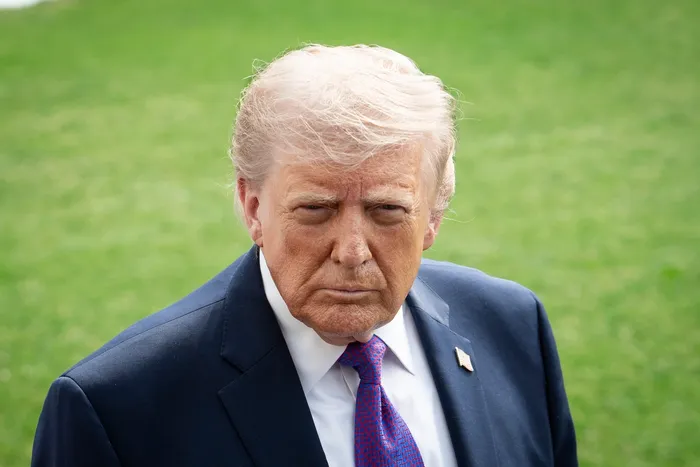
- Political Leveraging: For Donald Trump, the announcement serves as a demonstration of "diplomacy through disruption," attempting to settle a multi-decade conflict through the sheer pressure of a ticking clock.
- Escalation Management: It provides a cooling period for civilians on both sides while keeping military assets in a state of high-readiness (DEFCON 2 equivalent), ensuring that the cost of violating the agreement remains prohibitively high.
The Litani Constraint and the Sovereignty Gap
The primary failure of previous diplomatic attempts was the inability to decouple Hezbollah from the civilian and geographic infrastructure south of the Litani River. For this ceasefire to hold, the Lebanese Armed Forces (LAF) must occupy the vacuum. This creates a structural bottleneck: the LAF lacks the kinetic capacity to disarm Hezbollah and the political mandate to act as an Israeli border guard.
The success of the 10-day period relies on the Hezbollah Withdrawal Function. If the rate of withdrawal ($W$) is lower than the Israeli Defense Forces (IDF) intelligence-driven detection rate ($D$), the ceasefire creates an "exposure trap." Hezbollah fighters moving north become vulnerable to surveillance, while staying south triggers a localized breach of the agreement.
The logistical reality of the LAF's deployment involves:
- Asset Mobilization: Moving five to eight brigades into the south requires a fuel and logistics chain that Lebanon currently cannot sustain without external subsidies.
- Operational Integration: The LAF must coordinate with UNIFIL without appearing to take orders from the IDF, a delicate optics game that often leads to paralysis in the face of Hezbollah provocations.
Iranian Strategic Depth and the Cost of Proxy Loss
The conflict in Lebanon is inextricably linked to the broader war in Iran, as referenced by recent kinetic exchanges. Iran views Hezbollah not merely as a political ally but as its "First-Strike Deterrent." The degradation of Hezbollah’s Radwan Force and its long-range missile inventory significantly lowers the cost for Israel—or a future US administration—to strike Iranian nuclear facilities.
The "Iran-Hezbollah Feedback Loop" dictates that Tehran will only permit a ceasefire if the alternative is the total liquidation of their most valuable proxy. If the 10-day ceasefire is perceived as a ruse to allow the IDF to reset for a final push, Tehran will likely order a saturation strike to reset the terms of engagement. Conversely, if Iran believes that the Trump administration is prepared to escalate sanctions to a "Maximum Pressure 2.0" level, they may utilize this window to signal a tactical retreat to preserve their assets for a later date.
Quantifying the Failure Points
Predicting the durability of this ceasefire requires monitoring specific indicators that track the divergence between diplomatic rhetoric and ground reality:
1. The Smuggling Corridor (The Syria-Lebanon Nexus)
If the IDF continues to strike the Masnaa Border Crossing or other arterial routes during the ten days, it indicates that the "ceasefire" does not extend to the interdiction of Iranian hardware. A true ceasefire requires a total freeze on logistics. Continued strikes on supply lines will be interpreted by Hezbollah as a breach, likely leading to retaliatory rocket fire into northern Israel.
2. The Verification Mechanism
Who monitors the 10-day window? If the monitoring body is UNIFIL, history suggests a 90% probability of reported but un-actioned violations. If the monitoring is conducted via US-provided satellite telemetry with a direct "hotline" to the IDF, the threshold for a return to combat is much lower.
3. The Displacement Variable
The return of 60,000+ displaced Israelis to the north is the ultimate metric of success for the Israeli government. If the ten-day window does not produce a significant change in the security perception of these citizens, the political pressure on the Netanyahu cabinet to resume operations will be insurmountable.
The Trumpian Factor: Diplomacy as a Transactional Asset
The involvement of Donald Trump introduces a "Wildcard Premium" into the negotiations. Unlike the Biden administration’s emphasis on de-escalation for the sake of regional stability, the Trumpian approach treats the ceasefire as a transaction. The "Deal" likely involves private assurances to Israel regarding freedom of action in the event of a breach, balanced against threats of total diplomatic isolation for the Lebanese state if they fail to constrain Hezbollah.
This creates a high-stakes game of "Chicken."
- For Israel: They gain a brief window to rotate troops and perform maintenance on heavy armor, while keeping the threat of an expanded ground incursion over Beirut’s head.
- For Hezbollah: They gain a reprieve from the targeted assassination of their mid-level leadership, but at the cost of abandoning their entrenched positions.
- For the US: It is a low-cost, high-reward gambit. If it works, Trump claims a "Day One" victory before even taking office. If it fails, he blames the "weakness" of the previous administration’s groundwork.
The Mechanics of Kinetic Resumption
If the 23:00 deadline passes and the first 24 hours see a "Quiet for Quiet" exchange, the focus shifts to the Buffer Zone Verification. The IDF will utilize high-altitude UAVs and ELINT (Electronic Intelligence) to map any movement. The ceasefire agreement likely contains a "Self-Defense Clause," which is the most common point of failure.
This clause allows either side to respond to "imminent threats." In a dense urban environment like Southern Lebanon, the definition of an "imminent threat" is entirely subjective. A Hezbollah operative moving a crate could be viewed as "re-arming," triggering an Israeli strike, which triggers a rocket barrage, effectively ending the ceasefire within hours.
The Strategic Play: Navigating the 240-Hour Cycle
The move forward requires a ruthless adherence to the following operational parameters:
The Lebanese government must immediately authorize the LAF to seize any unauthorized weapon stockpiles discovered during the 10-day window. Failure to do so renders the "sovereignty" argument moot and justifies continued Israeli incursions. International donors should condition further Lebanese state aid on the measurable displacement of Hezbollah influence from the Ministry of Health and other civil sectors that facilitate the group's logistics.
Israel must define "Success" not as the total eradication of Hezbollah—an impossible short-term goal—but as the verifiable destruction of the launch infrastructure within 20km of the border. Once this "Safe Zone" is established, the transition from a kinetic war to a cold containment strategy becomes viable.
The 10-day ceasefire is not a peace treaty; it is a tactical pause designed to force a strategic realignment. The primary objective is to move the conflict from a war of attrition to a monitored containment zone. Stakeholders should prepare for a "Snap-Back" escalation. If the 23:00 deadline holds, the subsequent 48 hours will determine if the Middle East is entering a phase of managed stability or if the 10-day window was merely the "eye of the storm" before a wider regional conflagration involving direct Iranian intervention.
Regional actors must now decide if the cost of the status quo is higher than the risk of a Trump-mediated settlement. Given the economic collapse of Lebanon and the military depletion of Hezbollah’s elite units, the structural incentive to comply has never been higher, yet the ideological commitment to resistance remains the primary friction point.