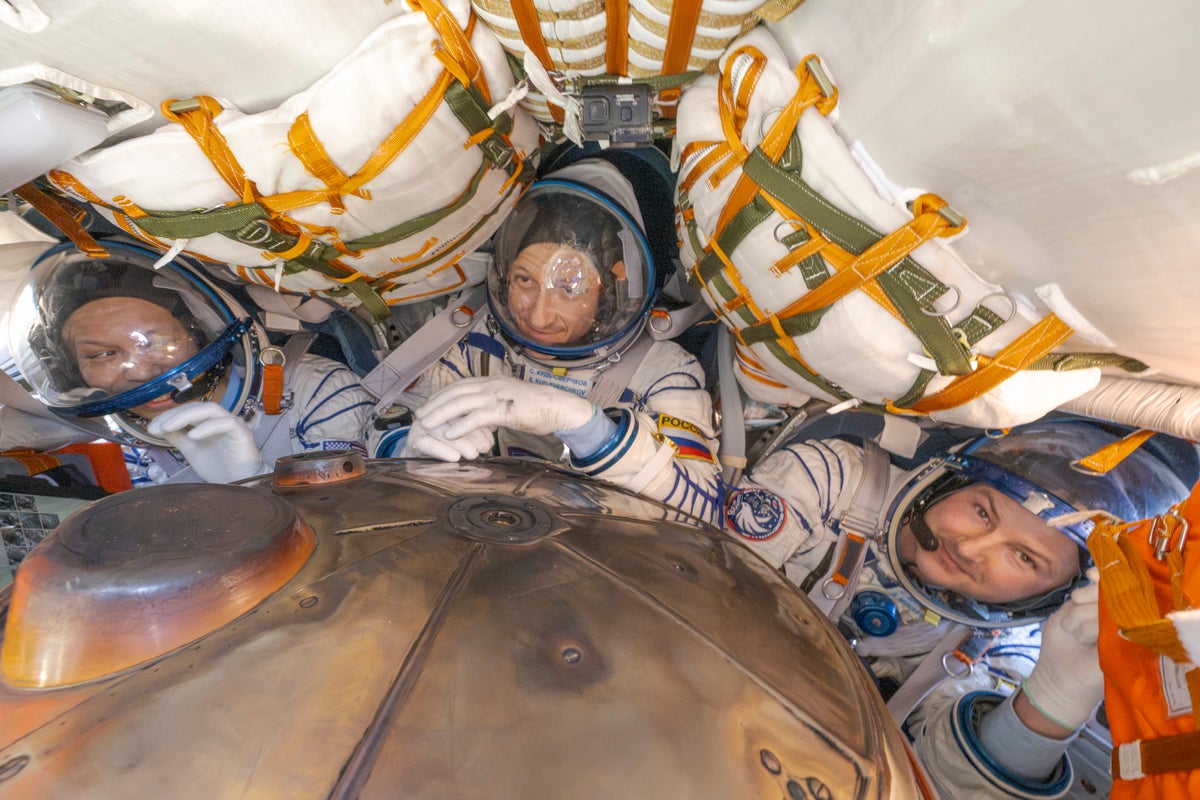
The return of a multi-nationality crew from an eight-month International Space Station rotation exposes the rigorous operational trade-offs governing modern low Earth orbit habitation. Standard news reporting frames these missions through narrative arcs of safe homecomings and endurance milestones. This approach obscures the underlying engineering constraints, physiological degradation curves, and logistical dependencies that dictate orbital schedules.
Long-duration spaceflight functions as a high-stakes stress test for human physiology and hardware reliability. When a crew remains on orbit for over two hundred days, the mission parameters shift from exploratory demonstration to systematic risk management. The intersection of life support system maintenance, cargo vehicle cadence, and crew health preservation creates a tightly coupled operational equation. Don't forget to check out our recent post on this related article.
Physiological Attrition Under Microgravity
The human body operates as a closed-loop system calibrated for Earth gravity. Removing this constant vector initiates rapid structural remodeling across multiple biological systems. Understanding the true cost of an extended ISS deployment requires examining the degradation mechanics within three primary domains: musculoskeletal integrity, cardiovascular regulation, and neurovestibular stability.
The Skeletal and Muscular Cost Function
In a terrestrial environment, mechanical loading drives bone density maintenance and muscle hypertrophy. Without gravitational loading, osteoclasts outpace osteoblasts, driving a net loss of bone mineral density primarily in weight-bearing structures such as the lumbar spine, femoral neck, and pelvis. This loss occurs at an estimated rate of one to one point five percent per month despite intensive daily countermeasures. To read more about the history here, Engadget offers an excellent summary.
Countermeasure protocols rely on resistive exercise via the Advanced Resistive Exercise Device, cycle ergometry, and treadmill running strapped by bungee systems. Yet, these interventions mitigate rather than halt structural decline. The resulting operational deficit means returning crew members face acute fall risks, structural fragility, and prolonged rehabilitation windows upon terrestrial re-entry.
Cardiovascular Deconditioning and Fluid Shifts
Terrestrial gravity maintains a hydrostatic pressure gradient, pulling blood toward the lower extremities. Microgravity eliminates this gradient, triggering an immediate cephalic fluid shift. The body registers this redistribution as an excess blood volume state, initiating renal diuresis to reduce total plasma volume.
Upon return to a one-g environment, this reduced plasma volume combined with orthostatic intolerance causes blood to pool in the lower body, starving the brain of adequate perfusion during the initial post-flight hours. Crew members routinely experience presyncope or syncope if not aggressively rehydrated and monitored immediately after landing.
Logistical Dependencies and Orbital Mechanics
Sustaining a crew for eight months demands a precision supply chain defying conventional industrial logistics. The International Space Station operates as a localized manufacturing and habitat ecosystem dependent on a continuous cadence of uncrewed resupply vehicles.
The Mass Balance Equation
Every kilogram delivered to the station requires an exponential expenditure of propellant mass at launch. Water, oxygen, dry food rations, and experiment hardware consume a fixed cargo allowance per resupply manifest. To extend mission durations from the standard six-month baseline to eight months or longer, life support recycling efficiency must scale proportionally.
The station relies on Environmental Control and Life Support Systems to recycle approximately ninety-eight percent of wastewater, including moisture from crew respiration and sweat, as well as urine reclamation. The reliability of these closed-loop systems dictates the safety margin of extended stays. A mechanical failure in the urine processor assembly or oxygen generation system forces reliance on emergency reserve stores, compressing the mission timeline if resupply vehicles are delayed by launch anomalies or scheduling bottlenecks.
Orbital Decay and Re-boost Mechanics
Operating in low Earth orbit subjects the station to constant atmospheric drag, causing a gradual decay of the orbital altitude. Maintaining a stable operational envelope requires periodic orbital re-boost maneuvers executed by docked vehicles, such as Russian Progress cargo craft or Northrop Grumman Cygnus spacecraft.
Extended crew rotations must synchronize with this propulsion schedule. Station-keeping maneuvers require precise fuel consumption calculations, orbital mechanics modeling, and collision avoidance planning against orbital debris fields. An extended duration mission increases the probability exposure window to micrometeoroid and orbital debris impacts, necessitating constant vigilance and structural shielding assessments by mission control teams.
Operational Risk Distribution
Managing crew health and station infrastructure over an eight-month horizon requires shifting from reactive troubleshooting to predictive maintenance models. The distribution of operational risk splits across three distinct vectors: human error induced by cumulative fatigue, software and hardware obsolescence, and psychological resilience under prolonged isolation.
Cumulative fatigue manifests in subtle cognitive slowing and operational friction. Although flight controllers on the ground manage the macro-scheduling, crew members execute intricate payload maintenance, spacewalks, and system repairs. As mission duration extends past the standard six-month mark, procedural drift and physical exhaustion increase the probability of human error during critical maintenance windows.
Psychological sustainability under prolonged isolation introduces variable performance metrics. Confined environments, sensory monotony, and high-stakes operational pressure test interpersonal dynamics. Space agencies mitigate this through structured behavioral health support, private family conferences, and autonomous scheduling blocks, yet the cognitive load of isolated confinement remains a constant variable in mission success metrics.
Strategic Fleet Planning Implications
The operational lessons extracted from extended-duration ISS rotations directly inform the architecture of future deep-space exploration platforms, including cis-lunar habitats and transit vehicles for Mars missions. The ISS serves as the definitive terrestrial testbed for quantifying human system degradation over medium-length durations.
Future mission profiles to Mars will require crew independence from immediate terrestrial rescue and rapid resupply cadences. The transition from an eight-month low Earth orbit deployment to a thirty-month round-trip interplanetary journey demands a threefold increase in closed-loop life support reliability and automated health monitoring systems.
Agencies and commercial operators must transition from viewing extended orbital stays as endurance records to treating them as baseline data-gathering operations for deep space systems engineering. The operational data compiled from these missions defines the boundary conditions for human spaceflight viability over the next decade.
Allocate capital investment toward autonomous life support diagnostics and closed-loop material recycling efficiency to eliminate single-point-of-failure dependencies on terrestrial resupply supply chains before initiating crewed transit architectures beyond cis-lunar space.