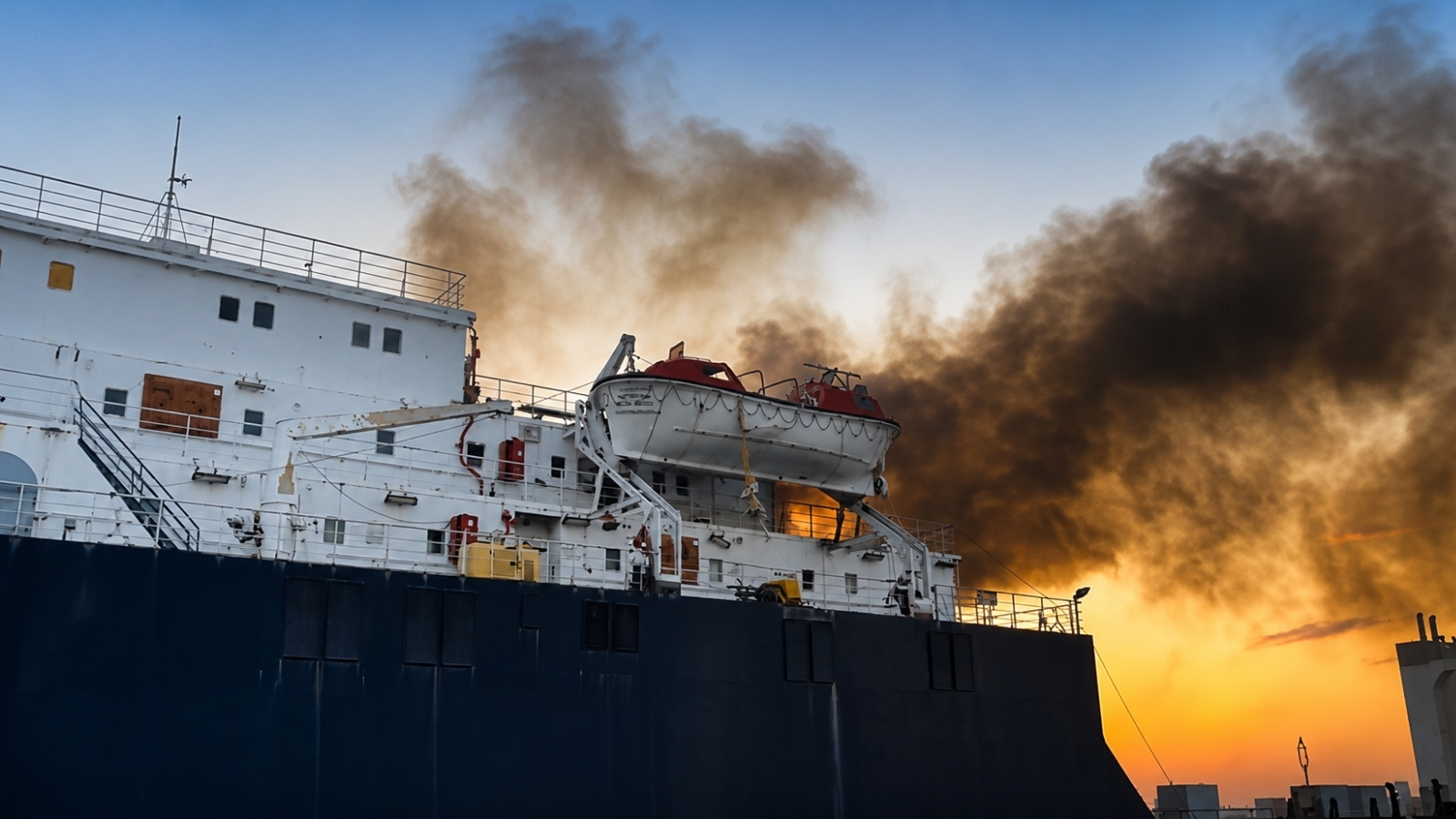
The maritime industry has long operated under the assumption that the open ocean provides a neutral sanctuary. That belief shattered the moment the ongoing conflict in Ukraine turned commercial shipping lanes into unintended battlegrounds. Thirteen Indian nationals currently find themselves held captive by this new reality, trapped aboard a vessel navigating waters where drone technology and long-range munitions have erased the line between combatant and civilian.
New Delhi is scrambling to stabilize the situation. The Indian Embassy is coordinating directly with regional authorities to secure the safe passage of these citizens, yet the diplomatic levers available are proving increasingly fragile. This is not merely a consular issue. It represents a systemic failure in how global trade infrastructure manages risk when non-state actors and advanced drone swarms enter the equation.
The Geography of Maritime Vulnerability
Shipping companies calculate risk based on historical data. They look at piracy hotspots, weather patterns, and port congestion. They do not typically calculate the probability of a commercial freighter being caught in the crosshairs of an automated drone strike. The vessel in question, caught near the perimeter of high-tension zones, serves as a stark reminder that modern naval warfare has shifted.
The threat is asymmetric. Traditional warships have hardened defenses, radar-jamming capabilities, and anti-aircraft missile arrays. A standard merchant vessel has a steel hull, a crew of civilian contractors, and a manifest full of cargo. When drones designed for tactical battlefield destruction stray into shipping lanes, the crew is defenseless.
The Indian government’s primary hurdle is the sheer lack of legal clarity regarding the protection of merchant vessels in proximity to active conflict zones. While international maritime law mandates freedom of navigation, it provides little recourse when that navigation intersects with military objectives. The Indian Embassy is not just negotiating for the release or safe passage of thirteen people; they are arguing against the normalization of civilian collateral damage in commercial waters.
Operational Failures in Risk Assessment
Why were these mariners in this position to begin with? The answer lies in the thin margins of the global supply chain. Many shipping lines operate on razor-thin profitability, forcing operators to take routes that shave hours off transit times, even if those routes skirt the edges of restricted zones. This is a common industry practice known as voyage optimization.
In a hypothetical scenario, an operator might choose a route that crosses a contested maritime border because the fuel savings and demurrage fees avoided outweigh the perceived risk. This calculus worked for decades. It fails now because the speed of escalation has outpaced the speed of corporate policy updates.
When a drone threat emerges, there is no standardized protocol for merchant captains to follow. Do they accelerate? Do they drop anchor? Do they abandon ship? Each choice carries a different legal and financial liability. The trapped Indian crew members are currently the human face of this policy vacuum. They are waiting for instructions that their headquarters may not even have the expertise to provide.
The Diplomatic Tightrope
The Indian Ministry of External Affairs functions through quiet, persistent communication. Their objective is to extract the citizens without escalating the incident into a wider geopolitical standoff. Public posturing would be counterproductive here. By keeping the dialogue low-profile, India maintains the ability to work with multiple stakeholders who, on the surface, refuse to acknowledge each other.
This strategy is effective but slow. It relies on the goodwill of local naval commanders who might not be the ones holding the actual authority. The volatility of the situation means that every hour of delay increases the chances of a mechanical failure, a food shortage, or a misidentified drone strike on the vessel.
Observers within the industry are watching this case closely. If the Indian government secures a safe exit, it sets a precedent for how other nations should handle similar crises. If the situation deteriorates, it will signal that merchant crews are essentially disposable assets in the eyes of warring factions. The maritime insurance industry is already pricing in this new reality, with war-risk premiums for vessels operating in or near the Black Sea surging to unprecedented levels. This financial pressure is beginning to force a change in routing, but for the thirteen men on this ship, the shift in market dynamics comes far too late.
The Technological Reality of Drone Warfare
The rise of unmanned systems has democratized the ability to threaten ships. It no longer requires a nation-state navy to blockade a port or threaten a merchant marine convoy. Small, relatively inexpensive drones can now cause catastrophic damage to the propulsion or steering systems of large vessels.
This environment makes the job of the ship’s captain nearly impossible. How does one detect a target that costs less than the fuel used to intercept it? Modern navigation systems are built for safety and efficiency, not for spotting low-altitude, low-radar-signature threats. Unless commercial vessels are retrofitted with active electronic warfare suites—an extremely expensive and legally complicated proposition—they will continue to be vulnerable.
The international maritime community is effectively in a period of transition where existing safety frameworks are obsolete. We are witnessing the end of the era of uncontested civilian passage. Governments are beginning to realize that if they want to protect their citizens at sea, they must move beyond traditional diplomatic channels and start dictating new terms of engagement for the high seas.
The thirteen Indian seafarers are currently more than individuals in need of rescue; they are the leverage point in a broader test of sovereignty and safety. If the current international order cannot protect a merchant vessel from becoming an unintended target, the cost of global commerce will eventually be paid in more than just shipping fees. Every additional day the ship remains stationary, the window for a peaceful resolution closes. Security is no longer about geography; it is about the ability to control the environment around the hull, a capability that most commercial vessels simply do not possess. The outcome of this ordeal will dictate the standard operating procedure for every crew member entering these waters for the foreseeable future.