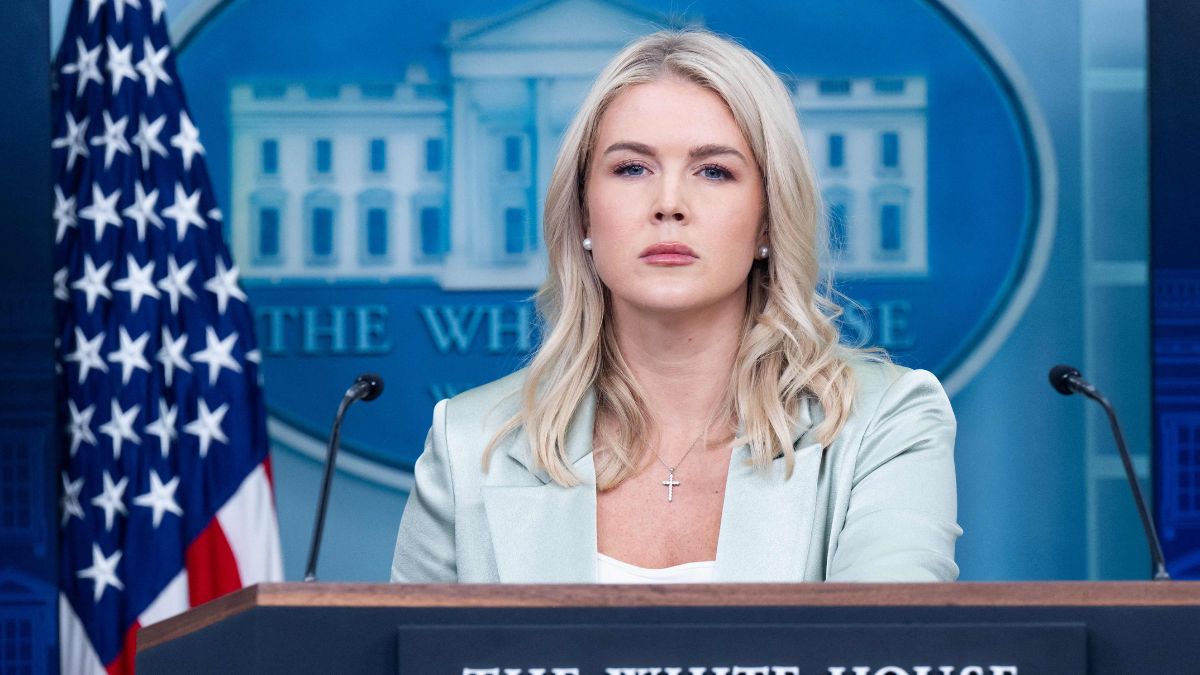
The imminent departure of White House Press Secretary Karoline Leavitt at the end of August 2026 creates an acute operational vacancy inside the West Wing. Occupying the role for 20 months as the youngest person in U.S. history to hold the post, Leavitt established an aggressive communication model defined by direct media confrontation and deep alignment with the executive branch's political strategy. Her transition to an external advisory role focusing on the midterm elections forces the administration to select a successor capable of maintaining messaging dominance under intensifying legislative and electoral scrutiny. Analyzing who steps into the James S. Brady Press Briefing Room requires evaluating internal deputies, departmental spokespeople, and legal surrogates against specific operational parameters.
The Operational Requirements of the Office
Evaluating potential successors requires isolating the functional demands of the White House Press Secretary position. The role operates on three distinct axes: adversarial media management, internal message synchronization, and executive representation.
The primary metric of success is not merely defending policy, but controlling the friction coefficient between the administration and the media corps. A viable candidate must balance televised combative messaging tailored for external political bases with the administrative management of daily press pool logistics. The proximity of the upcoming midterm elections amplifies the stakes, shifting the primary objective from long-term institutional narrative-building to short-term electoral defense and rapid-response crisis management.
Internal Succession: Anna Kelly and the Continuity Vector
The most direct internal candidate is Principal Deputy Press Secretary Anna Kelly. Operating as Leavitt's immediate second-in-command, Kelly possesses granular familiarity with the existing workflow of the press office. Her background includes managing foreign policy communications, a domain characterized by high factual density and zero margin for error.
The structural argument for Kelly rests on operational friction reduction. Elevating the principal deputy bypasses the steep onboarding curve required for an external hire. Because Kelly has already represented the administration across television and radio formats, her appointment signals administrative continuity. The limitation centers on whether the administration prefers a seamless internal transition or an ideological pivot that signals a shift in tone. If the core objective is minimizing disruption to the existing communications apparatus, Kelly represents the lowest-risk mathematical choice.
Cross-Agency Lateral Movement: Kingsley Wilson and the Departmental Model
A second category of contenders involves figures currently managing communications operations in high-profile federal agencies. Kingsley Wilson, who serves as the press secretary for the Department of War, represents this tier. Having managed aggressive public affairs overhauls under military leadership, Wilson's profile is built on navigating institutional friction and aligning agency outputs with broader executive directives.
The utility of a departmental lateral move lies in hardening the press office against institutional pushback. Personnel who have operated within defense or security communication portfolios are accustomed to high-stakes information gatekeeping and coordinated media pushback. However, transferring a departmental spokesperson to the podium requires an immediate scaling of political agility, as the White House briefing room demands instantaneous national political improvisation that differs structurally from agency-specific messaging.
External Legal and Political Surrogates: Alina Habba and the Confrontational Model
Speculation regarding high-profile replacements also points toward external surrogates who gained prominence defending the executive outside traditional bureaucratic structures, such as Alina Habba. Figures from this cohort derive their authority from aggressive litigation-adjacent communications and fierce loyalty demonstrated during intense public scrutiny.
The strategic rationale for an external surrogate is maximizing television dominance and ideological friction. If the administration evaluates that the remainder of the term requires an offensive posture that treats the press briefing room purely as an ideological battleground, a legal or political surrogate provides that exact tactical utility. The trade-off is administrative efficiency; outsiders often lack familiarity with the intricate mechanics of daily inter-agency policy coordination, creating potential friction points with career communications staff.
The Interim Void and Selection Mechanics
President Donald Trump has not outlined a definitive timeline or immediate replacement, leaving open the possibility of an extended interim period managed by deputies, mirroring previous operational pauses during maternity leaves.
To optimize communication throughput ahead of the midterms, the selection algorithm must weigh three variables: velocity of response, institutional control, and baseline television performance. If the administration prioritizes institutional stability, an internal elevation of Anna Kelly provides immediate stability. If the objective is escalating ideological conflict, an external surrogate shifts the baseline dynamics of every exchange in the briefing room. The ultimate appointment will calibrate the exact level of confrontation the executive branch intends to project for the remainder of the term.