Evaluating elite political continuity within an isolated, highly militarized totalitarian state requires stripping away speculative media narratives and focusing strictly on institutional signaling, state-media semiotics, and historical precedent. Intelligence assessments from Seoul regarding the public prominence of Kim Jong-un’s daughter, Kim Ju-ae, indicate that Pyongyang has entered a structural phase of leadership branding. Analyzing this transition demands an examination of the mechanisms of dynastic legitimization, the friction points of a patriarchal command structure, and the operational logic governing North Korea's supreme leadership continuity.
The Mechanics Of State Media Semiotics
Dynastic durability within the Workers Party of Korea relies on the uninterrupted transfer of the Paektu bloodline mythology. When external intelligence agencies evaluate succession indicators, they do not rely on formal bureaucratic decrees; instead, they measure shifts in visual proximity, honorific vocabulary, and protocol frequency within state organs such as the Korean Central News Agency. Meanwhile, you can find similar events here: The Anatomy of Electoral Longevity: Why Incumbent Shields Defeat Generational Disruptions.
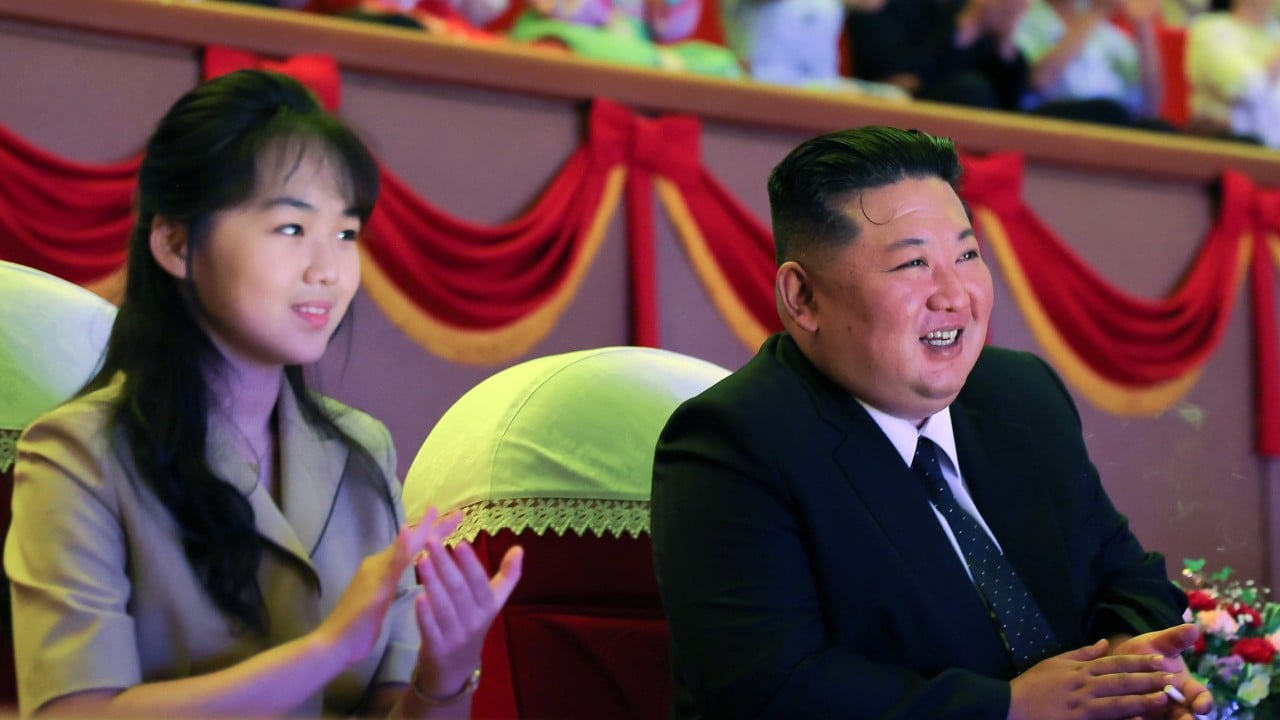
The evolution of nomenclature assigned to Kim Ju-ae serves as a primary diagnostic tool. State media transitioned descriptors from initial warm adjectives to the designation of respected, a linguistic marker historically reserved exclusively for sitting supreme leaders or their direct consorts. This shift represents a deliberate branding strategy designed to normalize a fourth-generation transition long before any formal institutional appointment occurs. By pairing the subject with strategic assets—ranging from intercontinental ballistic missile test sites to naval destroyer inspections—the regime systematically fuses dynastic continuity with national survival credentials.
Structural Friction Within A Patriarchal Monolith
The proposition of a female supreme leader in North Korea introduces profound systemic friction. The political ecosystem of Pyongyang is anchored in traditional military-first patriarchy, where absolute authority has historically been wielded through hyper-masculinized displays of physical command over armed forces. Elevating a female successor requires neutralizing structural skepticism among elite military cadres and party heavyweights. To understand the bigger picture, we recommend the excellent article by TIME.
To mitigate this friction, the regime deploys high-contrast symbolic messaging. Public appearances featuring military interactions—such as inspecting strategic missile guidance systems or participating in operational evaluations—are engineered to project tactical aptitude and authority. This counters institutional inertia by establishing a precedent where competence within the ruling family supersedes conventional demographic constraints. The speed and intensity of these public exposures are calculated to eliminate elite hesitation by signaling that the succession path is definitive and irreversible.
Assessing Intelligence Limitations And Alternative Hypotheses
Rigorous analysis requires acknowledging the limits of external observation. Intelligence evaluations from bodies like the National Intelligence Service rely on fragmented data points, aerial reconnaissance, defectors, and state-broadcast analysis.
Several competing hypotheses merit evaluation:
- The Operational Shield Hypothesis: Elevating a young heir into the public sphere functions as a deliberate distraction or a shield, safeguarding the primary decision-maker by dispersing analytical attention across multiple targets within the royal household.
- The Interim Legitimization Model: The current high-visibility campaign may not signify an ultimate coronation, but rather an accelerated effort to establish a symbolic anchor for the regime during a vulnerable generational transition, preserving stability until alternative internal alignments mature.
- The Definitive Succession Track: The convergence of military inspection tours, specialized protocol, and institutional framing confirms an active grooming process aimed at securing internal fealty well in advance of a leadership vacuum.
Strategic Outlook
External actors monitoring stability on the Korean Peninsula must re-weight their predictive models. The institutionalization of a fourth-generation successor, regardless of demographic anomalies, signals an intent by the ruling core to institutionalize predictability within the Paektu lineage. Policymakers should discard assumptions that patriarchal constraints alone will prevent this transition, treating the ongoing elevation of the leadership's daughter as an active operational variable in long-term strategic forecasting.