The air in the valley did not move. It sat heavy, smelling of baked dust and dry pine needles, thick enough to chew. By early afternoon, the thermometer nailed to the wall outside the village bakery had stopped making sense, its red line pushing past numbers it had never been asked to read before.
(Note: The characters and specific daily routines described below are hypothetical scenarios designed to illustrate the human weight of verified meteorological data.) Learn more on a related topic: this related article.
Meet Elena. For forty years, she has kept a small garden behind her stone cottage in the south of France, coaxing tomatoes and basil from the stubborn earth. This summer, she stopped watering them. Not because she lost interest, but because the local authorities turned off the taps in the middle of the day. A tiny plastic sign on the municipal pump read simply: Interdit. Forbidden.
She watched her harvest curl inward, turning the color of old parchment. The soil beneath them cracked open into jagged little mouths, thirsty and deep. Additional journalism by Associated Press explores similar perspectives on the subject.
Western Europe just endured the hottest June and July on record.
Meteorologists stare at graphs filled with spikes that look like jagged mountain ranges, pointing to anomalies and standard deviations. They talk about high-pressure domes and atmospheric blocks. But graphs do not show you what it feels like to watch a well go dry. They do not capture the sound of a forest holding its breath, waiting for a spark.
Dry.
The word feels too small for what actually happened. It sounds clean, clinical. It sounds like a throat that needs a glass of water. It is not that. It is an entire ecosystem standing on the edge of a blade.
Consider what happens when the rain simply refuses to fall for sixty days.
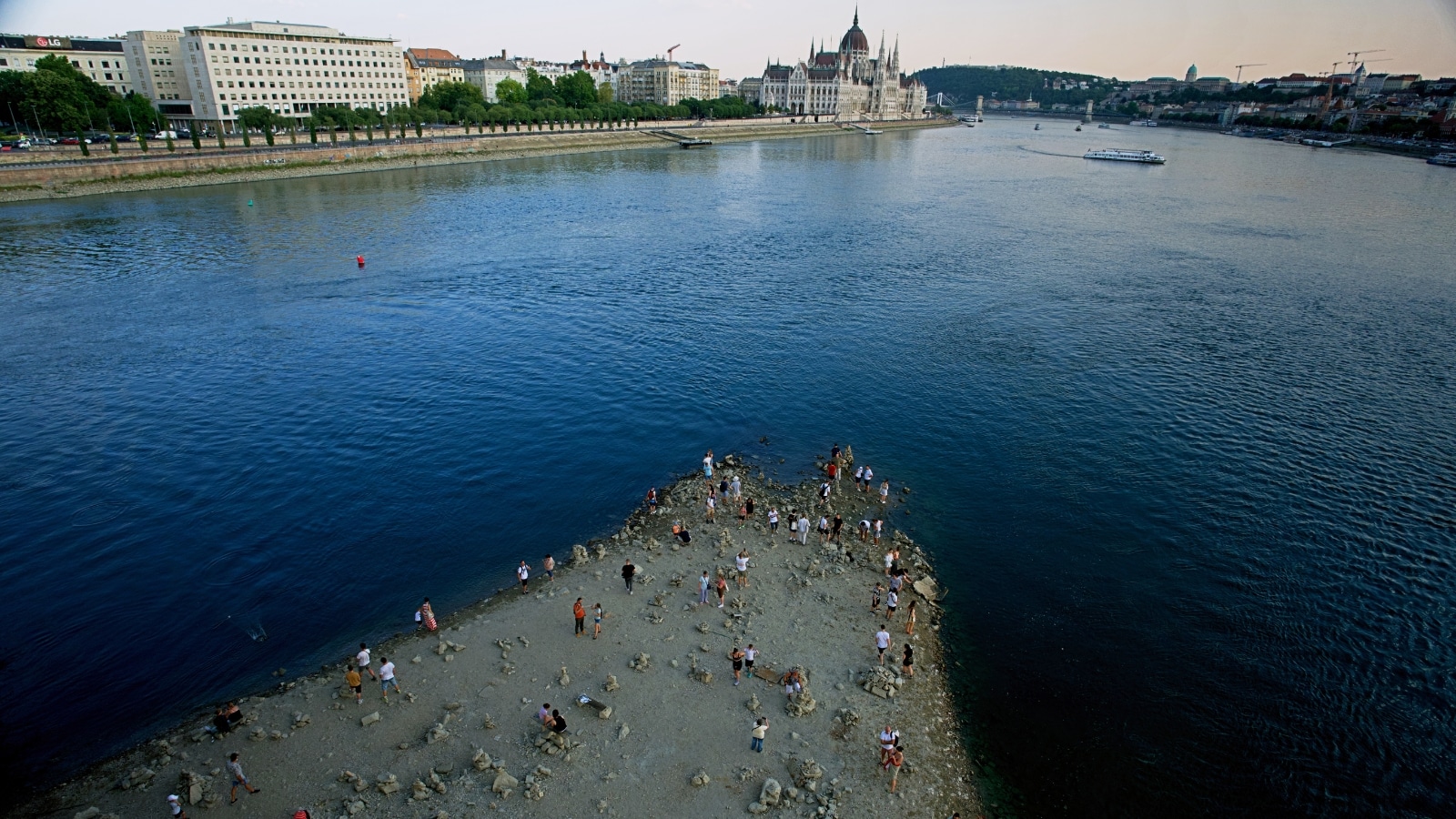
In the valleys, the rivers shrank. The mighty Rhine and the Loire, commercial highways of water that have carried trade and history for centuries, turned into sluggish, muddy trickles. Barges sat stranded, their heavy bellies resting on exposed riverbeds among rusted bicycle frames and ancient stones last seen decades ago. Grain stayed in silos. Coal stayed at the docks. The logistical arteries of a continent clogged not with snow or ice, but with empty space.
Heat is a thief. It steals moisture from the clouds before they can form. It steals the energy from the soil. And then, it comes for the trees.
Pine forests across Spain, Portugal, and France became tinderboxes. When a forest lives through normal seasons, the wood holds a deep, cool dampness. It fights back against a stray spark. This summer, that defense mechanism vanished. The trees dried out from the inside out, turning into bundles of dry kindling wrapped in bark.
People who lived generations near the timberlines know the sound of a wildfire before they see it. It is not a crackle. It is a deep, low roar, like a freight train barreling through a tunnel made of dry leaves.
When the fires came, they moved fast. Too fast.
Evacuation orders crackled over local radio stations. Families packed what would fit in the trunk of a hatchback: photo albums, birth certificates, a favorite blanket, the dog. They drove down narrow country lanes choked with smoke, watching the orange glow eat the horizon in their rear-view mirrors.
I remember standing on a balcony years ago, smelling that exact smoke, tasting ash on the back of my tongue. It stays with you. It is the smell of a home becoming a memory in real-time. You realize then how fragile our modern arrangements really are. We build cities of glass and steel, string electrical grids across continents, and assume the weather will always stay in the background, playing a polite supporting role to our daily routines.
It stopped being a background actor.
Statistics tell part of the story. Thousands of premature heat-related deaths across urban centers where concrete traps the warmth long after the sun goes down. Elderly residents in top-floor apartments suffering behind closed shutters, electric fans merely stirring the oven air. Agricultural losses running into the billions, threatening olive oil harvests, wine yields, and grain supplies.
Yet, numbers are armor. They protect us from feeling the true weight of the crisis.
When you look at a dry riverbed, you are looking at the future calling backward. The historical records kept since the nineteenth century show nothing quite like this continuous, punishing siege of heat. It is a slow-motion catastrophe, quiet until the moment it isn't.
But the real story is not just about what is breaking. It is about what people are doing in the quiet spaces between the emergency alerts.
In a village north of Madrid, neighbors formed a bucket brigade when the local reservoir dipped below critical levels, saving a grove of centuries-old olive trees that had survived kings and wars, only to be threatened by a Tuesday afternoon. In cities, strangers knocked on doors to check on the elderly, sharing bags of ice and cold water.
We are learning a new vocabulary of survival. We are learning how to count drops instead of gallons. We are learning how to look at a cloudless blue sky not with relief, but with a knot in the stomach.
The heatwave broke eventually. A cold front pushed down from the north, bringing autumn-chilled rain that hissed against the asphalt and washed the ash from the rooftops.
Elena went back out to her garden. The soil is still cracked, scarred by the baking sun of June and July. She cleared away the dead stalks, turning the dirt over with a heavy iron spade, looking down into the dark, damp earth she knows will have to try again next year.
The wind picked up, carrying the sharp, clean scent of approaching rain across the valley, while the river below slowly began to remember its way to the sea.