The global food supply chain is broken, and a distant war just shattered whatever fragile illusion of stability was left.
When fighting erupted in Iran and the Strait of Hormuz was blocked, geopolitical analysts immediately began calculating the price of crude oil and tracking container ships. But the real, devastating impact of this regional conflict isn't just felt in corporate boardrooms or at the petrol pump. It's being felt on the ground by smallholder farmers across the globe who keep British supermarket shelves stocked.
From the tea estates of East Africa to the coffee cooperatives of Latin America, small-scale producers are absorbing massive, unsustainable economic shocks. They're paying double for fertiliser, watching transport costs triple, and dealing with a system that forces them to absorb every single loss. Right when these producers desperately need systemic protection, the UK government has missed its own deadline to introduce rules that would hold big corporations accountable for their supply chains.
It's a classic case of political paralysis, and the people paying the price are the ones growing our food.
The Brutal Reality of a Distant War
You can't fully understand the vulnerability of your morning cup of tea or coffee without looking at what it takes to get it to your kitchen. Global agriculture relies heavily on stable trade routes and predictable input costs. The moment the Strait of Hormuz closed, those inputs went into freefall.
Take Kenya, which supplies roughly 40% of all the tea consumed in the UK. Because of the conflict, a standard 50kg bag of fertiliser has jumped from 3,500 Kenyan Shillings (£20) to 6,500 Shillings (£37). That isn't a minor fluctuation. It's a budget-destroying spike.
At the same time, air freight costs to move fresh cut flowers and produce out of East Africa have skyrocketed from $0.40 to $1.20 per kilo. In Côte d'Ivoire, a massive cocoa cooperative reported that more than 70% of its members simply cannot access or afford the basic inputs required for the upcoming growing season.
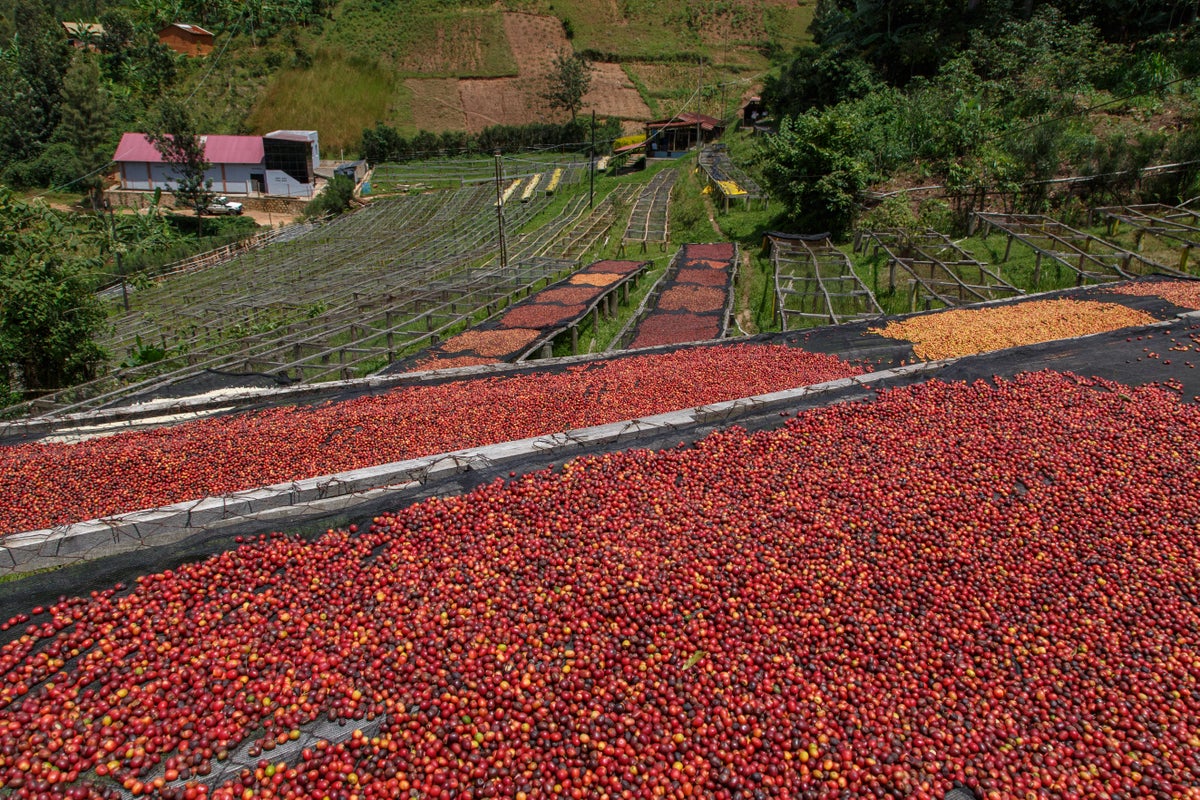
The story repeats in Mexico. Silvia Herrera, a smallholder coffee farmer in the Chiapas region, recently shared that she is literally paying out of pocket to produce coffee because market returns don't even cover basic production costs. Farmers like Herrera are dealing with a double blow. Extreme weather and shifting rain patterns already slash harvests in half, and now the soaring cost of imported agricultural goods makes recovery impossible.
When your farm loses half its crop to drought and the cost to feed the remaining fields doubles, you aren't running a business anymore. You're running out of time.
Where is the UK Government?
While smallholders are drowning in overhead costs, the UK government is nowhere to be found.
For months, campaigners and advocacy groups like the Fairtrade Foundation have pushed for a mandatory Human Rights and Environmental Due Diligence (HREDD) law. This legislation would legally compel large British companies to audit, identify, and fix human rights abuses and environmental damage throughout their entire supply networks. Crucially, it would give small-scale farmers the leverage they need to demand fairer trading terms when global crises strike.
The government promised a response to its sustainable business review by March. That deadline came and went with absolute silence.
This bureaucratic delay isn't just a political footnote. It has real-world consequences. Without strict legal frameworks, big supermarkets and major food brands can continue to insulate themselves from the economic fallout of the Iran war by passing the financial pressure downward. They squeeze their suppliers, who then squeeze the local cooperatives, who ultimately squeeze the farmers at the bottom of the pyramid.
When the state refuses to regulate, the market defaults to protecting the biggest players at the expense of the most vulnerable.
The Myth of Corporate Self-Regulation
Big food brands love to use slick marketing campaigns highlighting their commitment to sustainability and fair partnerships. But a crisis always reveals the truth behind the PR.
Voluntary corporate commitments don't work when inflation hits double digits. When shipping lanes close and fuel prices rise, corporate procurement officers are judged on one metric: maintaining their profit margins. If they can force a cooperative in Africa or Latin America to accept lower prices or bear the cost of expensive freight, they'll do it.
An HREDD law would change the rules of the game by making corporate responsibility a legal requirement rather than a marketing choice. It would prevent supermarkets from cutting corners or turning a blind eye to the fact that their cheap supply chains are driving international farmers into absolute poverty.
Domestic Agriculture is Hurting Too
This isn't just an international problem. The exact same supply chain dynamics are crushing domestic British agriculture.
According to reports from the Bank of England and the National Farmers' Union (NFU), British farming is currently facing extreme financial stress. The UK imports roughly 60% of its nitrogen fertiliser. Since the Middle East crisis escalated, the cost of red diesel and heating oil has surged, adding tens of thousands of pounds to standard farm operating bills.
NFU President Tom Bradshaw has pointed out that British producers are more exposed to volatile global markets than ever before. Much like their counterparts in Kenya or Mexico, UK arable and livestock farmers are being forced to absorb higher costs without seeing a matching return from the major supermarkets. Food price inflation is projected to climb up to 7% this year, yet very little of that extra cash actually flows back to the people working the land.
Whether you're running a multi-generation arable farm in Suffolk or a small coffee plot in Chiapas, the systemic issue is identical. The primary producers take all the risk, while the corporate middlemen hold all the power.
Steps for a More Resilient Food System
We can't stop a regional war overnight, but we can completely change how our supply chains respond to geopolitical shocks. Fixing this broken system requires concrete action from governments, businesses, and consumers.
- Enact Mandatory Due Diligence Laws: The UK government needs to break its paralysis and immediately pass a strict HREDD law. Voluntary compliance is a proven failure. Companies must be legally liable for the financial and environmental health of their supply chains.
- Establish Minimum Pricing Floors: Supermarkets must guarantee baseline prices for essential commodities that reflect the actual, current cost of production, including inflation and input shocks.
- Diversify Agricultural Inputs: Both domestic and international food systems need to reduce their absolute dependence on imported chemical fertilisers. Investing in localized, organic, and regenerative soil solutions creates a vital buffer against energy market spikes.
- Support Transparent Cooperatives: Funding and sourcing directly from independent farmer-led cooperatives cuts out unnecessary middlemen and ensures a larger share of the retail price stays in the community that grew the crop.
The current crisis makes it undeniably clear that global food security is incredibly fragile. If we keep allowing the market to squeeze the people who grow our food, eventually, they'll stop growing it entirely. It's time to build a supply chain that values human survival over corporate margins.