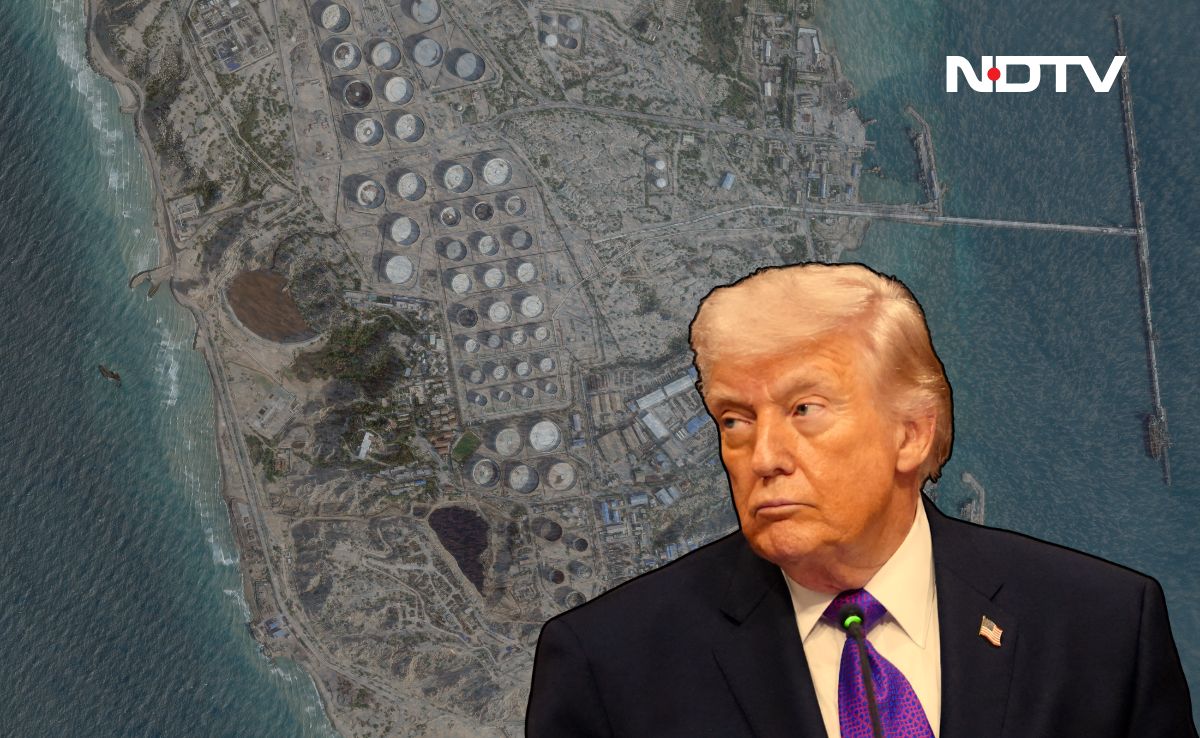
The foreign policy establishment is currently obsessed with a map of the Persian Gulf and a single, tiny coral outcrop: Kharg Island. The consensus from the talking heads is as predictable as it is flawed. They claim that by threatening Iran’s primary oil terminal, the Trump administration is finally "holding the pulse" of the Islamic Republic. They argue that taking or destroying the island—responsible for over 90% of Iran’s crude exports—is the ultimate "off-ramp" or the "maximum pressure" silver bullet.
They are dead wrong.
Threatening Kharg Island isn't a masterstroke of leverage; it is a fundamental misunderstanding of how the global energy market and the Iranian regime actually function in 2026. If the U.S. follows through on "obliterating" or occupying this rock, it won't just be a tactical error—it will be an act of economic self-sabotage that hands the geopolitical advantage straight back to the Mullahs and their primary customer, Beijing.
The Myth of the "Surgical" Strike
Military analysts love the word "surgical." It suggests we can remove Iran’s wallet without hitting the rest of the world’s jugular. This is a fantasy. Kharg Island is not an isolated target; it is the central node of a tightly coupled, high-pressure system.
When you threaten 1.6 million barrels per day (mb/d) of Iranian crude, you aren't just targeting Tehran's budget. You are gambling with a global supply-demand equilibrium that is already on a knife-edge. Brent crude is already hovering near $113 per barrel. The "lazy consensus" says that OPEC spare capacity can just fill the gap.
Here is the reality check: Most of that spare capacity—held by Saudi Arabia, the UAE, and Kuwait—is currently trapped behind the very same Strait of Hormuz that Iran has already partially obstructed. You cannot replace Iranian barrels with Saudi barrels if the tankers for both are getting sunk or refused insurance in the same 21-mile-wide waterway. A strike on Kharg doesn't "pressure" Iran into reopening the Strait; it gives them every incentive to weld it shut forever.
Why Tehran Wants You to Hit the Tanks
I have spent years watching regimes under sanctions. They don't collapse when their infrastructure is hit; they consolidate. By making Kharg the centerpiece of the conflict, the U.S. is giving the Iranian leadership the perfect external "Satan" to blame for a decade of domestic economic mismanagement.
Think about the internal mechanics of the Iranian state. The Revolutionary Guard (IRGC) thrives in the "shadow economy." When official exports from Kharg are halted, the price of "dark fleet" oil—the illicit barrels moved via ship-to-ship transfers and falsified transponders—skyrockets.
- Price Spikes Offset Volume Losses: If oil hits $150 per barrel because of a strike on Kharg, Iran can make as much money selling 500,000 barrels through back channels as they did selling 1.2 million at $60.
- The Martyrdom of Infrastructure: Destroying the terminal allows the regime to pivot from "corrupt administrators" to "defenders of the nation." Nothing kills a protest movement faster than a foreign power blowing up the national treasury.
The China Trap
The competitor's view completely ignores the "Beijing Factor." China is the anchor buyer of Iranian crude. By targeting Kharg, you aren't just poking the Persian lion; you are cutting off the energy supply of the world's second-largest economy.
Imagine a scenario where Chinese manufacturing costs jump 20% overnight because their discounted Iranian supply was deleted by a U.S. Tomahawk. Beijing won't stay on the sidelines. They will move from "quiet support" to "active defense." We are already seeing reports of China considering a revocation of "Permanent Normal Trade Relations" (PNTR) status in retaliation for U.S. trade probes. Adding an energy crisis to that fire is like trying to put out a localized blaze with a bucket of gasoline.
The Occupation Delusion
There is whispers of "taking and holding" the island. This is perhaps the most dangerous idea currently circulating in Washington. Kharg is 33 kilometers off the Iranian coast.
To "hold" Kharg, the U.S. would have to station thousands of troops and billions in hardware within easy reach of Iran’s entire short-range missile and drone arsenal. It would be a stationary target, a "sitting duck" on a coral reef. The logistics of protecting tankers docking at a U.S.-occupied Kharg under constant bombardment would make the 1980s "Tanker War" look like a bathtub toy fight.
The Real Leverage Nobody Talks About
If the goal is truly to dismantle the regime's power, you don't hit the terminal. You hit the distribution.
The obsession with Kharg is an obsession with "big, visible targets." Real "maximum pressure" happens in the ledgers of third-party banks in Dubai, Turkey, and Singapore that facilitate the "dark fleet" payments. It happens by out-competing Iran in the Asian markets through massive, subsidized supply shifts from elsewhere—not by blowing up the pumps and sending the global price to $200.
The establishment wants a Hollywood ending where the "bad guys" lose their oil. But in the real world, when you blow up a major oil terminal, everyone loses. The American consumer pays for it at the pump, the global economy pays for it through inflation, and the Iranian regime survives by selling the remaining scraps at a massive premium to a desperate world.
Stop asking what Trump can achieve by threatening Kharg Island. Start asking why we are handing Tehran the one thing they need to stay relevant: a global energy crisis they can blame on us.
Would you like me to analyze the specific impact on the U.S. Strategic Petroleum Reserve if a Kharg strike leads to a full closure of the Strait of Hormuz?