The Bureaucratic Mirage of Ideological Threat Targets
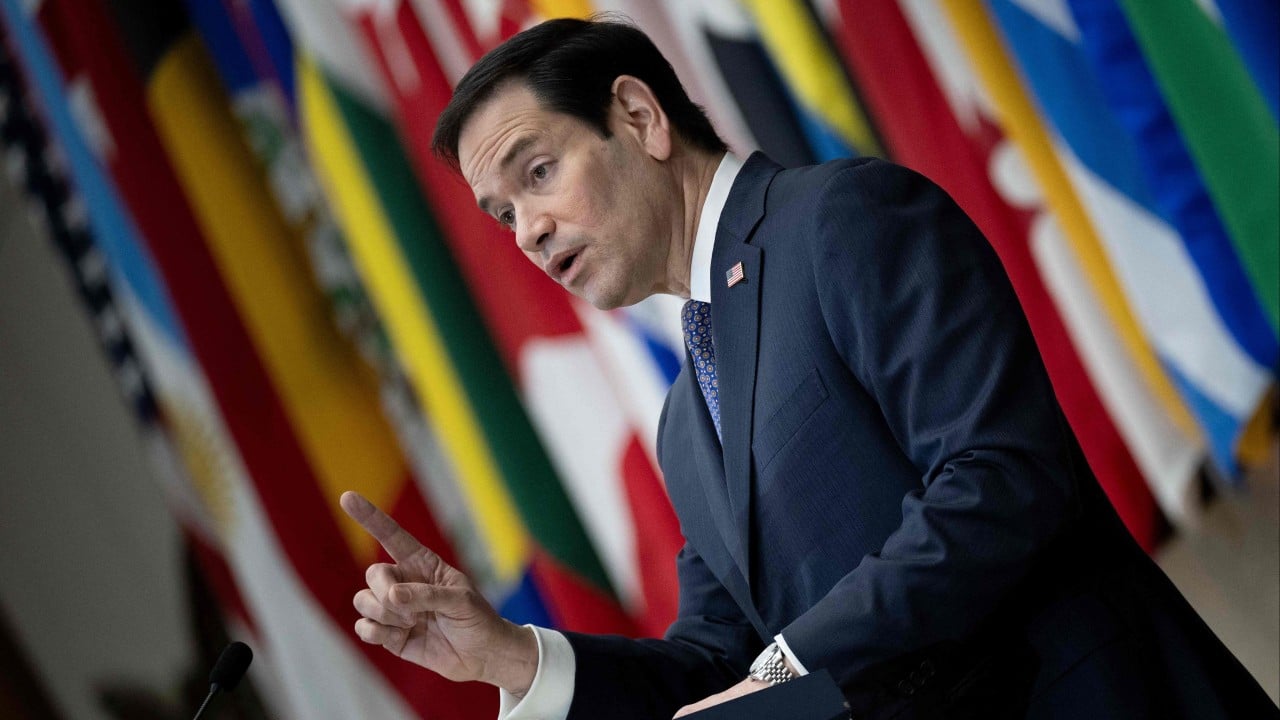
Politicians love a clean, partisan target. When Marco Rubio signals a strategic shift in federal counterterrorism priorities toward left-wing movements, Washington pundits respond right on cue with predictable, hyper-partisan cheerleading or outrage. They are all missing the point. The debate over whether "left-wing" or "right-wing" violent extremism represents the greater existential danger to domestic security relies on a fundamental misunderstanding of how modern ideological violence actually operates.
Fixating on ideological labels is a legacy strategy built for a century that ended twenty-five years ago. Modern intelligence operations do not fail because they misjudge political leanings; they fail because they treat fluid, hyper-fragmented online subcultures as structured political movements. Meanwhile, you can read related developments here: The Lines We Draw in the Dust.
+-------------------------------------------------------------------+
|                  TRADITIONAL vs. MODERN THREAT                    |
+-------------------------------------------------------------------+
| TRADITIONAL MODEL                  | MODERN THREAT MODEL          |
| • Top-down hierarchy               | • Decentralized networks     |
| • Rigid ideological manifestos     | • Ideological "syncretism"   |
| • Clear geographic cells           | • Individualized grievances  |
| • Predictable funding pipelines    | • Self-directed action       |
+-------------------------------------------------------------------+
Federal law enforcement agencies waste thousands of man-hours trying to map ideological hierarchies that do not exist. Whether the target is designated as environmental radicalism, anarchism, or militant nationalism, the underlying mechanism of mobilization is identical: decentralized, internet-mediated radicalization driven by personal grievance rather than coherent doctrine.
The Flaw in Category-Based Intelligence
The premise driving the latest shift in national security rhetoric assumes that domestic threat actors operate like 1970s paramilitary cells. They do not. To explore the bigger picture, check out the recent article by NBC News.
In the modern security environment, threat actors practice ideological syncretism. They mix and match contradictory beliefs—combining elements of ecoterrorism, accelerationism, anti-government hostility, and fringe conspiracy theories—into personalized narratives of rage.
"When you classify a network based purely on traditional left-right political spectrums, you blind yourself to the cross-pollination occurring in decentralized digital spaces."
I have spent years analyzing intelligence reports and national security strategies. I have watched federal agencies throw tens of millions of dollars at monitoring specific activist coalitions, only to be completely blindsided by unaffiliated individuals who absorbed conflicting radical doctrines in dark corners of the web.
When intelligence resources are directed to track a specific political wing, two dangerous things happen:
- Strategic Blind Spots: Resources are diverted away from detecting action-oriented, ideology-agnostic threats.
- Politicization of Threat Assessment: Field agents are forced to fit complex behavioral indicators into rigid political boxes to satisfy policy directives.
Traditional Counterterrorism Focus
├── Top-Down Organizational Hierarchies
└── Fixed Ideological Categories (Left vs. Right)

Actual Modern Security Reality
├── Fluid Networked Subcultures
└── Individualized, Syncretic Grievance Vectors
Actionability Over Ideology: A Better Approach
Security analysts often ask the wrong question: Which political movement is the most dangerous right now?
That question is inherently flawed. Threat is a function of capability and intent, not partisan affiliation. Threat assessment models must strip away the political framing entirely and evaluate operational mechanics instead.
1. Track Capabilities, Not Speech
Ideological rhetoric is noisy, cheap, and ubiquitous. The intelligence apparatus frequently confuses loud online rhetoric with operational readiness. Counterterrorism units must focus strictly on technical indicators:
- Procurement of restricted materials
- Acquisition of specialized tactical skills
- Surveillance of critical infrastructure assets
- Encrypted operational security practices
2. Map Behavior, Not Beliefs
When federal agencies pivot to target specific political movements, they inevitably sweep up lawful, constitutionally protected dissent. This creates endless legal friction, dilutes investigative focus, and breeds public distrust. Focus instead on violent action markers regardless of the underlying manifesto.
3. Disrupt Network Infrastructures
Modern extremists do not depend on formal leadership; they rely on specialized digital infrastructures for logistics, funding, and operational security. Disruption efforts should target these operational hubs—such as illicit financial rails and communication channels—rather than trying to police political discourse.
The Cost of Political Counterterrorism
The true danger of pivoting national security strategy around political realignment is not just inefficiency; it is systemic blind spots. Security policy dictated by partisan posturing creates predictable cycles: an administration takes power, shifts federal focus to the opposing political side, disrupts a few low-level networks, and leaves the national security apparatus exposed to threats evolving outside those narrow parameters.
Politicians will continue to use national security announcements to score political points. But if the goal is actual security rather than political messaging, intelligence strategy must abandon the outdated left-right spectrum entirely. Threat actors do not care about partisan classifications, and a security apparatus that relies on them is built to fail.