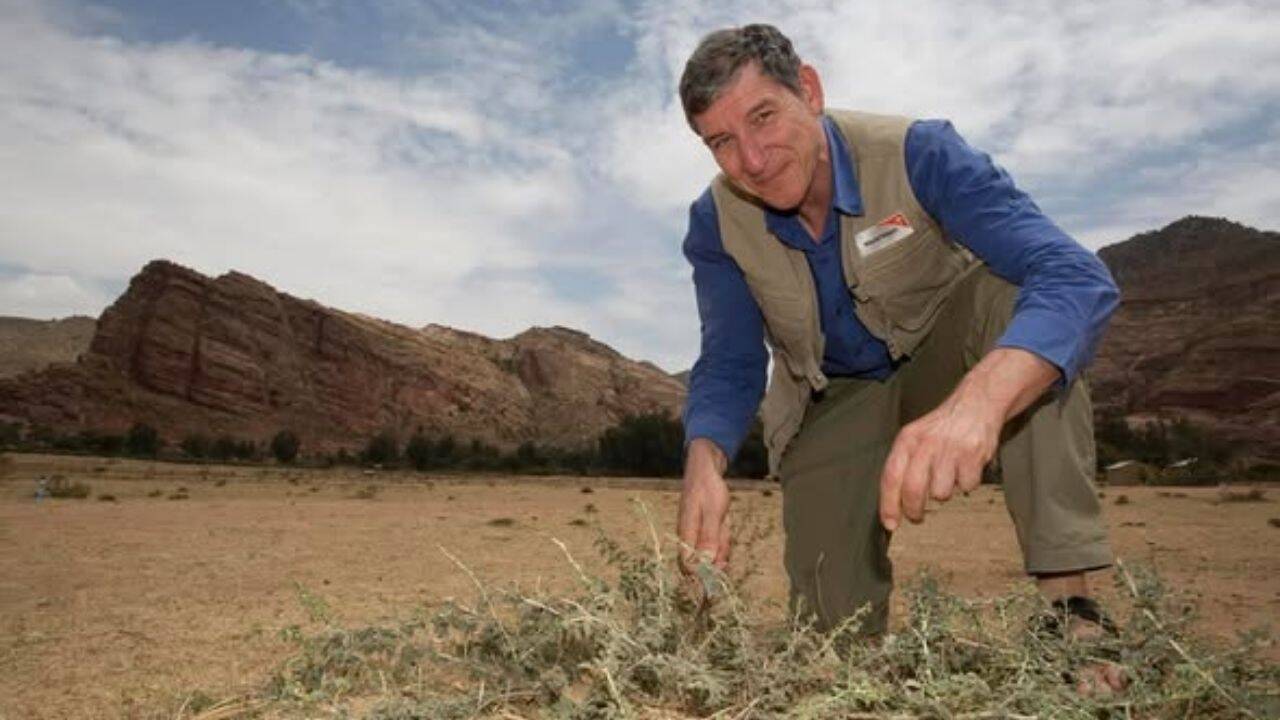
Tree planting projects fail far more often than aid agencies care to admit.
You've seen the headlines before. Governments announce ambitious plans to plant billions of saplings across arid regions, complete with high-profile photo ops. Then the cameras leave. Within months, goats eat the shoots, heat dries out the roots, and local communities—who had no say in the project to begin with—stop watering them. Millions of dollars evaporate into dust. If you found value in this post, you should look at: this related article.
In the early 1980s, an Australian agronomist named Tony Rinaudo realized this tragic reality while working in southern Niger. He watched millions of saplings die despite endless human effort.
Then he looked closer at the barren soil. For another look on this event, refer to the latest coverage from NBC News.
What he discovered wasn't a lack of seeds, but an underground forest waiting for permission to grow. That single insight birthed Farmers Managed Natural Regeneration (FMNR), a low-cost regreening technique that transformed southern Niger without expensive nurseries or imported technology.
By working with nature rather than forcing it, local farmers restored over 5 million hectares of land and brought back an estimated 200 million trees.
The Myth of the Empty Desert
When Rinaudo arrived in Niger with the missionary organization Serving in Mission (SIM), northern Africa was choking under severe droughts. The Sahel region suffered from massive land degradation. Decades of colonial-era land management laws had stripped farmers of tree ownership, encouraging widespread clearing to clear fields for crops.
The conventional wisdom insisted that bringing green back to the Sahel required digging holes and planting nursery-grown trees. Rinaudo spent years doing exactly that.
The failure rate was staggering. Roughly 80% to 90% of planted saplings perished.
"I was looking out over this vast, degraded landscape," Rinaudo often recalled in interviews. He felt defeated, realizing that even if his team worked around the clock, their efforts were a drop in the ocean compared to the scale of desertification.
The breakthrough happened during a routine drive in 1983. Rinaudo stopped to deflate his truck tires on a sandy road. Looking down at what appeared to be a useless bush sticking out of the ground, he examined its leaves carefully. It wasn't a weed or a shrub. It was the top shoot of a mature tree species, regrowth sprouting from a massive underground root system.
Locals had been clearing these sprouts every season to make way for sorghum and millet, treating them as weeds. In reality, the underground roots were alive, acting as an "underground forest" waiting for a chance to break through.
How Farmer Managed Natural Regeneration Works
FMNR doesn't rely on expensive tools, genetic modification, or complex technology. It relies on sharp tools, basic selection, and simple management.
Instead of clearing young shoots, farmers identify the healthiest stems growing from dormant root stumps scattered across their fields.
Here is the exact process:
- Selection: The farmer surveys the land and selects five to ten strong stems growing from a living stump, removing the rest.
- Pruning: Lower branches are trimmed up to half the height of the stem. This directs energy upward, allowing light to reach crops underneath while creating straight, useful timber over time.
- Protection: The selected stems are protected from livestock, fire, and premature cutting.
- Maintenance: Every year, side shoots are pruned back, and new stems are selected as older ones mature and get harvested.
That's basically it.
Because the root systems are already fully established—often extending dozens of feet into the groundwater table—these pruned shoots grow exponentially faster than any newly planted sapling ever could. They survive severe droughts because their root network is already built to endure harsh climate swings.
Why Top Down Tree Planting Projects Keep Failing
To understand why FMNR succeeded where multi-million-dollar international aid projects failed, you have to look at local incentives.
For decades, national policies across parts of Africa dictated that trees belonged to the state, not the landowner. If a farmer let a tree grow on their land, government forestry officers could fine them or cut it down without compensating the farmer. Unsurprisingly, farmers systematically cleared every shoot they found to retain control over their fields.
Rinaudo and his team realized that changing the law was just as important as changing the pruning methods. They worked with local villages to establish informal ownership rights. Once farmers realized that growing trees on their land meant they owned the wood, fruit, and fodder, everything shifted.
Contrast this with traditional tree-planting campaigns. Aid groups hire contractors to dig pits, plant saplings, and leave. Local residents have no financial or social stake in keeping those saplings alive. When water grows scarce, communities naturally prioritize their own crops and animals over a foreign donor's tree project.
FMNR flips the script. It costs practically nothing—often calculated at under $50 per hectare compared to $1,000 or more per hectare for traditional reforestation schemes. The returns go straight into the farmer's pocket.
The Ripple Effects Across Niger
The economic and ecological numbers out of Niger sound almost unbelievable until you examine the satellite imagery analyzed by USGS geographers like Chris Reij.
Over a 20-year period, without massive government subsidies, farmers in Niger restored 5 million hectares of farmland. That translates to roughly 200 million trees integrated right into working cropland.
The benefits compound quickly across three main areas:
Soil Health and Crop Yields
Trees like Faidherbia albida (a native acacia species) act as natural fertilizer factories. Unlike most plants, Faidherbia loses its leaves during the wet season, providing nutrient-rich organic matter to crops below right when they need it most, while minimizing canopy shade during the growing season. Grain yields in FMNR areas routinely increased by 50% to 100%.
Food Security and Economic Resilience
During dry spells, crops fail. Trees don't. Farmers who adopted FMNR suddenly had access to wild edible fruits, leaves, and pods to feed their families and livestock during dry spells. Surplus timber and firewood could be sold at market, giving household finances a reliable buffer.
Local Climate Regulation
Trees shade the soil, reducing ground surface temperatures dramatically and cutting water evaporation rates from crops. Over time, restored tree cover in southern Niger helped trap atmospheric moisture, leading to microclimate stabilization across entire provinces like Zinder and Maradi.
The Challenges Nobody Talks About
FMNR sounds like a silver bullet, but it isn't effortless.
The biggest hurdle isn't ecological; it's social friction. In many arid regions, pastoralists and migratory herders rely on open grazing land. When farmers reserve areas for tree regeneration, conflicts can flare up if livestock wander in and consume the growing shoots.
Solving this requires community-wide agreements and negotiation between farmers and nomadic herders. If a single village chief isn't on board, roaming animals can destroy months of careful pruning in a single afternoon.
Property rights remain another tricky issue. In areas where land tenure is uncertain or contested, farmers hesitate to invest time into managing trees if they fear the land might be seized or reallocated by authorities.
Finally, FMNR requires patience. While shoots grow faster than seedlings, managing a farm with integrated trees requires ongoing labor and careful seasonal pruning. It is a fundamental shift in how people view farming—moving away from clean, bare fields toward agroforestry systems.
Bringing Agroforestry Principles to Your Own Land
You don't need to live in the Sahel to apply the core logic behind Tony Rinaudo's work. The principle of working with native root systems and strategic pruning applies to land restoration, permaculture, and small-scale homesteading anywhere in the world.
If you are managing degraded land or attempting to restore native vegetation, skip the impulse to buy dozens of nursery saplings right away.
Start by auditing what is already trying to grow. Map out volunteer shoots, existing root suckers, and natural pioneer species already established in your soil.
Select the strongest stems, clear competing weeds right around their bases, and prune lower branches to encourage upward growth rather than wide, bushy tangles. Protecting established native volunteer plants almost always yields better survival rates than planting fresh container stock—saving you time, effort, and money in the process.