Fourteen people are dead because two trains occupied the same space at the same time near Jakarta. It sounds like a nightmare from a bygone era of manual switches and steam engines, but this is the reality of modern Indonesian rail travel when systems fail. When metal hits metal at high speeds, the physics are unforgiving. Bodies break. Families are destroyed. The wreckage left behind near the capital isn't just a pile of twisted steel; it's a massive red flag about the state of infrastructure in Southeast Asia’s largest economy.
You’d think with the push for high-speed rail and gleaming new stations that the basic safety of commuter and regional lines would be a given. It isn't. This collision happened in the morning, a time when these trains are packed with people just trying to get to work or visit family. They trusted the signal. They trusted the driver. They died. Don't miss our previous article on this related article.
Why Jakarta Trains Keep Crashing
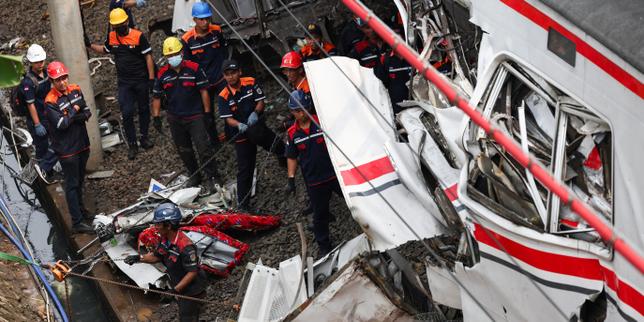
The crash site near Jakarta shows a familiar, grisly scene. Rescue workers in orange jumpsuits spent hours cutting through the wreckage to pull out survivors and those who didn't make it. Preliminary reports suggest a failure in communication or signaling, which is basically code for "someone or something failed to stop a train that shouldn't have been there."
Indonesia’s rail network is a strange mix. On one hand, you have the brand-new Whoosh high-speed line. On the other, you have aging corridors where safety equipment often feels like an afterthought. When you look at the data from the National Transportation Safety Committee (KNKT), a pattern of human error and technical debt emerges. We keep seeing the same mistakes. Over and over. If you want more about the context of this, The New York Times provides an in-depth summary.
The technical term is a "head-on collision," but that doesn't capture the sheer violence of it. One carriage literally climbed on top of another. Imagine being in that second car. One second you're looking at your phone or staring out the window, the next, the ceiling is crushing down on you because the kinetic energy had nowhere else to go.
The Cost of Human Error and Aging Tech
Investigators are looking at the signaling system. In many parts of the Indonesian network, the technology is decades old. Even when it’s modern, the interface between the humans operating the trains and the automated systems can be clunky. If a signal shows green when it should be red—or if a driver misses a signal because they’re fatigued—the results are catastrophic.
I’ve seen this play out in other sectors too. We focus on the shiny new projects because they look great in a ribbon-cutting ceremony. We ignore the "boring" stuff like track maintenance, sensor upgrades, and rigorous driver training. But the boring stuff is what keeps people alive.
PT Kereta Api Indonesia (KAI) has been trying to modernize, but the sheer volume of passengers makes it a constant uphill battle. Jakarta is a sprawling megacity. Millions of people rely on these tracks. When the system is pushed to its absolute limit every single day, the margin for error disappears.
Comparing This to Past Disasters
This isn't the first time Indonesia has mourned a rail disaster, and honestly, if nothing changes, it won't be the last. We remember the Bintaro crash of 1987. That was the darkest day for KAI, with over 150 deaths. You'd hope that such a tragedy would permanently fix the culture of safety. While things have improved since the 80s, the "close calls" that don't make the news are still far too frequent.
The 14 deaths in this latest incident near Jakarta bring the total toll of rail-related fatalities over the last decade into a range that should make any official lose sleep. Every time this happens, there's a flurry of activity. Officials visit the site. They promise a "thorough investigation." They offer compensation to the families. Then, a few months later, the news cycle moves on and the systemic issues remain buried under the ballast.
What Real Reform Looks Like
If we want to stop writing these articles, we need to stop accepting "human error" as a final answer. Human error is a symptom, not a cause. If a driver can make a mistake that leads to 14 deaths, the system is designed poorly. A robust system should have layers of redundancy.
- Automatic Train Protection (ATP): This isn't optional anymore. We need systems that automatically apply the brakes if a train passes a red signal or exceeds the speed limit for a specific section of track.
- Signal Modernization: Move away from manual or semi-automated systems in high-traffic corridors. If the train position isn't being tracked via GPS and integrated digital signaling in 2026, it's a failure of leadership.
- Staff Fatigue Management: Drivers on these lines work grueling shifts. We know that a tired brain makes the same mistakes as a drunk one.
The families of the 14 victims deserve more than a check and a press release. They deserve a rail network where "collision" isn't a word they have to fear every time they buy a ticket.
If you're traveling by rail in Indonesia, stay in the middle carriages. Statistics show they're generally safer in the event of a collision compared to the lead or rear cars. It’s a small, grim piece of advice, but until the infrastructure catches up to the 21st century, it’s the kind of practical reality commuters have to live with. Pay attention to the emergency exits. Don't block the aisles with luggage. Demand better from the Ministry of Transportation. Safety shouldn't be a luxury reserved for the high-speed lines.