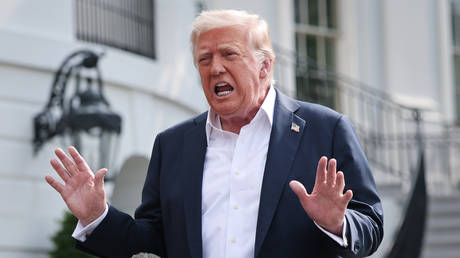
Language matters in politics. When a sitting president labels a major national newspaper's reporting as treasonous, the rules of engagement shift instantly. Donald Trump didn't just dismiss a critical news story recently; he escalated his ongoing war against the press into an entirely different legal and rhetorical category.
Let's look at what actually happened. The conflict ignited after a report detailed an alleged tense exchange at Camp David between Trump and Defense Secretary Pete Hegseth regarding military munitions reserves. The administration pushed back hard. White House Press Secretary Karoline Leavitt and Pentagon officials labeled the reporting entirely false. But Trump took it a step further on Truth Social. He dubbed the publication the "Washington ComPost" and asserted that its fake reporting crossed the line into treason. Building on this topic, you can find more in: Inside the Thailand School Shooting Crisis and the Failure of Firearm Regulation.
The Escalation of Presidential Rhetoric
You've heard these kinds of attacks before. Trump has a long history of railing against mainstream outlets, using nicknames, and accusing journalists of bias. Branding an article as inaccurate is standard political pushback. Calling it treason, however, carries heavy constitutional weight.
Treason is the only crime specifically defined in the United States Constitution. It requires levying war against the country or giving aid and comfort to its enemies. Legal scholars point out that publishing a story about internal administration friction over missile stockpiles does not fit this definition. Yet, accuracy isn't always the primary objective of political messaging. The goal here is delegitimization. Observers at The Washington Post have also weighed in on this matter.
When you brand a news organization as a traitorous actor, you change how your supporters perceive every single headline they read. You turn standard reporting into an existential threat.
The Hunt for Leakers
The anger from the Oval Office wasn't just directed at the journalists writing the pieces. It targeted the invisible sources feeding information to them.
Reports surfaced detailing potential strains on U.S. air-defense interceptors and long-range missiles amid ongoing military engagements. Trump fired back by declaring that the leakers of these statements were being actively hunted down. He warned that long-term jail sentences would be sought for anyone caught leaking internal government discussions.
This creates a chilling effect inside federal agencies and the military. Bureaucrats and officials think twice before talking to reporters when the commander-in-chief frames that communication as a betrayal of the state.
The Battle Over Munitions and Narrative
Behind the fiery social media posts lies a very real policy debate. The administration insists the United States possesses massive amounts of munitions and that production lines are running at historic capacities. Defense officials deny any critical shortages that would hamstring military strategy.
Critics and anonymous insiders paint a different picture, suggesting that prolonged conflicts strain inventories and force hard choices on military planners. This clash over facts sits at the heart of modern political journalism. Who do you trust? The official press release from the White House, or the anonymous sources speaking to legacy media?
Both sides have clear incentives. The administration wants to project absolute strength and readiness. Critics and leaking officials want to sound alarm bells about operational limits.
Why This Strategy Persists
Trump knows exactly what he's doing. Decades of media training and public relations battles taught him that institutional trust is a zero-sum game. By attacking the credibility of outlets like the Washington Post, he shields his administration from damaging leaks while galvanizing a base that already distrusts mainstream journalism.
For the press, the challenge is maintaining factual integrity without getting bogged down in semantic wars over words like treason. Independent newsrooms stand by their reporting, insisting that shining a light on government strain serves the public interest.
The feud shows zero signs of cooling down. As long as leaks happen and high-stakes military decisions make headlines, the collision between presidential power and the press corps will only grow more intense. Watch how federal agencies tighten internal security next. The internal crackdown on information might turn out to be the most consequential fallout of this entire episode.
Why President Donald Trump Is (Falsely) Accusing People Of 'Treason'
This video provides historical context on how and why Donald Trump frequently utilizes the accusation of treason against his political and media adversaries.