You can't bluster your way out of a geographical trap. Right now, the White House is learning that lesson the hard way. Since the joint US-Israeli airstrikes hit Iran on February 28, the Trump administration has tried a familiar playbook: maximum pressure, rapid-fire ultimatums, and a complete naval blockade.
The goal was simple. Bomb the facilities, choke off the oil, and force Tehran to sign a humiliating new deal.
It hasn't worked. Instead, we are looking at a classic military deadlock. The Strait of Hormuz remains effectively closed, oil prices have flirted with $125 a barrel, and Iran's negotiators just handed over a 14-point counterproposal that the president dismissed as "garbage."
The administration keeps setting deadlines that pass without any real action. March 21, March 26, April 6, May 6, and now the mid-May deadlines have all come and gone. Every time, the threats get louder, but the reality on the ground stays stuck.
If this feels incredibly familiar, it should. We've seen this exact movie before, and it has been running for 75 years on the Korean Peninsula. The ongoing crisis in the Persian Gulf is mirroring the structural deadlock of the Korean War. If the White House doesn't recognize the parallels, the US is going to stumble into a prolonged, ruinous conflict with no exit strategy.
The Myth of the Quick Victory
When the US and Israel launched operations in late February, the assumption among Washington hawks was that Iran's economy would collapse immediately under a total naval blockade and targeted bombings. Defense Secretary Pete Hegseth even pushed back against critics who called the operation a quagmire, celebrating what he viewed as an early military triumph.
But tactical success doesn't equal strategic victory.
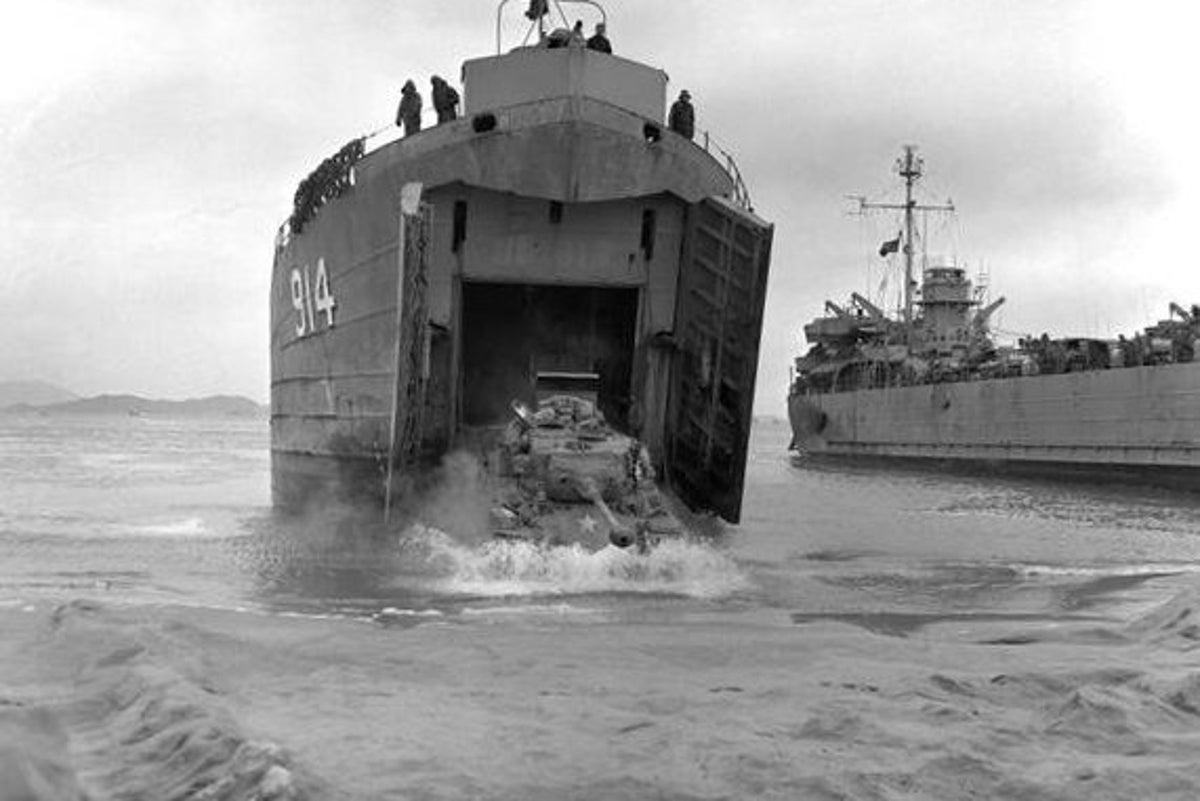
This is exactly what Douglas MacArthur thought in 1950. After the brilliant amphibious landing at Incheon, US-led UN forces smashed through North Korean lines. MacArthur promised the troops would be home by Christmas. He assumed that superior American firepower and complete dominance of the air and sea would force a quick surrender.
Instead, he miscalculated the resilience of an asymmetric adversary and the geopolitical flashpoints surrounding the conflict. The US drove right up to the Yalu River, triggering a massive Chinese intervention that pushed the alliance back down the peninsula and locked the war into a bloody, multi-year stalemate.
In Iran, the modern equivalents of the Yalu River are everywhere. You can destroy radar sites, intercept cargo ships, and crater enrichment facilities, but you cannot change geography. Iran commands the entire northern flank of the Strait of Hormuz. They don't need a massive, blue-water navy to make the shipping lanes unusable. They use mobile anti-ship missiles, smart mines, and swarm drones.
Even with a US naval presence out at sea, Iran has managed to keep the strait locked down. The result? Global supply chains are fractured, and European inflation is spiking due to soaring energy costs. Just like in Korea, the sheer physical reality of the terrain and the adversary's willingness to absorb punishment have neutralized overwhelming American conventional superiority.
Ultimatums Without Leverage
The biggest flaw in the current strategy is the reliance on public ultimatums. President Trump has repeatedly used social media and press briefings to draw lines in the sand. On March 21, he threatened to destroy Iran's largest power plants if the strait wasn't opened in 48 hours. On March 30, he expanded the threat to Kharg Oil Island and desalination plants.
None of those strikes happened. The deadlines pass, the administration extends them, and the cycle repeats.
This constant shifting happens because the administration is finding out that the threat of total destruction doesn't work against a regime that views the conflict as existential. When you threaten to send a country "back to the Stone Age," you leave them with zero incentive to negotiate. You destroy their political room to maneuver.
Look back at the Korean War negotiations at Kaesong and Panmunjom. The US military frequently used massive bombing campaigns—including the near-total destruction of Pyongyang and the bombing of major hydroelectric dams on the Yalu River—to terrorize the communist side into signing an armistice on American terms.
It didn't work. The North Koreans and Chinese dug in deeper. They accepted staggering casualties and economic ruin rather than sign a deal that looked like unconditional surrender. The talks dragged on for two agonizing years while thousands died because neither side could accept the political cost of backing down.
Today, Iranian lead negotiator Mohammad Bagher Ghalibaf is playing the exact same hand. Tehran's 14-point proposal isn't a white flag. It demands a total lifting of the naval blockade, the unfreezing of billions in overseas assets, an end to Israeli operations against Hezbollah in southern Lebanon, and even war reparations. To Washington, these terms look absurd. To Tehran, they are the baseline for a regime that refuses to negotiate from a position of weakness. When Iranian military spokesman Abu al-Fadl Shekarchi warns that they will stop all oil from leaving the region if their own exports are blocked, he isn't bluffing. He's stating their doctrine.
The Trap of Moving Goalposts
A major reason the 75-year-old Korean deadlock never ended is that the political goals kept shifting. The war started as an effort to resist aggression and restore the border at the 38th Parallel. Then it became a mission to unify the peninsula by force. After China intervened, it shifted back to status quo preservation.
Because the objectives were constantly morphing, a permanent peace treaty was never signed. We got an armistice in 1953, and thousands of US troops are still stationed there today, facing down a nuclear-armed state.
The administration is falling into the same trap with Iran. The initial justification for aggressive action was non-proliferation—stopping Iran from crossing the nuclear threshold. But once the bombs started falling, the goals mutated. Suddenly, the demands included halting regional proxy networks, rewriting maritime sovereignty in the Gulf, and pushing for regime change.
This shifting focus makes diplomacy impossible. Stockholm International Peace Research Institute (SIPRI) analysts have pointed out that this exact issue ruined Trump's previous attempts at nuclear diplomacy with North Korea. During his first term, the 2018 engagement with Kim Jong Un collapsed at the 2019 Hanoi Summit because the US suddenly shifted to one-sided denuclearization demands before offering any sanctions relief.
When Iran sees the US apply that exact same maximum pressure script—negotiating via economic blackmail and shifting the goalposts mid-stream—they conclude that survival, not diplomacy, is their only option. Iranian President Masoud Pezeshkian can claim all day that Tehran isn't seeking nuclear weapons, but the current US strategy gives his military every reason to want them.
The Cost of the Forever War
The domestic fallout of a prolonged deadlock is already hitting home. Senator Tammy Duckworth and other critics are pointing out that this military campaign was launched without explicit congressional authorization, risking American lives in another undeclared conflict. The economic strain is real, too. The Pentagon has already burned through tens of billions of dollars in operational costs, and the American middle class is feeling the pinch through high fuel prices and broader economic instability.
During the Korean War, President Harry Truman saw his public approval ratings tank as the conflict ground into a stalemate. The American public grew weary of a war that cost billions, took thousands of lives, and yielded no clear victory. It ultimately cost the Democrats the White House in 1952.
The current administration faces a similar vulnerability. The promise was to end foreign wars and lower costs for families. Instead, the country is tied to a volatile maritime standoff with no clear end state.
What Needs to Change Right Now
To avoid spending the next decade policing a broken, violent status quo in the Persian Gulf, the administration needs to pivot away from theatrical threats and adopt a realistic diplomatic framework.
- Drop the public ultimatums. Setting artificial deadlines via social media destroys American credibility when they pass without action. It signals hesitation to the adversary and unnerves global markets. Move negotiations back to quiet, third-party channels like Qatar or Pakistan.
- Establish a fixed, limited objective. The US cannot force a total geopolitical surrender from Iran without a massive, ground invasion that nobody wants. The White House must decide what matters most. If the priority is keeping the Strait of Hormuz open and securing a nuclear moratorium, then broader regional issues and demands for regime change must be taken off the immediate table.
- Offer synchronized, reciprocal relief. The lesson of Hanoi and the current Gulf deadlock is that an adversary will not trade away its strategic leverage for vague promises. Any Iranian concession on uranium enrichment or maritime security must be met simultaneously with targeted sanctions relief and the unfreezing of specific assets.
The 1953 Korean Armistice proved that you can stop the fighting without solving every political disagreement. In the Middle East, a cold, managed peace that opens the shipping lanes and stops the bombing is vastly superior to an endless, unwinnable war of attrition. It is time to stop hunting for a grand, cinematic victory that geography and history won't allow.
This video analyzing the geopolitical choke points of the Strait of Hormuz offers excellent context on why a conventional military edge cannot easily solve a maritime blockade in this region.