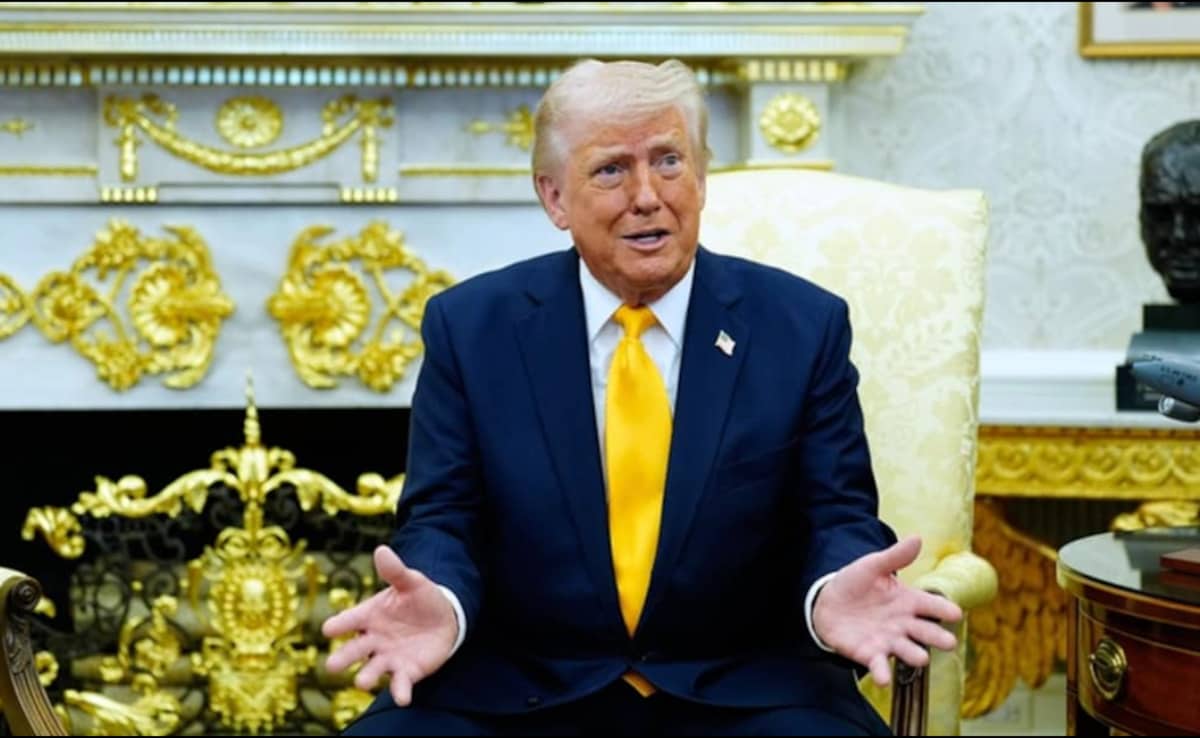
The media had a field day when Donald Trump once remarked that he didn't want to wear a heavy bulletproof vest because it made him look like he had gained twenty pounds. Predictably, the commentary followed a lazy, pre-packaged script. Pundits mocked it as peak vanity, a dangerous obsession with image over personal survival.
They missed the entire point. Recently making news recently: The Legal Fiction of Terminated Hostilities with Iran.
In high-stakes politics and executive protection, optical dominance is not just a vanity metric. It is a security asset. The conventional wisdom says you always optimize for maximum physical protection. The insider reality is that looking vulnerable, bulky, or physically compromised can invite the exact aggression you are trying to deter. Trump’s refusal to wear the standard armor was not a failure of common sense. It was a masterclass in the psychological reality of threat deterrence.
The Fatal Flaw of the Bulky Vest
The standard logic dictates that more Kevlar equals more safety. This is a linear, simplistic view of security that any experienced detail leader will tell you is fundamentally flawed. Additional information into this topic are explored by Reuters.
Body armor works on a trade-off curve. You trade mobility, heat dissipation, and silhouette for ballistic coverage. When you force a high-profile principal into heavy, ill-fitting soft armor or rigid plates, you change how they move. You change how they breathe. Most importantly, you telegraph to the world that they are afraid.
To understand why this matters, you have to understand the mechanics of threat assessment. Assassins and agitators look for weakness. A principal who looks stiff, weighed down, or overtly shielded projects vulnerability. They look like a target who is already on the defensive.
In executive protection, we call this the Armor Paradox. The more visibly protected you are, the more you signal to your adversary that you are soft underneath.
Why Silhouette Dictates Authority
Let's look at the biomechanics of power.
- The V-taper vs. The Block: Human psychology associates a strong shoulder-to-waist ratio with command. Bulky under-armor destroys this silhouette, turning a tall figure into a rectangular, sluggish target.
- The Perception of Agility: High-value targets need to project the ability to move quickly. If you look like you are carrying an extra twenty pounds of dead weight, you project physical deceleration.
- The Heat Factor: Heavy vests trap core heat. A sweating, visibly uncomfortable leader looks panicked. On television, sweat is read as fear, not thermal insulation.
When Trump rejected the vest because of the weight profile, he was instinctively managing his psychological perimeter. He understood that in the arena of public perception, looking formidable is the first line of defense.
The Mechanics of Concealable Armor
Let's address the technical reality that the critics ignore. Not all armor is created equal, but the media covers it as if everyone is wearing a standard-issue military flak jacket.
There are three main categories of personal ballistic protection used in executive details, and each has massive operational downsides that the public never hears about.
| Armor Type | Protection Level | Thickness | The Real-World Catch |
|---|---|---|---|
| Level IIA / II Soft Armor | Handgun rounds (.9mm, .40 S&W) | 4mm - 5mm | Bunching. It rides up the torso when sitting, creating a visible shelf under the chin. |
| Level IIIA Soft Armor | High-velocity handguns (.44 Magnum) | 6mm - 8mm | Rigidity. It restricts torso rotation and creates unmistakable wrinkling across the suit fabric. |
| Level III / IV Hard Plates | Rifle rounds (5.56mm, 7.62mm) | 15mm - 25mm | Immobility. Unusable for extended public speaking or dynamic movement in tailored clothing. |
If you put a 70-something-year-old man in a Level IIIA vest under a bespoke Italian wool suit, the fabric behaves differently. The shoulders pull. The lapels pop open. The jacket wrinkles abnormally across the ribs.
For someone whose brand is built on projecting unyielding strength, these small visual cues are catastrophic. They disrupt the image of control.
The Illusion of Absolute Safety
People love the illusion of safety. They want to believe that there is a magic vest that makes you invincible. This is a comforting lie.
I have spent years around security details where clients demanded maximum protection, only to abandon the gear after three days because they could not perform their jobs. Security that prevents you from executing your core function is not security; it is a cage.
In the case of a political figure, the core function is communication and projection. If the armor compromises the delivery of the message, the armor is failing the mission.
The Threat of the Non-Ballistic Attack
Focusing obsessively on ballistic protection ignores the reality of modern threats. High-profile figures face risks that Kevlar cannot stop:
- Blunt Force Trauma: A vest stops the bullet from penetrating, but the kinetic energy still breaks ribs and causes internal bleeding.
- Head and Neck Vulnerability: The most visible parts of a speaker remain completely exposed.
- Psychological Warfare: A leader who looks intimidated has already lost the engagement before a single word is spoken.
By optimizing entirely for the low-probability, high-impact event of a torso shot, you degrade the high-probability necessity of projecting absolute confidence every single day. Trump chose to accept the physical risk to maintain the psychological advantage. It was a calculated trade-off.
Psychological Deterrence vs. Physical Mitigation
The core disagreement here is between two different philosophies of protection: detection/deterrence versus mitigation.
The academic consensus, pushed by pencil-pushers who have never stood on a stage in front of thousands of people, prioritizes mitigation. They want you to wear the armor, wear the helmet, and stay behind the bulletproof glass. They want to eliminate the physical consequence of an attack.
The practitioner's reality prioritizes deterrence. You prevent the attack from being conceived in the first first place.
You do this by maintaining an aura of invincibility. You move with speed. You speak with authority. You project a physical presence that suggests any attempt to disrupt the event will be met with overwhelming, immediate force.
When you strap a heavy, movement-restricting vest onto a principal, you trade your deterrence for mitigation. You make them easier to attack in the hope that the attack hurts less. That is a loser’s strategy.
Stop Treating Executive Protection Like a Math Problem
The public believes that security is a checklist. Did they check the bags? Is there a metal detector? Is he wearing the vest?
It does not work that way. True security is an art of subtle compromises.
If a client tells me they feel restricted by their gear, I do not tell them to suck it up. I change the strategy. We increase the standoff distance. We deploy more plainclothes countersnipers. We tighten the physical perimeter.
You do not compromise the principal's ability to do their job just to make the security team's job easier.
Trump’s critics viewed his comments through the lens of superficiality. They thought he was just worried about looking heavy on camera. What they failed to understand is that for a global political figure, how you look on camera is the job.
If you look weak, you invite chaos. If you look immovable, you command the room.
The next time you see a leader rejecting a standard safety measure, stop assuming it is ego. It might just be the highest level of threat management you are simply not trained to see.