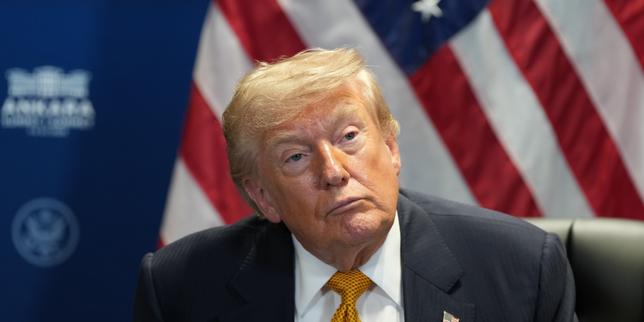
Don't believe the rhetoric coming out of the NATO summit in Ankara. When Donald Trump declared that the mid-June interim ceasefire with Iran was dead, he wasn't just talking tough for the cameras. He was signaling a massive, dangerous shift in the Middle East. Within hours of his announcement, U.S. Central Command forces launched a second consecutive night of heavy strikes inside Iran. This isn't just a minor skirmish. It's a fundamental collapse of a highly touted diplomatic effort, and the consequences are rolling through global energy markets right now.
The main driver behind this sudden escalation is the strategic bottleneck of the Strait of Hormuz. Washington claims the strikes are direct retribution for Iranian attacks on commercial oil tankers transiting the waterway. But if you look closer at the timeline, the real trigger happened behind closed doors when the U.S. Treasury Department officially revoked a license allowing Iran to sell its crude oil. That move effectively tore up the Memorandum of Understanding signed on June 18.
Iran reacted exactly how anyone watching the region expected them to. They went after the shipping lanes. Now, we are looking at a hot military conflict that threatens to engulf the entire region, no matter how much the White House insists this will end quickly.
The Mirage of the Sixty Day Peace
The June agreement was fragile from the start. Both sides spun it as a victory to their domestic audiences, but it left the most critical issues completely unresolved. Washington wanted a pause on Iran's uranium enrichment program, while Tehran desperately needed relief from crushing economic sanctions. For about two weeks, things remained quiet. Vice President JD Vance even noted during a campaign stop in Milwaukee that the Iranians "were well behaved for about a week" before things fell apart.
The breaking point came when the U.S. decided to tighten the economic screws yet again, cancelling the oil export authorizations. For Iran, an agreement that doesn't allow them to export oil is completely worthless. Their immediate asymmetric response was to target international transit.
The United Kingdom Maritime Trade Operations reported multiple commercial ships hit by unidentified projectiles near the strait. A Liquefied Natural Gas tanker caught fire after being struck near Limah, Oman, and a Very Large Crude Carrier suffered port-side damage just outside the waterway. These weren't random acts. They were calculated messages from Tehran showing that if they can't sell oil, nobody else will move it through the region safely.
Mapping the American Bombing Campaign
The response from CENTCOM was immediate and expansive. The first wave hit over 80 targets using precision-guided munitions. While early reports from state media in Tehran tried to minimize the damage by reporting only a dozen explosions, the reality on the ground is much more severe. The military campaign is explicitly designed to dismantle Iran’s coastal defense infrastructure.
According to defense officials, the operations have successfully targeted:
- Coastal radar installations and early-warning surveillance networks.
- Surface-to-air missile batteries and air defense hubs protecting key ports.
- Drone launch sites and command-and-control bunkers used by the Islamic Revolutionary Guard Corps.
- More than 60 IRGC fast-attack boats used to harass commercial shipping lanes.
The second night of bombings expanded the target list significantly. Explosions rocked major southern port cities like Bandar Abbas, Chabahar, and Konarak. More alarming are the strikes reported near Bushehr. That city houses Iran's only commercial nuclear power facility and sits directly adjacent to Kharg Island, the country's primary oil export terminal.
Iranian state broadcaster IRIB confirmed the deaths of at least eight military personnel from their naval and air forces during the initial attacks. By striking deep into these sovereign logistics hubs, the U.S. has escalated far beyond simple defensive posturing.
The Flawed Logic of Fast Warfare
Trump told reporters in Ankara that he expects this entire flare-up to be over "very quickly" and that the administration isn't looking for a long-term engagement. This displays a dangerous misunderstanding of how the Iranian regime operates. Tehran doesn't fight conventional wars that finish in a week. They rely on strategic patience, proxy networks, and asymmetric disruption.
While American stealth fighters bomb coastal radars, Iran's regional allies are already shifting their postures. The Israeli military just confirmed the capture of a senior Hezbollah operative from the elite Radwan Force in southern Lebanon. This proves that the multi-front pressure cooker is still boiling. If the U.S. continues to hammer targets inside mainland Iran, expecting the regime to just back down and return to the negotiating table is wishful thinking.
The reality is that regional actors like Qatar and Pakistan are already panicking, openly begging both sides for immediate de-escalation. They understand what Washington seems to ignore. A disrupted Strait of Hormuz means immediate global economic shockwaves, spiking insurance premiums for maritime shipping, and volatile oil prices that won't stay quiet for long.
To protect your operations or investments from the fallout of this sudden shift, you need to stop watching the political statements and start tracking the physical metrics. Monitor the daily shipping transit numbers through the Strait of Hormuz via maritime tracking databases. Watch the fluctuating war-risk insurance premiums issued by global underwriting syndicates. These numbers will tell you the true state of the conflict long before the official press releases admit it.