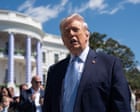
Donald Trump just proved once again that he’s the only person who can walk a country to the very edge of a cliff and then claim he’s a hero for not jumping. On Tuesday evening, the President announced a 14-day provisional ceasefire with Iran, a move that comes just hours after he threatened to "wipe out a whole civilization" if Tehran didn’t cave to his demands regarding the Strait of Hormuz.
The whiplash in D.C. is real. One minute the world is bracing for a kinetic war with a regional power, and the next, Trump is on social media calling Iran’s 10-point proposal "workable." If you're confused, you're not alone. Political leaders across the spectrum are scrambling to figure out if this is a masterstroke of "peace through strength" or a desperate attempt to find an exit ramp from a conflict that was spiraling out of control.
The 11th hour deal that stopped the bombs
The timing of this ceasefire wasn't accidental. It came roughly 90 minutes before a self-imposed deadline that would have seen U.S. forces strike Iranian power plants and energy infrastructure. According to reports, Pakistan acted as the primary intermediary, with China working the phones in the background to prevent a global energy crisis.
Trump’s shift from "annihilation" to "diplomacy" in less than 24 hours is classic Trump. He claims we've "exceeded all military objectives," but critics say he’s just realizing that a full-scale war with Iran is a political swamp he can't afford. The deal, at its core, hinges on the "complete, immediate, and safe opening" of the Strait of Hormuz. In exchange, the U.S. pauses its bombardment for two weeks.
Washington reacts with relief and rage
The response on Capitol Hill highlights the deep fractures in American politics. Senate Democratic Leader Chuck Schumer didn't mince words, basically calling the President’s bluff. He noted that Trump is "desperately searching for any sort of exit ramp" from his own bellicose rhetoric. Schumer, along with Hakeem Jeffries and Nancy Pelosi, has been vocal about the "wanton war of choice" that has already sent gas prices soaring and destabilized the global economy.
Voices from the Left
- Alexandria Ocasio-Cortez: She’s pushing for the 25th Amendment, arguing that threatening "genocide" against the Iranian people makes a leader unfit. To her, a two-week pause "changes nothing" while the threat of total destruction still looms.
- Hakeem Jeffries: Called the administration’s strategy "unhinged" and "unconscionable," pointing out that the U.S. entered this hostilities phase without a clear exit strategy.
Voices from the Right
On the other side of the aisle, Republicans are largely circling the wagons, though some are doing it with more caution than others.
- Senator Rick Scott: He’s all in, calling the ceasefire "excellent news" and a win for the "peace through strength" doctrine.
- Senator Lindsey Graham: Even a known hawk like Graham is playing it careful. He expressed hope for diplomacy but insisted that any deal must include the U.S. taking control of Iran’s highly enriched uranium. He’s not ready to let Iran off the hook just yet.
- Dan Crenshaw: He told everyone to "take a breath" and stop taking the President’s rhetoric literally, arguing that the language of power is the only thing Tehran respects.
The reality of the two week window
A 14-day ceasefire is a heartbeat in the world of geopolitics. It’s barely enough time to get negotiators in a room, let alone solve decades of animosity. The National Iranian American Council has already called the agreement "tenuous." For this to hold, Trump might actually have to do something he hates: stay disciplined.
He’ll also have to manage his relationship with Benjamin Netanyahu. Some analysts suggest that a sustainable peace requires the U.S. to rein in Israeli strikes, which is a tall order for an administration that has historically given Israel a green light.
What this means for you
If you’re watching this from home, the most immediate impact is likely at the pump. The threat of a closed Strait of Hormuz sent oil markets into a frenzy. This ceasefire provides a temporary cooling effect, but don't expect gas prices to drop overnight. Markets hate uncertainty, and a two-week fuse is the definition of uncertain.
The "10-point proposal" Trump mentioned includes provisions for U.S. control over certain Iranian nuclear assets and a framework for regional de-escalation. However, the details are murky. We don't know what concessions the U.S. made or if this is just a tactical pause to reload.
The path forward
This isn't a peace treaty; it's a timeout. If you want to stay ahead of how this affects your wallet and the world, watch the Strait of Hormuz. If commercial shipping doesn't resume with 100% transparency within the next 48 hours, the ceasefire is effectively dead.
Keep an eye on the following:
- The White House meeting with NATO’s Mark Rutte: This will signal if our allies are actually on board or just nodding along to avoid the blast radius.
- Congressional War Powers Resolution: Democrats are trying to force a vote to permanently end the conflict. If they get GOP defectors, Trump’s leverage changes instantly.
- IAEA Reports: Any movement of uranium during this 14-day window will be seen as a violation and could trigger the "annihilation" rhetoric all over again.
The next two weeks will determine if we’re headed for a historic diplomatic win or the start of a much larger, much darker chapter in the Middle East. Don't get comfortable just yet.