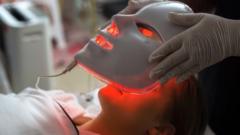
You’ve seen the photos. Everyone from A-list celebrities to your neighbor is posting selfies wearing glowing red plastic masks that look like something out of a low-budget sci-fi flick. They claim these devices fix everything. Wrinkles? Gone. Acne? Vanished. Bad mood? Solved by the power of light. It sounds like literal magic, and honestly, the science says it kind of is—if you’re actually using the right equipment.
Most people are doing it wrong. They buy a $30 knockoff from a random online marketplace, use it for two minutes while scrolling their phone, and wonder why their skin looks exactly the same. Red light therapy, or photobiomodulation if you want to sound fancy at a dinner party, isn't just about shining a red bulb on your face. It’s about physics. It’s about energy. If the light doesn't hit your cells with enough intensity at very specific wavelengths, you’re just sitting in a dark room with a glow-stick on your nose.
How red light therapy actually talks to your cells
Your body reacts to light in ways you might not realize. Think about how sunlight triggers vitamin D production. Red light works on a similar biological "switch." When you expose your skin to specific wavelengths of red and near-infrared light—usually between 630 and 850 nanometers—your mitochondria soak it up.
Think of mitochondria as the power plants of your cells. They produce ATP, which is the currency your body uses for energy. When these power plants get a boost from red light, they produce more ATP. This extra energy allows cells to repair themselves faster. It's like giving your skin cells a double espresso.
This isn't just theory. NASA originally looked into this to help astronauts grow plants in space and later found it helped heal wounds that wouldn't close in zero gravity. Since then, thousands of peer-reviewed studies have backed up the benefits. The Journal of the American Academy of Dermatology has published research showing that red light can significantly increase collagen density. Collagen is what keeps you looking young. Without it, everything starts to sag.
The massive difference between red and near-infrared light
I see people get this confused constantly. They buy a device that only has red LEDs and think they’re getting the full treatment. You aren't.
Red light (around 660nm) is great for the surface. it targets skin texture, fine lines, and redness. It’s the "beauty" light. Near-infrared light (850nm) is invisible to the naked eye, but it’s the heavy hitter. This wavelength travels deeper into your body. It reaches muscles, nerves, and even bone. If you’re trying to recover from a brutal workout or deal with chronic joint pain, red light alone won't do much. You need that invisible near-infrared punch to get below the surface.
Top-tier devices use a mix. If your mask or panel doesn't let you toggle both or use them simultaneously, you're missing half the story. Cheap masks often use low-quality bulbs that don't actually output the frequency they claim on the box. They’re basically red Christmas lights.
Why your $50 LED mask is probably useless
Let’s talk about irradiance. This is the "power" of the light hitting your skin. If the light is too weak, nothing happens. It's like trying to cook a steak with a hair dryer. It might get warm, but you aren't getting a sear.
Most consumer-grade masks have very low irradiance. They have to, because they sit directly on your skin. If they were too powerful, they’d get hot and uncomfortable. This is why professional treatments at a clinic involve big panels that sit a few inches away. Those panels are powerful enough to push photons deep into your tissue.
If you're using a mask, you have to use it consistently. We’re talking 10 to 20 minutes a day, every single day. If you skip a week, the "charge" in your cells dissipates. It’s a cumulative process.
Common mistakes that ruin your results
- Wearing sunscreen during treatment. Sunscreen is designed to block light. If you have SPF on, the red light can't get through.
- Using it over heavy makeup. Foundation reflects the light. Always start with a clean, dry face.
- Expecting overnight miracles. This isn't Botox. You won't wake up tomorrow looking ten years younger. It takes 8 to 12 weeks of consistent use to see real structural changes in the skin.
- Buying based on price alone. A good set of LEDs is expensive to manufacture. If a device is dirt cheap, the components are likely garbage.
Can red light therapy help with more than just skin
The craze has moved beyond vanity. People are now using full-body beds for systemic inflammation. It’s becoming a staple in pro sports locker rooms. LeBron James and various NFL stars use red light for recovery because it helps clear out lactic acid and reduces muscle soreness.
There’s also some fascinating research regarding brain health. Some clinics use "transcranial" red light therapy to help with brain fog and even symptoms of depression. The light can actually penetrate the skull—only a tiny bit, but enough to potentially stimulate neuronal mitochondria. It’s a frontier that’s still being mapped out, but the early data is wild.
Even sleep quality can improve. Unlike the blue light from your phone that kills melatonin, red light is "biologically quiet." Using it in the evening can help your body wind down while still providing a boost to your skin.
Safety and the blue light trap
Is it safe? Generally, yes. It’s non-ionizing radiation, meaning it doesn't damage DNA like UV rays from the sun do. But there’s a caveat. Many "multi-color" masks include a blue light setting for acne. Be careful with that. While blue light kills bacteria, it can also damage your retinas if you aren't wearing eye protection.
Always look for a device that is FDA-cleared. This doesn't mean the FDA "approves" it like a drug, but it means the manufacturer has proven the device is safe and does what it says it does. If a company can't show you their FDA clearance or clinical testing data, keep your wallet in your pocket.
How to choose a device that actually works
Stop looking for the prettiest mask and start looking at the specs. You want to see "mW/cm²" mentioned. That’s the irradiance. For a panel, you want at least 100mW/cm² at a distance of six inches. For a mask, since it’s closer, the number can be lower, but it still needs to be backed by testing.
Check the wavelengths. You want 660nm for skin and 850nm for deep tissue. Anything else is usually filler. Some companies try to sell "amber" or "green" light. The evidence for those is much thinner than the mountain of data we have for red and near-infrared.
Don't buy a "wand" unless you have hours of free time. Those tiny little sticks cover about two square inches of skin at a time. To treat your whole face effectively, you’d be standing in front of the mirror for half the night. Get a panel or a full-face mask.
Practical steps for your first 30 days
If you're ready to try this, don't just wing it.
- Measure your progress. Take a high-resolution photo in the same spot with the same lighting today. Do it again in 30 days. You won't notice the change in the mirror because it happens slowly.
- Start slow. Even though it’s safe, some people get a "detox" response or slight redness if they overdo it initially. Start with 5 minutes.
- Hydrate. Better cellular function requires water. Drink a glass before and after your session.
- Target your problem areas. If you have a bad knee, don't just use the light on your face. Use a flexible wrap or a panel to hit that joint directly.
Red light therapy is one of the few "biohacks" that actually lives up to the hype, provided you aren't using a toy. Invest in a high-output device, use it while you listen to a podcast, and be patient. The glow is real, but it’s built at the cellular level over months, not minutes.