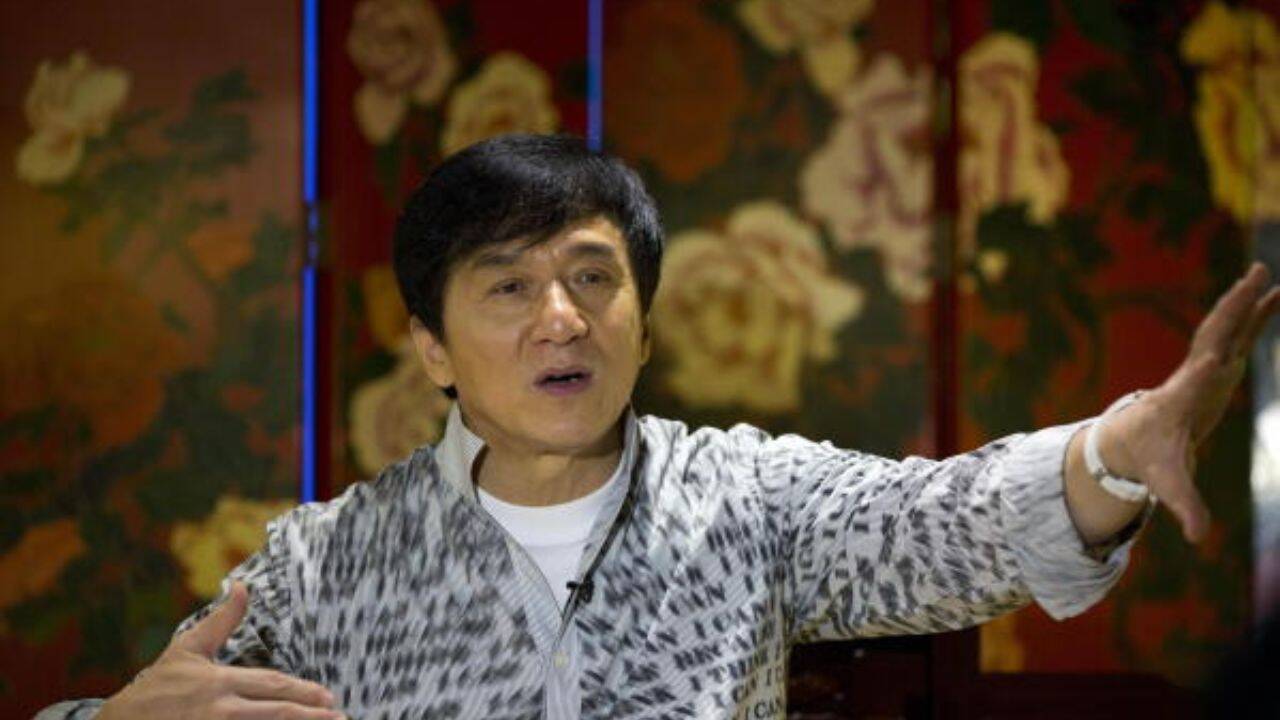
Bruce Lee died so Jackie Chan could spend forty years apologizing for not being him.
That is the sanitized mythology Hollywood and nostalgic film critics love to peddle. The lazy consensus goes like this: Bruce Lee was the brooding philosopher-king who brought martial arts to the Western world with deadly intensity, and Jackie Chan was the cheerful, self-deprecating clown who survived by turning slapstick comedy into kung fu choreography. The standard narrative treats Chan as the ultimate anti-Bruce, the guy who subverted the archetype by falling down scaffolding instead of striking stone-faced poses. For a deeper dive into similar topics, we recommend: this related article.
The narrative is dead wrong.
Chan did not escape the shadow of Lee by accident. He spent his early career trying desperately to wear Lee's oversized boots, breaking his nose and swallowing his teeth playing faceless, interchangeable clones in joyless exploitation flicks. The moment everything clicked was not when he decided to be different; it was when he realized that copying Lee's gravity was a mathematical loser. You cannot out-stoic a ghost. For additional information on the matter, extensive reporting can be read at IGN.
Yet, aspiring creators across every modern industry swallow the same toxic myth. They study the pioneer, copy the aesthetic, and wonder why the audience yawns. They miss the brutal mechanics of distinction.
Let us look at the actual physics of what happened.
The Myth Of Originality Through Contrast
When people talk about Jackie Chan wanting to be himself rather than the next Bruce Lee, they frame it as an artistic awakening. That is romantic nonsense. It was a survival strategy dictated by market saturation.
During the late seventies, Golden Harvest studios had a assembly line churning out clones of the Dragon. Audiences were drowning in scowling men with nunchucks screaming at the sky. If you entered that market doing a slightly worse impression of Bruce Lee, you starved. Chan did not pivot to comedy because he woke up one day with a passion for pratfalls. He pivoted because playing the grim hero made him invisible.
I have watched digital agencies, tech startups, and independent creators make this exact mistake for two decades. They look at the undisputed titan in their niche—the market leader who captured the flag first—and they try to build a slightly softer, slightly quirkier version of that monopoly. They think differentiation means changing the font or adding a joke to the pitch deck.
That is not differentiation. That is submission with a smile.
True distinction requires a complete re-engineering of your constraints. Chan could not match Lee's terrifying, feline menace. His physical frame was smaller, his face was expressive rather than chiseled, and his background in the Peking Opera taught him timing, acrobatics, and theatricality, not street-fighting lethality.
Instead of hiding those weaknesses, he weaponized them. He introduced vulnerability.
Imagine a scenario where Bruce Lee gets hit in a fight. It rarely happens, and when it does, it serves as a narrative insult that triggers a lethal counter-attack. Now imagine Jackie Chan getting hit. He winces. He shakes out his hand. He looks at the camera with wide, terrified eyes that say, this hurts terribly and I want to go home.
That is not just comedy. That is an entirely different emotional contract with the audience.
The Economics Of Pain And Precision
Let us talk about the dirty secret of physical authority. The cinematic world worships the stunt, but it ignores the architecture of risk.
Chan built his empire on the premise of visible consequences. When he jumped off a clock tower or shattered a pane of sugar glass over his skull, the audience knew two things: the danger was real, and the man taking the hit was terrified.
Critics love to praise his choreography, but they miss the economic engine behind it. In a standard Hollywood action film, the hero is invincible until the final reel. The fights are weightless CGI ballets where punches lack concussive force. The audience’s brain registers the spectacle as a cartoon, which means the emotional stakes flatline.
Chan inverted the equation. He made the environment the primary combatant. A ladder, a row of bicycles, a kitchen filled with frying pans—these were not set dressings; they were active participants that dictated the choreography.
Modern creators fail because they treat their tools the way bad action directors treat a soundstage. They use standard templates, standard software, standard growth funnels, and expect a unique outcome. They want the box office of a pioneer while using the assembly-line blueprint of a clone.
If your strategy relies on doing what the market leader does, but with a ten percent discount or a slightly friendlier tone, you are already bankrupt. You just haven't stopped moving yet.
The Trap Of The Pivot
People love to ask why modern action cinema lacks the kinetic brilliance of the eighties and nineties Hong Kong golden age. The answer is simple: nobody wants to bleed for the craft anymore, and studios are terrified of liability.
People also ask how to find their unique voice in a crowded digital landscape. The question itself is flawed. You do not find a voice by searching for it like loose change under a couch cushion. You forge it by slamming your specific limitations against an unforgiving market until something breaks.
Chan’s career offers a brutal masterclass in this process:
- Acknowledge your disadvantages immediately. If you cannot out-spend, out-intimidate, or out-engineer the dominant player, stop playing their game. Do not adopt their metrics.
- Turn your friction into your feature. The reason Chan used props is that he had to fill space and slow down opponents he could not realistically overpower in a pure striking exchange. Limitation breeds invention.
- Never hide the cost. The reason audiences connected with Chan’s later work is that they saw the bandages. In an era of digital perfection, synthetic gloss is cheap. Genuine friction leaves scars.
I have watched founders burn through millions of venture capital dollars trying to manufacture a polished, corporate brand identity that appeals to everyone. They sand down every sharp edge until their company looks like a stock photo catalog. Then they wonder why conversion rates are flat and customer loyalty is non-existent.
They wanted to be Bruce Lee. Clean, untouchable, and universally revered.
They forgot that the most valuable real estate in any market belongs to the person who is willing to look ridiculous, take the hit, and get back up on camera.
Stop trying to protect your ego. Stop looking for the safe, approved playbook. Stop running from your limitations.
Fall off the clock tower.