The international press is recycling a tired script. They see a lawyer and media commentator like Sonia Dahmani handed a fresh eight-month prison sentence and immediately reach for the "death of democracy" template. It is easy. It is predictable. It is also remarkably shallow. While global observers weep over the optics of a courtroom drama, they ignore the structural reality of a North African state attempting to define the boundaries of its own sovereignty against a backdrop of regional instability and information warfare.
To understand the Dahmani case, you have to stop viewing Tunisia through a purely Eurocentric lens that prioritizes individual rhetoric over collective institutional stability. The consensus is that this is a simple crackdown on dissent. The reality is far more complex: it is a stress test for Decree 54, a piece of legislation that Western critics love to hate but which represents a desperate attempt to regulate a digital space that has become a breeding ground for civil unrest.
The Myth of the Neutral Commentator
The prevailing narrative frames Sonia Dahmani as a mere victim of "thought crime." This ignores the weight of influence. In a fragile transition state, a microphone is not just a tool for expression; it is a weapon. When Dahmani made her now-infamous comments questioning the state of the country—asking "what kind of great country are we talking about?"—she wasn't just offering a hot take. She was poking a bruise in a nation struggling to maintain its national identity while dealing with a massive migration crisis and economic strangulation.
Critics argue that jail time for a sarcastic remark is disproportionate. From a purely libertarian standpoint, they are right. But governance isn't a philosophy seminar. I have seen states dissolve because they allowed "commentary" to evolve into a permanent state of delegitimization. When the state’s very foundation is questioned daily on prime-time television, the result isn't a "vibrant marketplace of ideas." The result is a vacuum of authority.
Decree 54 The Tool Everyone Hates but No One Can Replace
Everyone points to Decree 54 as the villain of this story. Promulgated by President Kais Saied in 2022, it aims to combat "false information and rumors." The international community treats this as a uniquely Tunisian overreach. This is hypocritical.
Across Europe and North America, "Online Safety Acts" and "Anti-Disinformation Task Forces" are popping up with the same goal: controlling the narrative. The only difference is that Tunisia isn't hiding behind the veneer of algorithmic transparency. It is using the law to assert that words have consequences.
- The Sovereignty Argument: Tunisia is currently navigating a precarious path between IMF demands and popular domestic expectations.
- The Security Variable: The North African corridor is currently the most volatile it has been in decades.
- The Information Vacuum: Without a framework like Decree 54, the state risks being steamrolled by external interests using domestic voices as proxies.
Dahmani’s sentence isn't an anomaly; it is the logical application of a law designed to stabilize the ship. Whether you like the captain is irrelevant to whether the hull is leaking.
Why the Legal Profession is Not a Shield
There is a loud outcry from the Tunisian Bar Association and international legal bodies. They claim that the arrest of a lawyer inside the "House of the Lawyer" is a sacrilege. This is the "professional immunity" fallacy.
The idea that certain professions should be exempt from the legal consequences of their public speech is an elitist holdover. If a plumber or a shopkeeper made statements that the state deemed a threat to public order, would the international community be up in arms? No. The outrage is fueled by class solidarity among the global professional elite.
Dahmani’s status as a lawyer should arguably hold her to a higher standard of legal precision, not grant her a free pass to engage in rhetorical destabilization. The Tunisian court isn't attacking the law; it is asserting that the law applies to those who practice it just as much as those who don't.
The Migration Context the Critics Ignore
You cannot discuss the Dahmani case without discussing the sub-Saharan migration crisis. This is the elephant in the courtroom. Tunisia has become a reluctant gatekeeper for Europe. The tension this creates within the country is explosive.
When public figures lean into rhetoric that complicates the state's handling of this crisis, they aren't just "critiquing." They are adding fuel to a fire that could lead to actual, physical violence in the streets of Sfax or Tunis. The state’s crackdown is a blunt-force instrument used to prevent a total breakdown of social cohesion. It is ugly. It is harsh. But the alternative is not a Scandinavian-style debate; it is chaos.
The Failure of the "Spring" Logic
The biggest mistake the "People Also Ask" crowd makes is assuming that Tunisia is still on the 2011 trajectory. That trajectory failed. It led to a decade of legislative paralysis, economic decay, and the rise of political actors who were more interested in ideological purity than fixing the phosphate mines or the tourism sector.
Kais Saied’s "Correction of the Path" in 2021 was a response to a failing state. The judicial moves against figures like Dahmani are part of a broader consolidation.
- Fact: The old system was a revolving door of corruption.
- Fact: The current system prioritizes order over the optics of "pluralism."
- Observation: Most Tunisians are more worried about the price of flour than the jail sentence of a TV pundit.
This is the uncomfortable truth the West refuses to digest. The "democratic" era left the average Tunisian poorer and more insecure. If the current administration believes that silencing a few loud voices is the price of keeping the lights on, they have a substantial—if quiet—mandate to do so.
The Legal Reality vs. The Media Circus
Dahmani’s defense team is playing to the cameras. They speak of "kidnappings" and "systemic torture." This is the language of escalation. By turning a legal procedure into a human rights spectacle, they force the state’s hand.
Imagine a scenario where the state backed down every time a lawyer shouted "dictatorship" at a camera. The judiciary would cease to function. The eight-month sentence for "spreading false news" is a message to the entire media class: the era of consequence-free commentary is over.
Is it a "fair" sentence? In a vacuum, perhaps not. In the context of a nation trying to prevent its own disintegration? It is a calculated move.
The Strategy of Disruption
The real story isn't that a critic went to jail. The story is that the Tunisian state is no longer asking for permission to govern. For years, Tunis looked to Paris, Washington, and Brussels for a thumbs-up on its internal policies. That era ended in 2021.
The Dahmani case is a signal to the international community that Tunisia will define its own red lines. You can call it an "authoritarian turn" all you want, but from the inside, it looks like a state finally growing a spine.
Stop asking if this is "good for democracy." Start asking if it is necessary for the survival of the state. Those are two very different questions, and only one of them matters to the people actually living in Tunis.
The Western press can keep their headlines. Tunisia is busy dealing with reality.
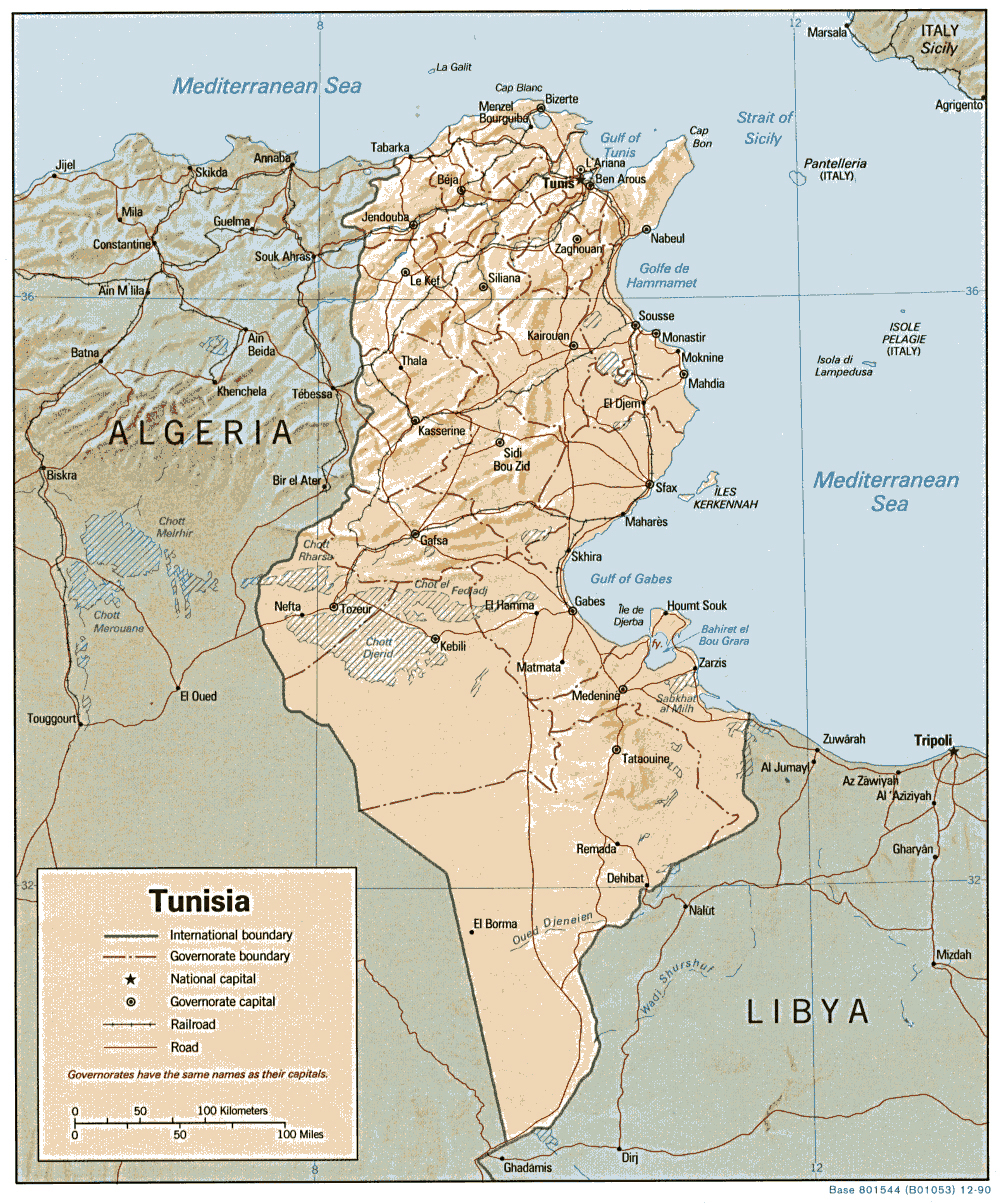
If you want to understand what's happening in North Africa, stop reading the human rights reports and start looking at the maps and the ledgers. The Dahmani sentence isn't a bug in the system; it’s a feature of a new, harder version of Tunisian sovereignty that doesn't care about your Twitter feed.