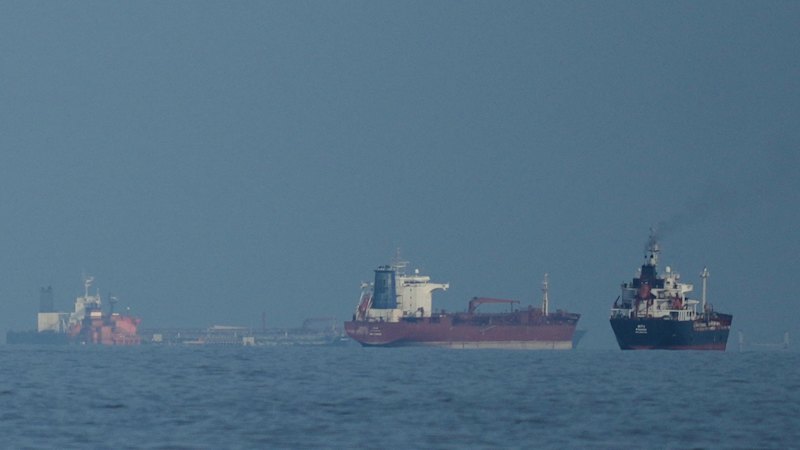
The steel hull of a modern supertanker is surprisingly thin. When you stand on the bridge of a vessel like the one targeted this week in the Strait of Hormuz, you feel the vibration of engines capable of moving two million barrels of crude oil, yet you are separated from the salt spray by only a few inches of metal. It is a fragile shell for a cargo that keeps the lights on in Tokyo, the factories humming in Berlin, and the ambulances running in Chicago.
At the narrowest point of the Strait, the shipping lanes are only two miles wide. To the north lies the jagged, mountainous coastline of Iran. To the south, the jagged, rocky points of Oman. It is a geographic choke point that handles roughly 20% of the world’s liquid petroleum gas and oil consumption every single day. Expanding on this idea, you can find more in: The Real Reason Pope Leo is Squaring Off with Washington from Luanda.
When the first reports of gunfire broke across the radio frequencies on Tuesday, the global economy didn't just flinch. It held its breath.
The View from the Bridge
Picture a captain. We’ll call him Elias. He isn't a politician or a military strategist. He is a man who worries about hull pressure, crew fatigue, and the precise salinity of the water. As his tanker entered the Strait, the "gateway to the world" suddenly felt like a hallway with the lights turned out. Experts at The Guardian have also weighed in on this matter.
The news reports describe the event in clinical terms: Iranian naval assets engaged a merchant vessel. Warning shots were fired. Waterway restrictions were reimposed.
But for Elias and his crew, the reality was the deafening crack of a deck-mounted gun and the sight of fast-attack craft swarming like hornets around a slow-moving giant. This isn't just "chaos" in a waterway. It is the sudden, violent realization that the invisible threads of global trade are incredibly easy to snap.
The Strait is a paradox. It is the most vital artery in the global energy body, yet it is governed by a set of rules that feel increasingly prehistoric. Under the United Nations Convention on the Law of the Sea, ships enjoy the right of "transit passage." This means they can move through the territorial waters of coastal states as long as they do so continuously and expeditiously.
When Iran imposes "restrictions," they aren't just changing a few maritime bylaws. They are effectively putting a tourniquet on the world's neck.
The Invisible Toll on Your Doorstep
We often treat these geopolitical flare-ups as distant dramas, things that happen to people in jumpsuits on the other side of the planet. We shouldn't.
Consider the math of a closed Strait. If the passage were truly blocked—not just restricted, but sealed—the world would lose access to 21 million barrels of oil per day. There is no pipeline network on earth, no fleet of trucks, no alternative route through the Cape of Good Hope that can bridge that gap quickly enough to prevent a systemic shock.
The price of Brent Crude doesn't just go up by five or ten dollars. It teleports.
Within forty-eight hours of a total shutdown, the cost of shipping a single container from Shanghai to New York would double as fuel surcharges eat into the margins of every logistics company. That's when the "human element" hits home. The price of a gallon of milk, the cost of a plastic toy, the heating bill for a family in a drafty apartment—these are the real casualties of a skirmish in a twenty-one-mile-wide strip of water.
The markets react to the threat of disruption even more than the disruption itself. Insurance premiums for tankers in the Persian Gulf have already spiked by nearly 25% since Tuesday’s engagement. These costs are never absorbed by the shipping giants. They are passed down, cent by cent, until they reach your wallet.
A History of Sharp Edges
This isn't the first time the Strait has been used as a lever. During the "Tanker War" of the 1980s, hundreds of merchant ships were attacked. The logic then was the same as it is now: if you want to get the world’s attention, threaten its fuel.
But the world of 2026 is different. We are more interconnected and, paradoxically, more vulnerable. Our "just-in-time" supply chains mean that we don't keep massive stockpiles of anything anymore. We rely on the constant, rhythmic flow of those tankers. If the rhythm stops, the machine seizes.
The Iranian strategy is one of calibrated pressure. By firing on a tanker and then imposing "security restrictions," they aren't looking for a full-scale war. They are looking for leverage in a larger game of sanctions and nuclear diplomacy. They know that every time a stray bullet hits a hull, a trader in London loses sleep and a politician in Washington feels the heat.
The High Stakes of Maritime Shadows
There is a psychological weight to this kind of conflict. Maritime law is built on trust. You trust that the lighthouse will be lit. You trust that the buoy is where the map says it is. You trust that if you stay in your lane, you are safe.
When that trust evaporates, the ocean becomes a very large, very lonely place.
The reimposition of restrictions means that every vessel must now undergo more rigorous "security screenings" by Iranian authorities. In practice, this means delays. A twelve-hour delay for a single tanker might seem minor. Multiply that by the hundreds of ships waiting to pass through, and you have a logistical nightmare that ripples across the Indian Ocean.
We talk about "energy independence" as if it’s a destination we’ve already reached. The truth is much messier. Even if a country produces its own oil, it exists within a global market. If the global price spikes because of a fire in the Strait, everyone pays the price. There is no wall high enough to keep out the economics of a choked waterway.
The Ghost in the Machine
Behind the headlines of "chaos" lies a deeper shift in how power is exercised. We are moving away from an era of clear borders and into an era of "gray zone" conflict. This is where the Strait of Hormuz becomes a laboratory.
In the gray zone, you don't declare war. You just make it very, very expensive for your enemy to exist. You make the insurance too high. You make the transit too slow. You make the crew too afraid to sign the contract.
Elias, our hypothetical captain, feels this shift in his bones. He watches the radar screen, seeing the blips of unknown vessels darting in and out of the shipping lanes. He knows that his ship is a pawn in a game played by people who will never smell the diesel or feel the spray.
The "waterway restrictions" are essentially a tax on global stability. They are a reminder that for all our digital sophistication and satellite tracking, we are still a civilization that relies on big metal boxes floating through narrow gaps in the earth.
The Sound of the Silence
What happens if the gunfire doesn't stop?
We have spent decades building a world that assumes the oceans are free. We’ve built cities on that assumption. We’ve built lifestyles on it. If the Strait of Hormuz becomes a permanent no-go zone, or even a perpetually contested one, the cost of being human in the 21st century changes forever.
It’s not just about the oil. It’s about the precedent. If one nation can successfully gatekeep a primary global artery, what stops others from doing the same in the Malacca Strait or the Suez Canal?
The chaos of this week is a signal. It’s a flare fired into the night sky, illuminating just how close we are to the edge of the map.
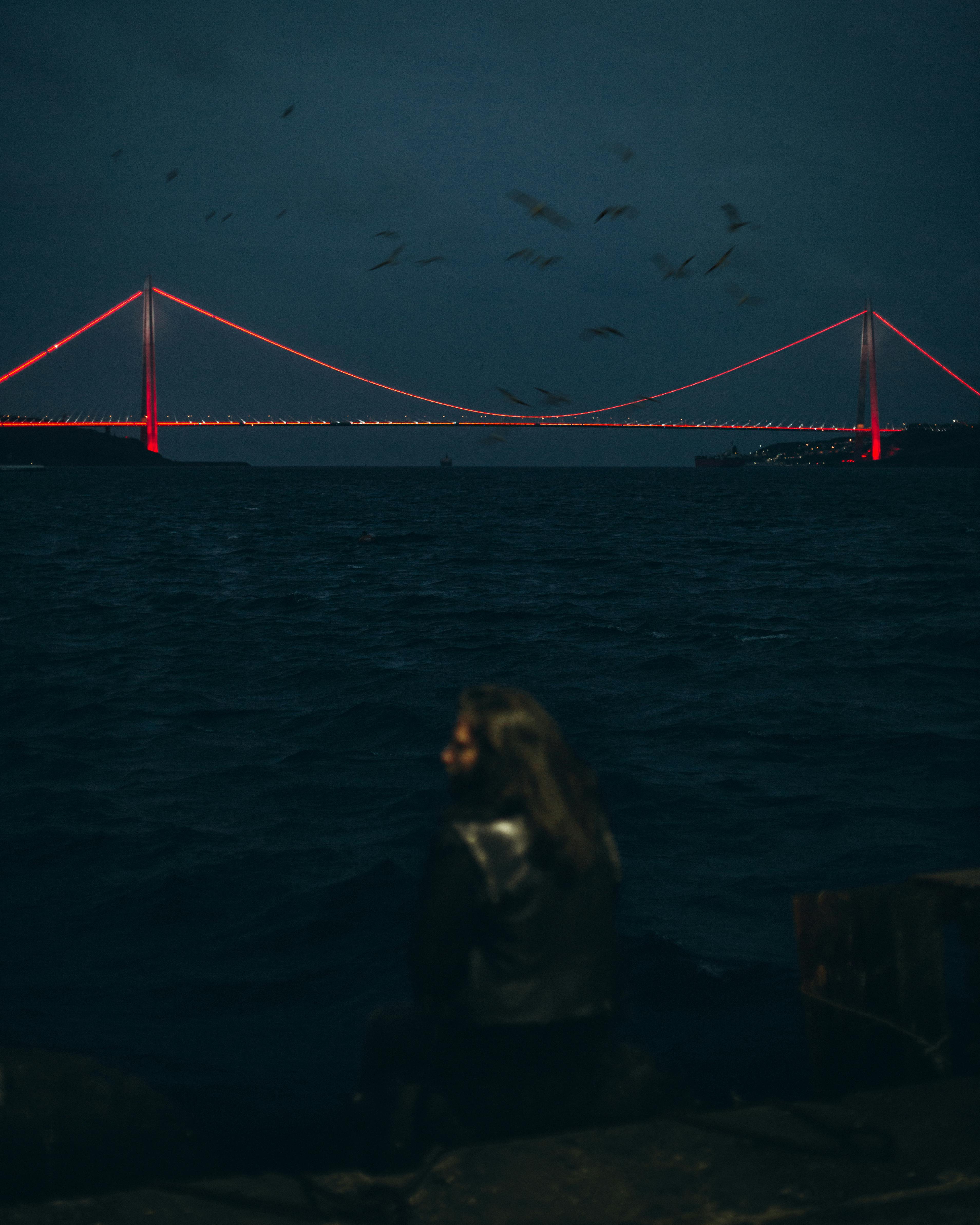
As the sun sets over the jagged cliffs of the Musandam Peninsula, the tankers continue to move. They move slower now. Their crews are on high alert, scanning the horizon for the next sign of trouble. The world continues to turn, fueled by the cargo they carry, unaware of how much depends on those few miles of dark, turbulent water.
The real story isn't the gunfire. It is the terrifying realization of how much we have to lose, and how little it takes to lose it. The silence after a shot is fired in the Strait of Hormuz is the loudest sound in the world. It is the sound of a global heartbeat skipping a beat, waiting to see if the next one will come.