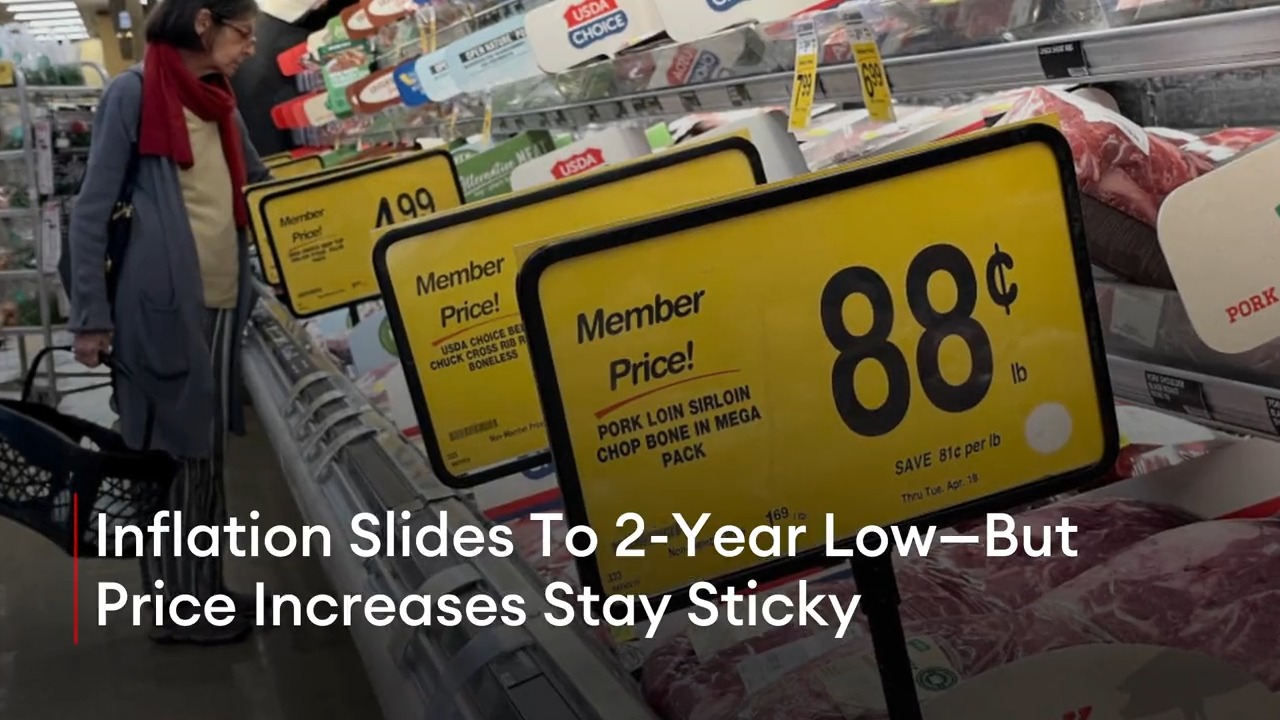
Central banks are losing their grip on the narrative. For decades, the Federal Reserve and its global counterparts relied on slow-moving surveys and lagging government data to gauge what the public thinks about the future value of money. But a new frontier in economic forecasting has emerged through the raw, unfiltered stream of social media. By scraping millions of posts for keywords related to price hikes and cost-of-living complaints, researchers have built a "tweet-based measure of inflation expectations." This isn't just a tech experiment. It is a desperate attempt to capture the "vibe shift" in the economy before it shows up in the official consumer price index.
The premise is simple but the implications are volatile. Traditional metrics like the Michigan Survey of Consumers or the Breakeven Inflation Rate often fail to capture the immediate panic of a mother seeing the price of eggs double overnight. Twitter, despite its chaotic reputation, acts as a massive, real-time focus group. When people complain about the cost of a burrito or the price of a gallon of gas, they aren't just venting; they are signaling their future economic behavior. If you believe prices will keep rising, you buy now. That collective rush to spend creates the very inflation the Fed fears.
The Death of the Lagging Indicator
The old guard of economics is built on a foundation of delay. By the time a government agency collects data, cleans it, and publishes a report, the reality on the ground has already shifted. Professional forecasters often live in a bubble of academic models that ignore the visceral reality of the grocery store aisle.
Social media data bypasses these gatekeepers. Using Natural Language Processing (NLP), analysts can filter out the noise to find specific mentions of "price," "expensive," "rip-off," and "inflation." This creates a daily, or even hourly, pulse check on public sentiment. The correlation between these digital complaints and actual realized inflation is surprisingly tight. When the "Twitter-based" index spikes, the official numbers usually follow a few months later.
This creates a terrifying feedback loop. In the past, the public didn't have a 24-hour ticker of collective economic misery. Now, an algorithmic trend can convince millions of people that a recession is inevitable, causing them to pull back on spending and—by their own actions—triggering the downturn they feared. We are no longer just observing the economy; we are manifesting it through our feeds.
Why Professional Forecasters Are Getting It Wrong
The failure of traditional models during the post-pandemic era highlighted a massive blind spot in institutional economics. Forecasters assumed that because "inflation expectations" remained anchored in their professional surveys, the public was calm. They were wrong. The public was screaming into the digital void long before the interest rate hikes began.
The Granularity Gap
Traditional surveys might ask 500 people how they feel about the economy once a month. Twitter provides millions of data points every single day. This volume allows for a level of granularity that was previously impossible.
- Regional Sentiment: Identifying that the Pacific Northwest is feeling the heat of housing costs more acutely than the Midwest weeks before regional CPI data drops.
- Sector Specificity: Distinguishing between general inflation dread and specific anger toward energy prices or insurance premiums.
- Demographic Proxies: While social media isn't a perfect mirror of the population, the language used can help analysts identify which socioeconomic groups are reaching a breaking point.
The sheer speed of this data turns the Federal Reserve into a reactive body rather than a proactive one. If the "Twitter Index" shows a sudden surge in inflation talk, the Fed is already behind the curve. They are fighting a fire that has been trending for three days.
The Danger of Sentiment Manipulation
If central banks and hedge funds start moving billions based on social media sentiment, the incentive to "game" the index becomes astronomical. We have already seen how bot farms can influence elections or pump meme stocks. What happens when a coordinated effort begins to manipulate inflation expectations?
Imagine a scenario where a state actor or a massive short-seller deploys a fleet of AI-driven accounts to flood the platform with stories of hyperinflation and scarcity. If the algorithms picking up this data aren't sophisticated enough to filter out the coordinated inauthenticity, they could trigger a false signal. This signal could lead to a genuine market panic, a spike in bond yields, or an unnecessary interest rate hike.
The "tweet-based measure" is only as good as the platform it mines. As these platforms become increasingly polarized or overrun by automated accounts, the signal-to-noise ratio degrades. Economists are essentially trying to drink from a firehose that someone else might have poisoned.
The Psychology of the Digital Panic
Inflation is as much a psychological phenomenon as it is a monetary one. When you see a "trending" topic about the rising cost of living, your brain processes it as a social proof. You aren't just seeing one person’s opinion; you are seeing what you perceive to be a global consensus.
This creates a consensus bias that can lead to hoarding or preemptive price hikes by small business owners. If a plumber sees everyone on his feed talking about 10% inflation, he raises his rates by 10% tomorrow, regardless of his actual costs. He does this because he expects his own costs to rise soon. This is how "expectations" become "reality."
The Twitter measure captures this contagion in real time. It shows the moment a localized price hike becomes a national obsession. For an investigative eye, the data isn't just a number; it’s a map of how fear spreads through a digital population.
The Methodology Behind the Madness
To build a superior measure, researchers don't just count the word "inflation." They look for "latent sentiment." This involves analyzing the emotional weight of words used in proximity to economic terms.
$$E = \sum (w_i \cdot s_i)$$
In a simplified model, the total Expectation ($E$) is the sum of the weight of the keyword ($w$) multiplied by the sentiment score ($s$) of the surrounding text. If someone says, "I'm worried about inflation," it carries a different weight than someone saying, "Inflation is a myth."
The most advanced models now use transformer-based architectures to understand sarcasm and context. This is crucial. A tweet saying "Gas prices are great if you love being broke" is a negative economic indicator, even though it contains the word "great." If the model misses the sarcasm, the data is worthless.
The Institutional Resistance
Despite the evidence, many at the Fed and the ECB remain skeptical. They argue that social media users are not a representative sample of the global economy. They point out that the "loudest" voices on Twitter are often outliers—the extremely wealthy or the extremely frustrated.
This skepticism is a luxury we can no longer afford. While the user base may be skewed, the velocity of the information is what matters. The people on these platforms are often the early adopters, the business owners, and the journalists who set the tone for the rest of the country. By the time the "representative sample" in a phone survey catches on, the damage to the currency is already done.
We are moving toward a world where "Social Listening" is a core pillar of monetary policy. The bank that ignores the digital chatter is essentially flying a plane with a radar that updates every thirty minutes while the storm is moving in seconds.
A New Class of Economic Intelligence
The rise of these measures has birthed a new industry of "alternative data" providers. These firms don't just look at tweets; they track satellite imagery of parking lots, credit card transaction flows in real-time, and ship-tracking data. The tweet-based inflation measure is just the most visible tip of a very large iceberg.
The competitive advantage in the next decade won't go to the firm with the best economists, but to the firm with the best data cleaners. The ability to distinguish between a genuine surge in consumer anxiety and a viral meme is the difference between a winning trade and a catastrophic loss.
We must also reckon with the fact that "The Public" is no longer a monolith. There are multiple different "Twitters" existing simultaneously. There is the tech-bubble inflation, the rural-scarcity inflation, and the urban-rent inflation. A single index number is a blunt instrument. The real power lies in deconstructing the index to see which groups are losing faith in the currency first.
The End of Objective Reality
The most uncomfortable truth is that by measuring inflation through social media, we are changing the nature of inflation itself. The observer effect in physics states that the act of observation changes the phenomenon being observed. The same is true here.
When the news reports that "Twitter sentiment shows inflation is rising," the people reading that news become more anxious, post more about it, and then act on that anxiety. We have created a hall of mirrors. The data is no longer a neutral reflection of the economy; it is a participant in it.
The veteran analyst knows that when the "experts" start relying on social media to tell them what's happening, the system has reached a state of extreme fragility. We are leaning on a broken crutch to navigate a minefield.
Watch the sentiment, but don't trust it blindly. The moment everyone agrees on the direction of the economy is usually the moment the floor falls out from under them.