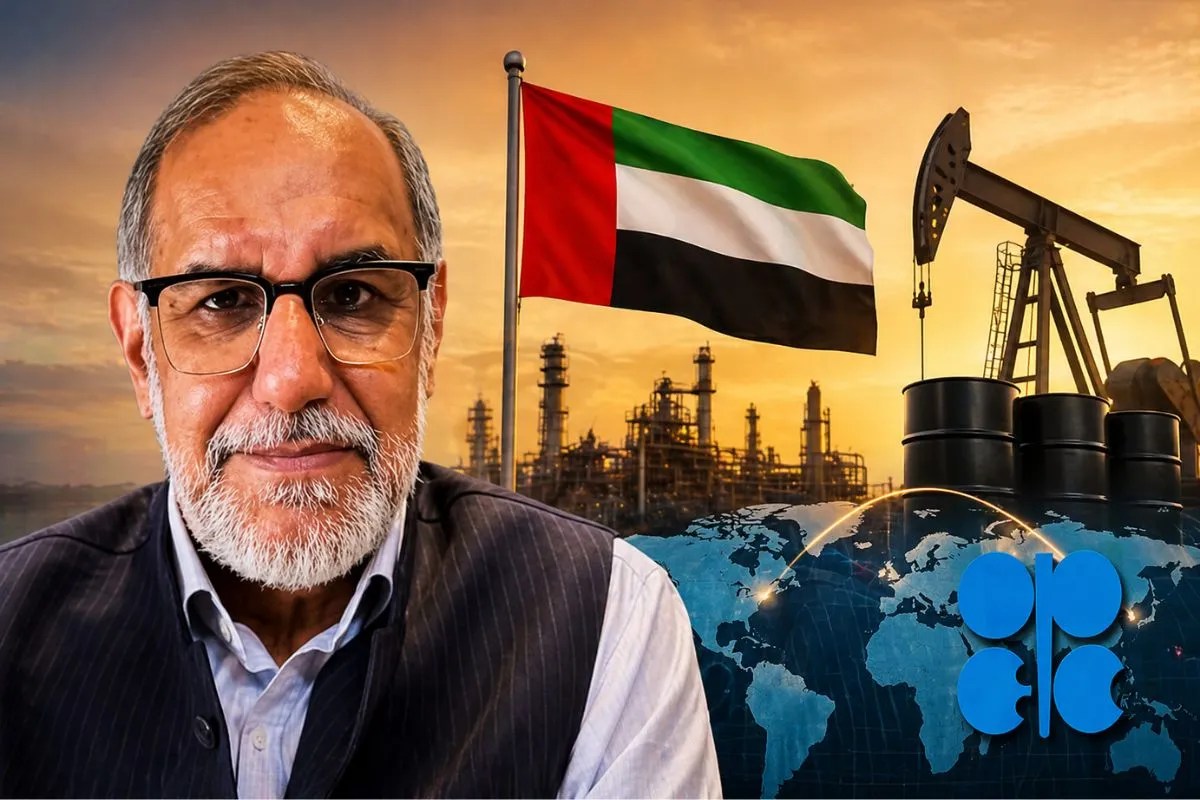
The United Arab Emirates is quietly dismantling the geopolitical architecture that defined the global energy market for over half a century. By moving away from a rigid reliance on the U.S. dollar for oil transactions and expanding its influence within the BRICS+ framework, Abu Dhabi is not just making a trade decision. It is signaling the end of an era where Washington held the exclusive remote control over Gulf capital.
The recent shift involves more than just a preference for local currencies. It is a calculated survival strategy. For 59 years, the relationship between the Emirates and the Western financial system was a marriage of necessity. The UAE provided the crude, and the U.S. provided the security and the currency. That deal has soured. The UAE now sees a world where the fastest-growing consumers of its primary export are not in the West, but in the East. Specifically, in India and China.
The Friction Behind the Divorce
To understand why the UAE is distancing itself from a six-decade-old status quo, we must look at the weaponization of the dollar. Abu Dhabi watched closely as the West froze Russian central bank assets. Regardless of the political justification, the move sent a chilling message to every sovereign wealth fund in the Middle East. If your assets are in dollars, they are only yours as long as you stay in Washington’s good graces.
This is not a sudden fit of pique. It is a response to a changing security environment. The UAE felt abandoned during various regional escalations over the last five years, leading to a realization that the "security for oil" bargain was no longer being honored by the American side. When the security guarantee falters, the incentive to keep every single barrel priced in Greenbacks vanishes.
Furthermore, the American energy boom turned a former customer into a fierce competitor. The U.S. is now a massive exporter of crude and liquefied natural gas. The UAE is essentially being asked to fund and support the currency of its biggest market rival. From a pure business perspective, that makes zero sense.
India as the Primary Beneficiary
India stands at the center of this realignment. The Reserve Bank of India and the UAE’s central bank have already established a framework for settling trade in Rupees and Dirhams. This is a massive win for New Delhi. By bypassing the dollar, India reduces its demand for foreign exchange reserves and cuts the transaction costs for its massive energy imports.
This relationship is symbiotic. For the UAE, India represents a guaranteed, long-term market that is still decades away from its peak oil demand. While Europe and North America talk about "decarbonization" and "energy transitions," India is building refineries and expanding its industrial base. Abu Dhabi is simply following the demand.
The benefits for India go beyond cheaper oil. We are seeing a deeper integration of the two economies. The UAE is investing heavily in Indian infrastructure, from ports to food parks. This is a strategic "food-for-energy" swap. The UAE lacks arable land; India has it. India needs energy; the UAE has it. By stripping the dollar out of this equation, both nations insulate themselves from Western inflationary pressures and sanctions risks.
The BRICS Plus Factor
Joining BRICS was the formal notification of this shift. For the UAE, BRICS is not an anti-Western club, despite how it is often portrayed in the media. Instead, it is a diversified portfolio. An investment banker doesn't put all their money into one stock; a nation-state shouldn't put all its geopolitical capital into one alliance.
Within this group, the UAE acts as the financial bridge. It possesses the sophisticated banking infrastructure that other members, like Iran or even Russia, currently lack. By positioning itself as the hub for non-dollar trade, Abu Dhabi ensures it remains indispensable even if the old world order continues to fracture.
Critics argue that the Dirham is still pegged to the dollar, which limits how far the UAE can truly "de-dollarize." This is true, but it misses the point. The goal is not to destroy the dollar tomorrow. The goal is to build a parallel system so that if the dollar system fails or becomes too restrictive, the UAE doesn't go down with the ship. It is about creating an exit ramp.
Internal Economic Pressures
We also have to consider the UAE’s domestic "Vision 2031." The country is trying to double its GDP. You cannot double your economy by sticking to the same old trade routes. They need to tap into the liquidity of the Global South.
The rise of the "Petroyuan" and the "Petrorupee" is a direct threat to the financial hegemony of the New York and London exchanges. When the UAE settles a deal in Dirhams, that capital stays within its own banking ecosystem longer. It builds depth in their local markets. It gives the UAE Central Bank more autonomy over its monetary policy, which has historically been forced to mirror the U.S. Federal Reserve, even when the UAE economy needed something different.
The Risk of Overextension
This move is not without peril. The UAE still relies on Western technology, healthcare systems, and high-end consumer goods. A total rupture with the dollar would make those imports prohibitively expensive. There is also the matter of the U.S. military presence in the region. While the UAE is diversifying its arms suppliers—buying drones from Turkey and jets from France—the backbone of its defense remains American-made.
Navigating this transition requires a delicate balancing act. Abu Dhabi is trying to be friends with everyone while being beholden to no one. It is a high-stakes game of "neutrality" in a world that is increasingly demanding that nations pick a side.
The New Energy Map
The old map was simple. Oil flowed from the Gulf to the West. Money flowed from the West back to the Gulf. The new map is a complex web of regional settlements. Crude moves to Jamnagar and Shanghai. Technology and labor move back to Dubai. Digital currencies and local currency swaps replace the SWIFT messages of old.
This shift will likely lead to a permanent increase in gold's importance for central bank reserves in the region. If you don't trust the dollar and you aren't ready to fully trust the Yuan or the Rupee, you buy the one asset that has no sovereign liability. The UAE has become one of the world's most significant gold trading hubs for this exact reason.
The transition is already visible in the numbers. Non-oil trade between the UAE and India reached $85 billion recently. That number is projected to hit $100 billion long before the decade ends. Much of that will never touch a U.S. bank account.
A Warning to Global Markets
Investors who are waiting for a "return to normal" in the Middle East are looking at the wrong decade. The "normal" of the 1970s petrodollar era is dead. The UAE has realized that the West is no longer the sole arbiter of global value.
By shifting its 59-year-old strategy, the UAE is betting on a multipolar world. It is betting that the future of the global economy is shaped by the consumers of the East rather than the creditors of the West. This isn't just a change in trade policy; it is a declaration of financial independence that will force every major economy to rethink its own dependency on a single currency system.
The leverage has shifted. For decades, the UAE needed the dollar to get rich. Now, the UAE is rich enough to decide which currency it wants to make even richer. The era of the passive Gulf state is over, replaced by a strategic actor that values optionality over loyalty.
The immediate consequence for the average observer will be a more volatile oil price as the standard "dollar-up, oil-down" inverse correlation begins to weaken. When oil is priced in a basket of currencies, the traditional levers used by Western central banks to control energy inflation will lose their potency. We are entering a period where energy security and currency sovereignty are the same thing.
Governments in the West can complain about the lack of "shared values," but the UAE is focused on "shared value." In the cold logic of the desert, a customer who pays in a currency you can actually use is always better than a partner who threatens to freeze your accounts. The 59-year-old partnership didn't fail because of a lack of friendship; it failed because it stopped being a good business deal.