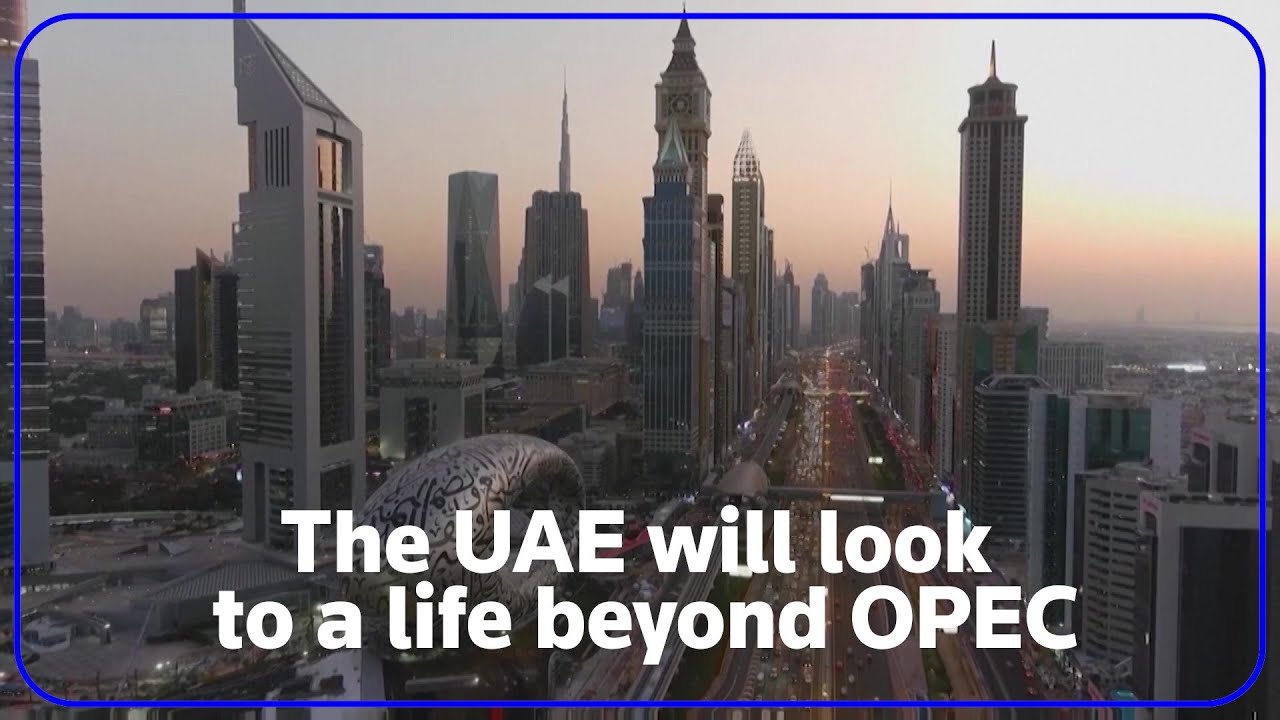
The narrative surrounding the UAE’s potential exit from OPEC is suffocatingly predictable. Conventional economists see a zero-sum game of supply and demand. They tell you that if Abu Dhabi walks, the floodgates open, prices crash, and Asian energy importers finally get the "bargaining power" they’ve craved for decades.
They are wrong.
Asian economies don't need "bargaining power" in a fragmented market; they need the price floor that only a disciplined cartel provides. The consensus view that an OPEC fracture benefits India, China, and Japan is a fundamental misunderstanding of how global energy infrastructure actually functions. If the UAE leaves, Asia isn't getting a discount. It’s getting a front-row seat to a volatility crisis that will wreck long-term industrial planning.
The Myth of the Price War Dividend
The "supply will surge" argument is the low-hanging fruit of economic analysis. It assumes that the UAE is sitting on massive idle capacity just waiting for the handcuffs of the Vienna Agreement to come off.
While ADNOC (Abu Dhabi National Oil Company) has pushed for a 5-million-barrel-per-day capacity by 2027, the reality of the oil patch is far more rigid. Production is not a kitchen faucet. It is a massive, multi-decade capital expenditure commitment.
If the UAE exits, the immediate reaction won't be a benevolent flood of cheap crude to Mumbai or Shanghai. It will be the total collapse of the OPEC+ floor. When prices cratered in 2020, did Asia "win"? No. Refineries faced massive inventory devaluations, and the lack of price stability halted investment in the very projects needed to ensure supply five years down the line.
Asia thrives on predictability, not cheapness. A $75 barrel that stays at $75 is infinitely better for a national budget than a $40 barrel that might be $110 by the next quarter because every marginal producer went bankrupt and supply dried up.
Why "Bargaining Power" is a Fantasy
Economists love to throw around the term "bargaining power" as if Asian oil ministers are haggling over rugs in a souk. In the real world, Asian buyers—mostly state-owned enterprises—are locked into long-term contracts. These aren't just purchase agreements; they are geopolitical anchors.
The UAE isn't looking to exit OPEC because they want to sell more oil to Asia for less. They want to exit because they need to monetize their reserves before the "Energy Transition" renders them stranded assets. This is an exit of desperation, not strength.
If the UAE goes rogue, the pricing mechanism shifts from the stability of the Official Selling Price (OSP) to a chaotic, spot-market-driven free-for-all.
The Infrastructure Trap
Asian refineries are specifically calibrated for "sour" Middle Eastern grades. You can't just swap UAE Murban for US WTI or Nigerian Light without massive efficiency losses or expensive retrofits.
- Assay Constraints: Most Indian and Chinese refineries are designed for the specific chemical profile of Gulf crude.
- Logistics: The maritime routes from the Persian Gulf to Asia are the most optimized supply chains on Earth.
- Storage: High volatility requires massive strategic reserves. Most of Asia, excluding China, is dangerously under-stocked to handle a market without an "anchor" producer like OPEC.
The Dangerous Disconnect in Asian Energy Strategy
The current talk of an "OPEC exit" ignores the elephant in the room: The UAE and Saudi Arabia are not just oil sellers; they are now the primary investors in Asian downstream infrastructure.
Saudi Aramco and ADNOC are pouring billions into refineries and petrochemical complexes in India and Vietnam. This isn't about supply; it’s about vertical integration. If the UAE leaves OPEC and triggers a price war with Riyadh, those investments don't just "get cheaper." They become toxic.
The "bargaining power" theorists imagine a scenario where India can play the UAE against Saudi Arabia to shave 50 cents off a barrel. In reality, a price war destroys the balance sheets of the very companies Asia relies on to build its energy future.
The Real Cost of Fragmentation
OPEC is often described as a "clumsy cartel," but its primary function for the last sixty years hasn't been to keep prices high—it has been to keep prices visible.
Without OPEC+, we return to the era of the "Seven Sisters," where price discovery happens in the shadows of private boardrooms rather than through a transparent, albeit political, quota system. For an emerging economy like Indonesia or Thailand, transparency is the only shield against predatory pricing.
When the UAE suggests they might walk, they aren't offering Asia a gift. They are threatening to remove the only mechanism that prevents the oil market from behaving like a penny stock.
The Pivot to "Value Over Volume"
We are entering the "Value over Volume" era. The UAE knows that the era of 100-million-barrel-per-day demand has a fast-approaching expiration date. Their strategy is to pump as much as possible, as fast as possible, regardless of the price.
For Asia, this is a disaster disguised as a bargain.
- Deflationary Shock: A sudden drop in energy prices can trigger deflationary cycles in manufacturing-heavy economies like China.
- Green Energy Stagnation: Cheap oil kills the incentive to diversify. If crude stays at $40 because the UAE and Saudi Arabia are trying to kill each other's market share, the transition to renewables in Asia—essential for long-term survival—grinds to a halt.
- Currency Instability: Asian currencies are often tied to the health of the global trade environment. Extreme oil volatility creates "noise" that central banks cannot easily filter out, leading to erratic interest rate hikes.
Stop Asking if Oil Will Be Cheaper
The question isn't whether the UAE’s exit will lower the price of a gallon of gasoline in Manila. The question is: Who manages the world’s spare capacity when the cartel is dead?
Historically, OPEC has been the "Central Bank of Oil." When demand spikes, they open the valves. When it craters, they close them. If the UAE leaves, and OPEC collapses, that "spare capacity" cushion disappears. We move to a "just-in-time" production model.
In a just-in-time model, any geopolitical hiccup—a drone strike, a tanker seizure, a pipeline leak—causes a vertical price spike. There is no one left to "stabilize" the market. Asia, as the world's largest net importer, is the most vulnerable to these spikes.
The Truth About the "Asian Premium"
For years, Asian buyers complained about the "Asian Premium"—the fact that they paid more for Middle Eastern oil than European or American buyers. They thought an OPEC breakup would end this.
It won't. The premium exists because of geography and refinery lock-in, not just cartel greed. Even if the UAE goes solo, they will still charge what the market can bear, and Asia is the only market that is still growing.
The UAE isn't going to give China a discount out of the goodness of their hearts. They will charge exactly one cent less than the next most expensive option. That isn't bargaining power. That's just being the last person standing in a burning building.
The UAE’s Gambit is a Warning, Not an Opportunity
Abu Dhabi is signaling that the era of cooperation is over. They are looking out for their own sovereign wealth fund, trying to extract every dollar before the world moves on.
If you are an Asian policymaker cheering for a UAE exit, you are cheering for the destruction of the only entity that provides a predictable framework for your national energy security. You are trading a stable, managed market for a chaotic, unmanaged one, under the delusion that "more supply" equals "better outcomes."
The "bargaining power" you think you’re gaining is actually just the power to choose which producer’s volatility ruins your fiscal year.
Oil is a weapon of the patient. By breaking the cartel, the UAE is choosing impatience. Asia will be the one that pays the price for that haste.
The market doesn't need a rogue UAE. It needs a Saudi Arabia that can keep its house in order. If the UAE walks, the floor doesn't just lower—it disappears.
Prepare for the era of the unmanaged barrel. It is going to be a lot more expensive than you think.