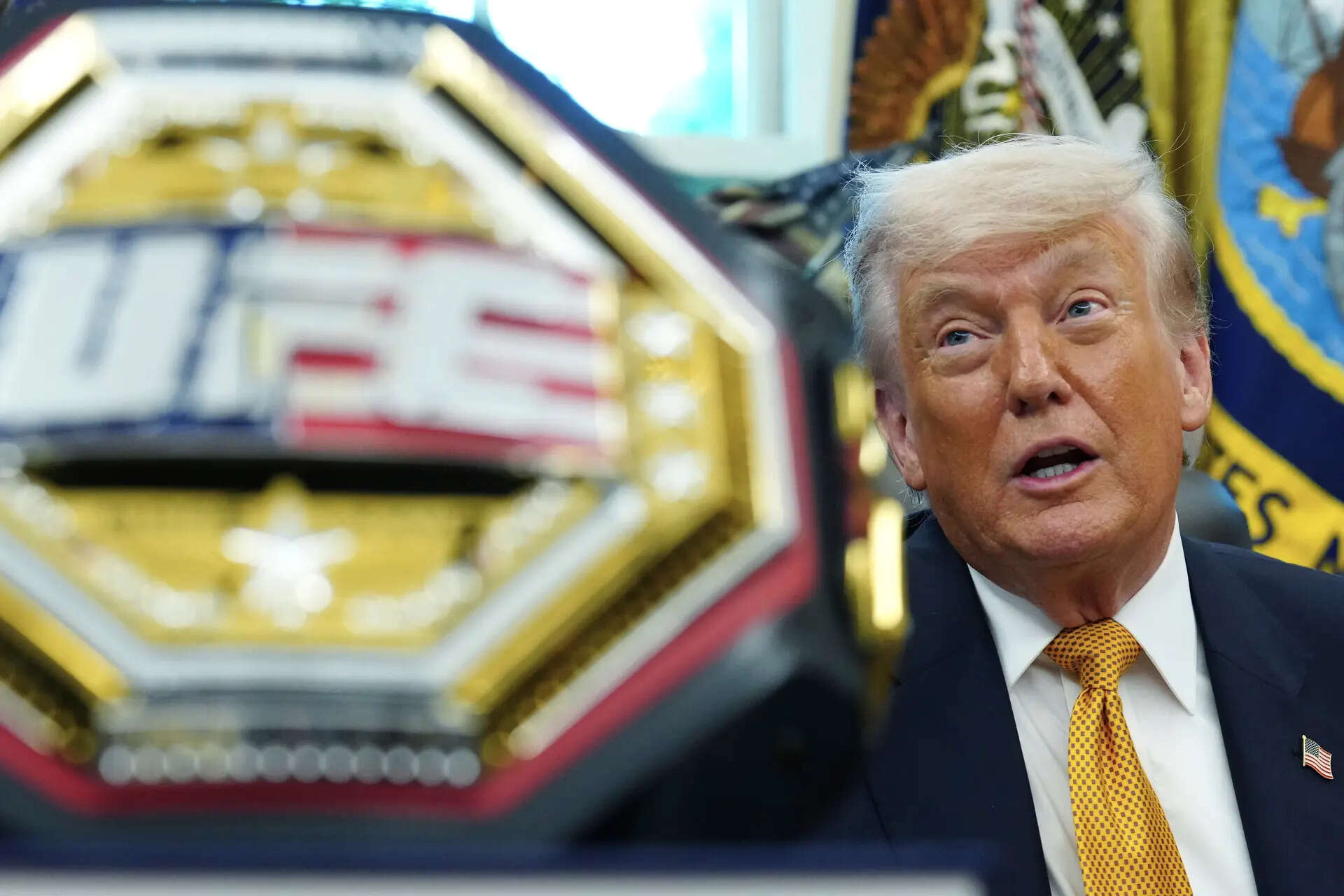
The presentation of the Freedom 250 fight belt to Ultimate Fighting Championship (UFC) athletes in the Oval Office represents a calculated synthesis of executive branding, sports marketing, and political iconography. This event transcends mere photo-opportunity aesthetics; it functions as a formal integration of the "Freedom 250" trademark—a government-backed initiative celebrating the United States Sestercentennial—into the high-growth ecosystem of mixed martial arts (MMA). By analyzing the mechanics of this endorsement, the structural alignment between the executive branch and the UFC, and the physical properties of the belt itself, we can map the strategic utility of this artifact as a tool for cultural and political signaling.
The Architecture of the Freedom 250 Belt
The "Freedom 250" belt is not a standard championship trophy but a bespoke ceremonial asset. To understand its value, one must deconstruct its physical and symbolic components. Unlike the standard UFC "Legacy" belt, which denotes divisional dominance, this artifact serves as a commemorative marker for the upcoming 250th anniversary of American independence.
- Iconographic Mapping: The belt utilizes traditional "Big Gold" design cues but replaces divisional markers with Sestercentennial motifs. The central plate acts as a focal point for the "Freedom 250" branding, effectively turning the athlete into a walking billboard for a specific federal milestone.
- Scarcity and Valuation: By classifying the belt as "never-seen-before" and limiting its distribution to a specific cohort of high-profile athletes (such as Jon Jones, Stipe Miocic, and Bo Nickal), the administration creates an immediate "Veblen good." Its value is derived not from precious metal content—though the gold plating suggests high production costs—but from its exclusivity and its direct association with the Commander-in-Chief.
- The Oval Office as a Validation Engine: Utilizing the Oval Office as the unveiling site provides the belt with a level of "sovereign legitimacy" that corporate sponsors cannot replicate. This environment transforms a sports trophy into a historical artifact, increasing its potential auction value and its weight in the cultural zeitgeist.
The Strategic Alliance Framework
The relationship between Donald Trump and the UFC, specifically its CEO Dana White, operates on a model of reciprocal brand equity. This is not a casual friendship but a sophisticated partnership that leverages the demographics of the MMA fanbase to achieve specific political and commercial outcomes.
Demographic Synergy
The UFC’s primary audience consists of 18-to-34-year-old males, a demographic that is increasingly central to modern political mobilization. By hosting fighters like Jon Jones—the heavyweight champion and a consensus "greatest of all time" candidate—the administration accesses a high-engagement network of millions of social media followers. This creates a direct pipeline for the "Freedom 250" brand to bypass traditional media gatekeepers.
The Institutionalization of "Outsider" Status
The UFC was once a marginalized sport, famously dubbed "human cockfighting" by politicians in the 1990s. Donald Trump’s early support of the organization during its "dark ages" (providing venues when others wouldn't) created a foundation of loyalty. Now, the UFC is a global powerhouse valued in the billions. The presentation of the Freedom 250 belt symbolizes the final stage of this institutionalization: the former "outcast" sport is now the preferred partner for the highest office in the land.
The Mechanics of Public Narrative Control
The unveiling of the belt functions as a masterclass in "Event-Driven Narrative Shaping." In a news cycle often dominated by legislative friction or international tensions, the White House uses the visceral, high-energy imagery of elite combat athletes to project an image of strength and national pride.
The "Champion's Validation" Loop
When a figure like Jon Jones—known for his dominance in the octagon—publicly accepts a belt from the President and performs his signature "victory dance," it creates a feedback loop of mutual validation.
- For the Politician: The association with "winners" and physical prowess reinforces a brand of strength.
- For the Athlete: The White House visit elevates their status from "prize fighter" to "national representative."
- For the Public: The imagery simplifies complex political identities into a binary of "winning" versus "losing."
Economic Implications of the Freedom 250 Brand
The "Freedom 250" initiative is more than a slogan; it is a multi-year branding exercise leading up to 2026. The introduction of a fight belt as one of the first major physical assets of this campaign suggests a strategy focused on "Mass-Market Patriotism."
Licensing and Merchandising Potential
While the specific belt shown in the Oval Office is a one-of-a-kind (or limited run) item, the design logic points toward a broader merchandising strategy. Replicas, apparel, and digital assets (NFTs or gaming skins) featuring the Freedom 250 branding and the UFC aesthetic are logical next steps. The UFC's existing infrastructure for global merchandising provides a turnkey solution for scaling the "Freedom 250" visual identity.
The Cost of Entry
For other sports leagues—the NFL, NBA, or MLB—achieving this level of specific, branded integration with a political administration is difficult due to internal player politics and corporate caution. The UFC’s centralized power structure, where Dana White maintains significant control over the brand's direction, allows for a "lean" decision-making process. This agility gives the UFC a competitive advantage in securing high-value government associations that other leagues must avoid to maintain "neutrality."
Risk Assessment and Structural Limitations
Despite the high-impact nature of the belt's unveiling, this strategy carries inherent risks that a rigorous analyst must account for.
- Brand Polarity: The intense association with a specific political figure can alienate segments of the global UFC audience. While the UFC is an American company, its growth is increasingly international (Brazil, China, UAE). A hyper-nationalist "Freedom 250" campaign may see diminishing returns in these markets.
- The "Gilded" Saturation Point: If the administration produces too many commemorative assets (belts for every sport, every event), the "Freedom 250" brand risks devaluation. Scarcity is the primary driver of the belt's current prestige.
- Athlete Volatility: High-profile fighters are independent contractors with unpredictable public lives. Any controversy involving an athlete who has been "crowned" with a White House belt reflects directly back on the executive branch, creating a potential PR liability.
The Tactical Deployment of Sports Diplomacy
The Freedom 250 belt is a tool of "Domestic Diplomacy." It uses the universal language of competition and physical achievement to bridge the gap between federal initiatives and the general public. By focusing on the 250th anniversary of the United States, the administration is attempting to create a unifying cultural moment, using the UFC as the primary delivery vehicle.
The selection of specific fighters for this event was not accidental.
- Jon Jones: Represents the pinnacle of athletic achievement.
- Stipe Miocic: Represents the "working-class hero" (a firefighter in Ohio).
- Bo Nickal: Represents the rising generation of wrestling-based MMA stars.
By covering these different "archetypes," the event ensures maximum reach across diverse sub-sectors of the American electorate.
Strategic Forecast: The Road to 2026
The presentation of the Freedom 250 belt is the first phase of a broader "Cultural Heritage" campaign. We should expect the following developments over the next 24 months:
- The Proliferation of "250" Branding in Sports: Expect to see Freedom 250 patches on jerseys, specialized "Freedom" rounds in tournaments, and the integration of the sestercentennial logo into major stadiums. The UFC belt serves as the "Minimum Viable Product" (MVP) for this rollout.
- The Executive Sports Tour: The White House will likely continue to use sports as a primary venue for major announcements, leveraging the high viewership of live events to reach audiences that do not consume traditional news.
- Capitalizing on the 2026 World Cup and Olympics: The momentum built through these early UFC activations will culminate in the massive global sporting events hosted in North America in 2026. The "Freedom 250" brand will be positioned to occupy the "Official Partner" space typically held by global conglomerates.
The Freedom 250 belt is a high-density symbolic asset. Its success depends on maintaining its aura of exclusivity while simultaneously using its imagery to saturate the digital landscape. For the UFC, it is a move that cements its status as the "State Sport" of the current administration. For the White House, it is a low-cost, high-yield method of defining the national narrative through the lens of physical victory and historical milestone.
The immediate tactical move for stakeholders in this space is to monitor the secondary market for Freedom 250-branded "drops" and to analyze the sentiment shifts within the 18-34 male demographic. The belt is no longer just leather and gold; it is a quantified instrument of influence.