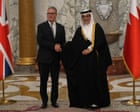
The UK just became the first G7 nation to sign a free trade agreement with the Gulf Cooperation Council (GCC). On the surface, it’s a numbers game. You’ve probably seen the figure £3.7 billion splashed across the headlines. It sounds massive, but in the context of the UK’s trillion-pound economy, that annual boost is actually quite focused. It isn't just about general growth; it’s about where that growth lands.
If you’re a British farmer, an automotive engineer, or a tech founder, this deal is the most significant thing to happen to your export strategy in years. The agreement covers Bahrain, Kuwait, Oman, Qatar, Saudi Arabia, and the United Arab Emirates. It isn't a vague "agreement to agree." It’s a concrete removal of barriers that have made doing business in the Middle East a headache for decades. You might also find this similar article insightful: Why the US$752 Million Hong Kong Scam Crackdown is Actually a Massive Failure.
Breaking Down the Real Numbers
We need to talk about the £580 million. That’s the amount of annual duties being wiped out once everything is fully implemented. Here is the kicker: £360 million of those tariffs vanish on day one. For most businesses, waiting five years for a trade deal to "phase in" is a death sentence for momentum. Having more than half the savings hit immediately is a rare win.
What does that look like on the ground? As reported in latest coverage by Investopedia, the results are worth noting.
- Food and Drink: British staples like cheddar cheese, cereals, chocolate, and butter are going tariff-free. The Gulf imports roughly 85% of its food. We’re moving from being a premium, high-tax luxury to a competitive market player.
- Automotive: Luxury cars—one of our biggest exports to the region—will see significant duty reductions.
- Services: This is where the long-term money sits. The deal includes commitments on the free flow of data. If you’re a fintech firm or a legal consultancy, you can now operate with a level of certainty that didn't exist when we were relying on individual bilateral treaties.
The government claims this will push real wages up by £1.9 billion a year in the long run. Whether that trickles down to your specific paycheck depends on your sector, but the macro pressure is definitely upward.
Why the G7 is Watching London
There’s a reason no other G7 country has managed this yet. The GCC is a notoriously difficult bloc to negotiate with as a single entity because the economic priorities of Riyadh are rarely the same as those in Dubai or Muscat. By landing this, the UK has essentially created a blueprint.
It’s also a strategic hedge. With the US leaning into global tariffs and the EU still tangled in its own internal regulatory shifts, the UK is betting on the "middle powers." These are states with massive sovereign wealth funds and a desperate hunger for Western "know-how" to diversify their economies away from oil. Saudi Arabia’s Vision 2030, for example, needs exactly what British firms sell: engineering, education, and healthcare tech.
The Friction That Remains
Don't let the celebratory press releases fool you into thinking it's all easy. Trade deals are messy. While the tariffs are going away, the "non-tariff barriers" like local licensing and cultural business norms haven't changed overnight.
You still need a local partner in many jurisdictions. You still have to navigate different legal systems that can be opaque. And honestly, the geopolitical backdrop is tense. The ongoing regional instability and the shadow of the Iran conflict mean that while the "trade" part of the deal is signed, the "stability" part is still a work in progress.
Critics will point out that £3.7 billion is roughly 0.1% of GDP. They aren't wrong. But trade isn't just about the immediate GDP bump. It's about securing supply chains and making sure British companies aren't locked out of the world’s fastest-growing consumer markets.
How to Move Your Business Forward
If you’re looking to capitalize on this, don't wait for the official "day one" ceremony. The market is already moving.
- Review your HS codes: Check exactly how the new tariff schedule affects your specific goods. The "day one" list is extensive.
- Focus on the Services Chapter: If you're in tech, read the data flow provisions. This is the first time the GCC has made these kinds of commitments to a G7 partner.
- Localize: Zero tariffs don't mean zero effort. You still need to adapt your branding and service delivery for the Gulf market.
The deal is a tool. It’s up to the private sector to actually use it. The path is cleared, but you still have to do the driving.