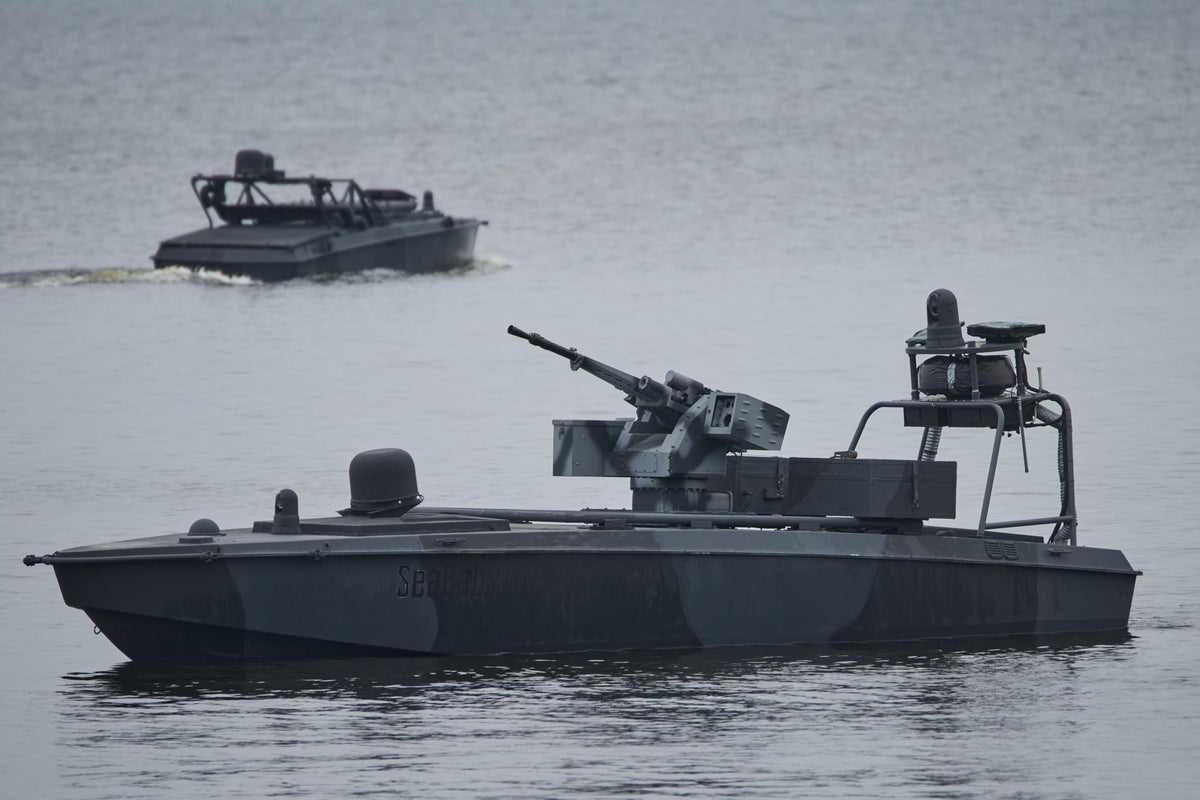
Ukraine just proved that the front lines of this war aren't just in the muddy trenches of the Donbas. They're in the Mediterranean. Specifically, off the coast of Libya. Reports are circulating that a secret Ukrainian unit managed to strike at the heart of Vladimir Putin's shadow fleet—the ghost ships he uses to bypass sanctions and keep his war machine funded. This wasn't a fluke. It’s a message.
If you've been following the naval side of this conflict, you know the Black Sea has become a deathtime for the Russian Navy. But Libya? That’s a massive shift in geography. Kyiv is showing the world that if you carry Russian oil to fund the invasion, you aren't safe anywhere. Not in the Red Sea, not in the Mediterranean, and certainly not near the North African coast.
The secret unit taking the fight to Africa
We aren't talking about standard infantry here. The units involved are likely part of the GUR, Ukraine's military intelligence wing. They've been busy. Over the last year, we've seen evidence of these operators popping up in Sudan to fight Wagner Group mercenaries. Now, they've turned their sights on the maritime logistics that keep the Kremlin's bank account from hitting zero.
The shadow fleet is a collection of aging, poorly maintained tankers. They often fly "flags of convenience" from countries with loose regulations. They turn off their transponders. They engage in ship-to-ship transfers in the middle of the night. It’s a shell game on the high seas. Ukraine just flipped the table.
By striking these vessels near Libya, Ukraine is hitting two birds with one stone. First, they disrupt the actual flow of oil and cash. Second, they force Russia to divert resources. Every ship Russia has to protect in the Mediterranean is one less ship they can use to threaten Odessa or monitor NATO movements. It’s a classic move: make the enemy bleed where they think they're strongest.
Why Libya is the perfect backdrop for this chaos
Libya is a mess of competing factions. You have the UN-recognized government in Tripoli and General Khalifa Haftar’s forces in the east. Haftar has long-standing ties to Moscow. The Russians use Libyan ports as a pit stop for their operations across Africa. It’s a hub for smuggling, mercenary deployments, and now, sanctioned oil.
Ukrainian operatives likely took advantage of this instability. In a country where multiple militias are already shooting at each other, a "mysterious" explosion on a tanker doesn't always get the forensic investigation it deserves. It provides the perfect cover for deniable operations. If a ship blows up in a Libyan port, who are you going to call? A police force that barely exists?
This strategy isn't just about blowing things up, though. It’s about insurance. When these shadow tankers start exploding, the cost of insuring them skydives into the abyss. Legitimate maritime insurers won't touch them. Even the shady ones will start demanding "danger pay" that eats into Putin’s profits.
The risk of the ghost ship strategy
Russia’s shadow fleet is an environmental disaster waiting to happen. These ships are old. They don't meet modern safety standards. If a Ukrainian strike causes a major spill off the coast of North Africa, the diplomatic blowback could be nasty. Kyiv knows this. They have to be surgical.
But honestly, the risk of doing nothing is higher. As long as those tankers keep moving, the missiles keep falling on Kyiv. Ukraine has decided that the global shipping lanes are now fair game. If the West won't effectively enforce sanctions through bureaucracy, Ukraine will enforce them with explosives.
What this means for the global oil market
Don't expect your gas prices to jump tomorrow because of one strike. The shadow fleet is massive—hundreds of ships. But the psychological impact is what matters. Every captain of a ghost tanker now has to look over their shoulder. They have to wonder if that small boat approaching them in the Mediterranean is a group of local fishermen or a Ukrainian special forces team with a grudge and a limpet mine.
- Increased surveillance: Expect NATO and Russian assets to beef up presence around North Africa.
- Logistical nightmares: Russia will likely try to move these transfers further out to sea, making them more expensive and dangerous.
- Escalation: Russia might try to retaliate against Ukrainian grain shipments in even more aggressive ways.
Taking the initiative back from the Kremlin
For a long time, the narrative was that Russia had the "strategic depth" to outlast Ukraine. They had the vast territory, the endless oil, and the ability to operate across the globe. Ukraine is dismantling that idea piece by piece. They're proving that a smaller, more agile force can strike the giant's ankles, no matter where those ankles happen to be standing.
You shouldn't look at the strike in Libya as an isolated event. It’s part of a broader "Global Ukraine" strategy. They are hunting Russian interests in Sudan, in Mali, and now on the high seas. It’s a total war.
If you're tracking this, watch the shipping data. Look for tankers that suddenly change course or "go dark" near the North African coast. The ghost fleet is being haunted.
The next step for international observers is to stop treating these maritime violations as mere paperwork errors. Ukraine has set the tone. If you want to stop the shadow fleet, you have to make the cost of operating it unbearable. For now, that means more than just fines—it means fire. Watch the ports in eastern Libya. That’s where the next chapter of this naval war is likely to be written. Keep an eye on the AIS tracking maps; the gaps in the data often tell the most interesting stories.