There is a precise moment when public life strips a person of their physical boundary. You walk into a room, you speak, you sign a bill, you debate a budget, and yet, somewhere beneath the surface of the professional transaction, an unspoken tallying takes place. People look at you not merely as a mind, a vote, or a leader, but as a canvas awaiting their critique.
Imagine, for a moment, the quiet shock of discovering that your face has become public property. Also making news recently: Dissecting Cross-Border Humanitarian Logistics Why Foreign Aid Fails at the Last Mile.
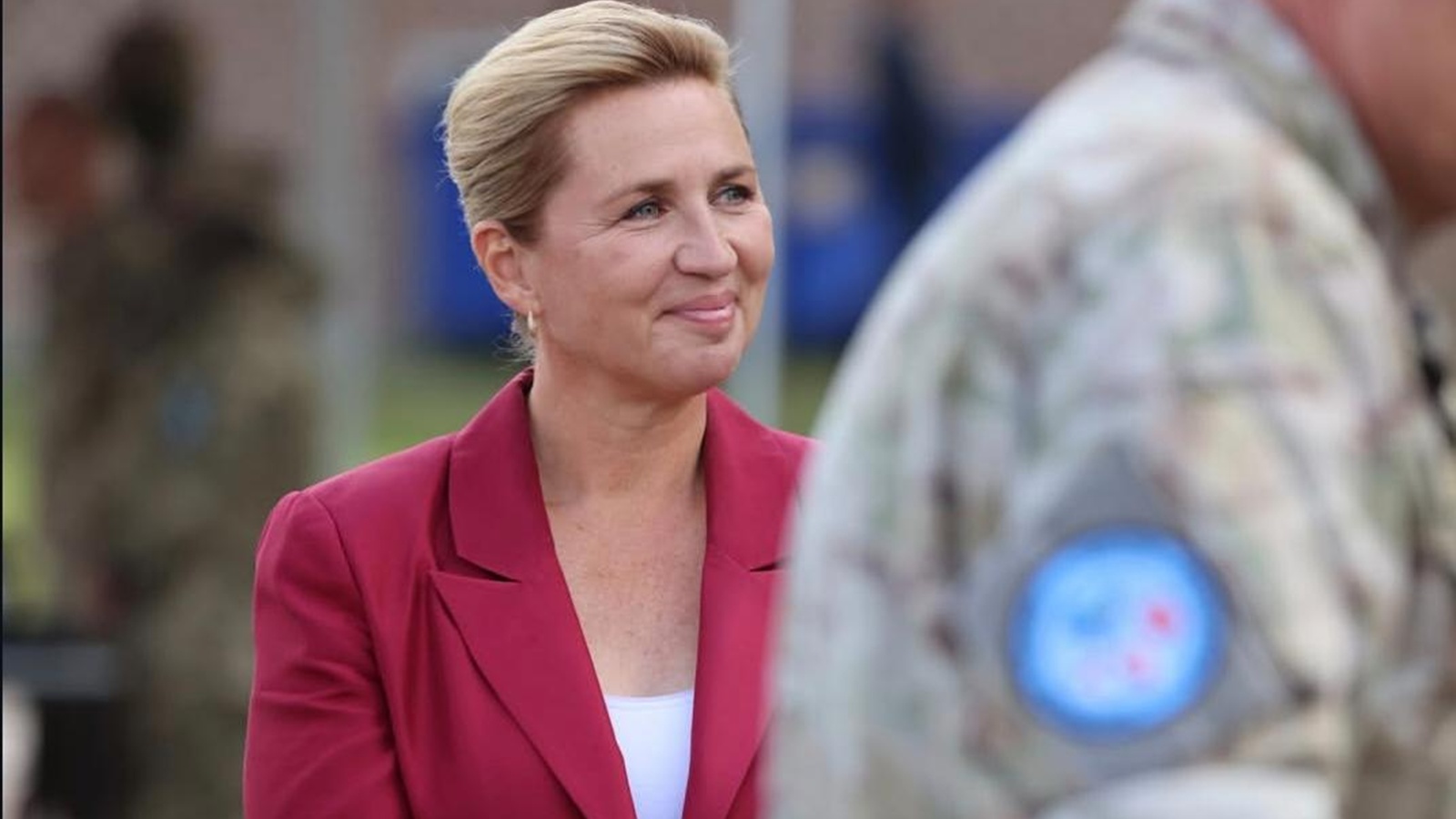
Denmark’s Prime Minister, Mette Frederiksen, found herself standing at that exact psychological crossroads. A plastic surgeon took to social media, looking at a woman elected to run a nation, and decided what she needed was a tune-up. A nip here. A tuck there. Unsolicited advice wrapped in professional terminology, broadcast out into the ether where boundaries dissolve and any stranger with a keyboard can participate in the dissection of a living human being.
Frederiksen did not scroll past. She did not issue a sanitized, poll-tested statement drafted by a committee of anxious communications staffers. Further details into this topic are explored by NPR.
She hit back.
Not my nose, she made clear.
Stop.
The Anatomy of the Unasked Opinion
We have built a culture that treats women in the public eye like open-source software. Everyone feels entitled to commit code to their appearance.
Think about the sheer audacity required to look at a head of government—someone managing foreign policy, economic inflation, healthcare reform, and the grinding machinery of the state—and fixate on the geometry of her nasal bridge. It is an extraordinary exercise in reductionism. It reduces decades of political survival, intellect, and executive gravity to the slope of cartilage.
(Note: When I speak of this reductionism, I am using it to describe the cultural reflex that values a woman's decorative compliance over her functional authority.)
The surgeon's post was not an isolated incident. It was part of a relentless, atmospheric pressure that whispers to every woman that her aging face is a failing public utility. For a politician, this pressure carries a double edge. If you age naturally, you are accused of letting yourself go, of looking tired, of lacking the vigor for the job. If you alter your face, you are accused of vanity, of insecurity, of trying to cheat time. You cannot win. The game is rigged from the start.
Frederiksen’s refusal to accept this framing matters. By drawing a hard line around her own body, she exposed the absurdity of the entire enterprise.
When the Mirror Becomes a Legislative Chamber
Power is supposed to insulate you from these indignities. We assume that once you reach a certain echelon—once your face is stamped on ballots and projected onto evening news broadcasts—you ascend to a realm where petty physical judgments bounce off like rain.
That assumption is a myth.
If anything, the higher you climb, the more intense the scrutiny becomes. The magnifying glass simply grows larger. Every wrinkle becomes a headline. Every expression is analyzed for signs of stress, weakness, or declining competence.
Consider what happens next: the normalization of bodily intervention as an unspoken job requirement. We have drifted into a reality where female leaders are quietly expected to invest time, money, and surgical pain into maintaining a state of perpetual, unblemished youth. When a leader rejects that tax, it feels revolutionary.
Frederiksen’s response was sharp, brief, and devastatingly ordinary. She asserted ownership over her own skin.
The Cost of Compliance
I remember sitting across from a mentor years ago, a woman who had broken through multiple glass ceilings in her industry, watching her trace the lines around her eyes with a look of quiet exhaustion. She wasn't tired from the work. She was tired from the preparation for the work. The hair, the makeup, the subtle psychological tax of ensuring she looked approachable yet formidable, aged enough to be taken seriously yet young enough to remain palatable.
We rarely talk about this hidden energy drain. Men in politics wear their years like armor. Gray hair is distinguished; lines on a forehead are maps of experience. For women, those same markers are treated as defects to be repaired.
When a surgeon offers unsolicited advice to a prime minister, they are reinforcing that double standard. They are saying: Your mind may run the country, but your face still belongs to us.
Frederiksen’s pushback was a rejection of that ownership. It was a reminder that even the most powerful public figures retain the fundamental right to exist without being optimized for someone else's aesthetic preferences.
The Line in the Sand
We are standing at a strange cultural juncture. On one hand, we talk endlessly about empowerment, bodily autonomy, and self-acceptance. On the other hand, we have engineered an online ecosystem that rewards hyper-scrutiny, filters, and digital perfection.
When a leader calls out this intrusion, she draws a boundary for all of us. She reminds us that boundaries are not gifts given by others; they are stakes driven into the ground by the person standing behind them.
Not my nose.
Four words. Simple. Unyielding. A complete sentence that requires no further negotiation.
As the digital noise rushes back in, filling the spaces between headlines and social media feeds, that phrase remains. It lingers like the faint smell of ozone after a lightning strike, clearing the air and leaving behind the sharp, unmistakable outline of a person who refuses to be remodeled.