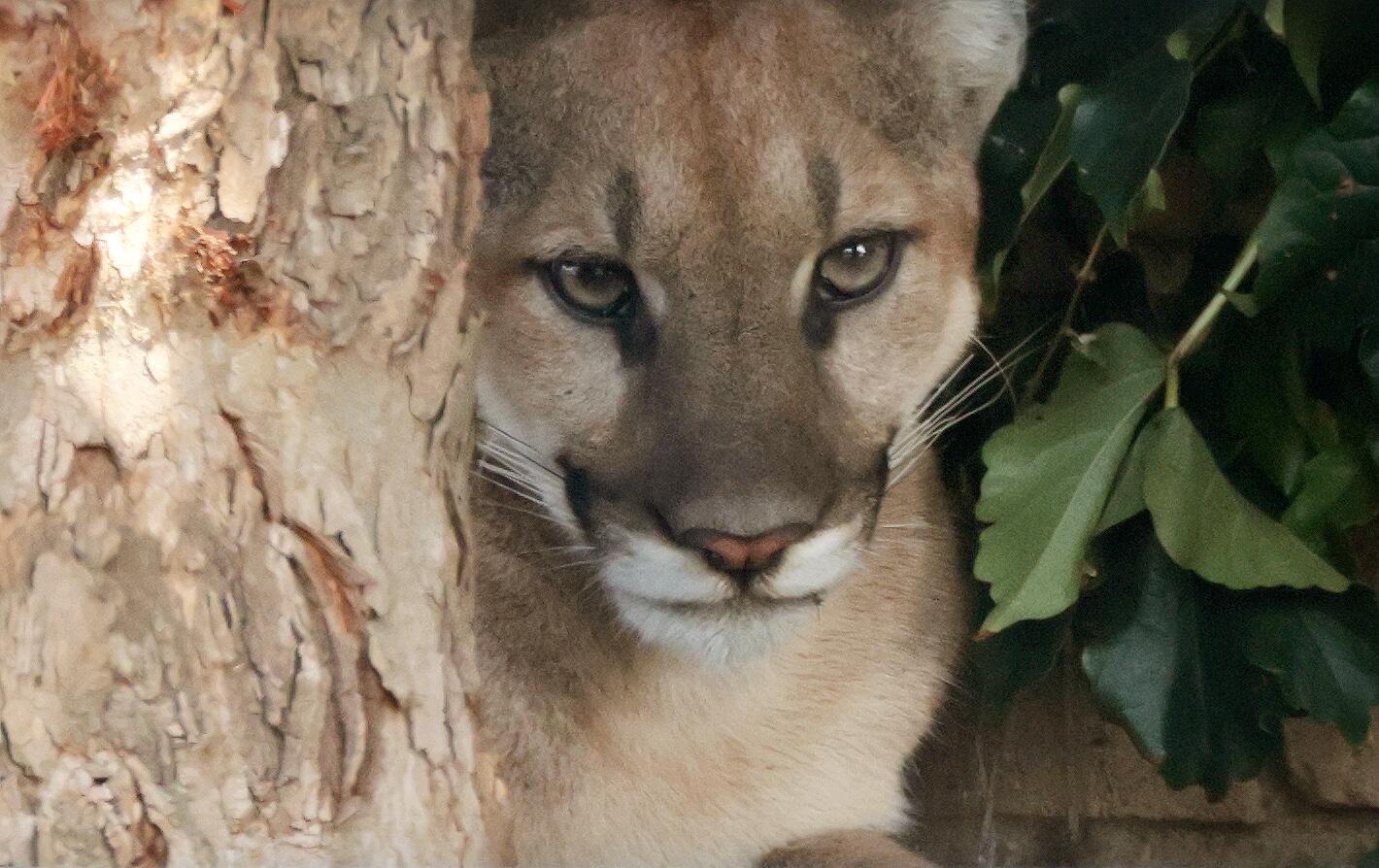
Urban expansion inevitably intersects with apex predator territory, creating operational challenges for municipal emergency response teams. When a mountain lion enters a residential zone like San Dimas, the situation transitions from a standard wildlife observation to a high-consequence containment scenario. Standard reporting typically focuses on the novelty of the sighting or the anxiety of residents. A rigorous analytical breakdown requires shifting the focus toward the underlying variables governing human-wildlife proximity, the mechanics of spatial displacement, and the strict protocols required to neutralize physical risk without causing system failure in public safety operations.
The Drivers of Spatial Displacement
Understanding why a puma traverses a suburban grid requires examining the ecological and environmental pressures forcing wildlife out of established corridors. Mountain lions maintain vast home ranges, often spanning dozens of square miles. Movement into human-dominated landscapes is rarely random; it is driven by a distinct set of ecological triggers.
Habitat Fragmentation and Infrastructure Density
Suburban sprawl divides contiguous wilderness into isolated patches. Roads, retaining walls, and residential developments act as semi-permeable barriers. When natural transit routes are severed, young dispersing males or foraging adults must navigate high-risk corridors to find territory or resources.
Resource Availability in Urban Peripheries
Residential areas inadvertently supply high-calorie attractants. Unsecured domestic pets, backyard livestock, and concentrated populations of urban herbivores such as raccoons, opossums, and mule deer establish a dense food web along the wildland-urban interface. The presence of these prey animals lowers the energetic cost of foraging, pulling predators past the boundary line separating wild lands from municipal zones.
Drought and Environmental Stressor Impact
Prolonged dry spells alter the distribution of native prey species. As ungulates move toward irrigated residential landscaping, golf courses, and artificial water sources, predators track them directly into suburban neighborhoods. The behavioral shift is a direct response to shifting thermodynamic and nutritional requirements.
The Operational Phases of Wildlife Containment
Emergency services and fish and wildlife agencies deploy a standardized, highly conservative protocol when managing large carnivores in populated sectors. Every second of delay increases the probability of an erratic civilian response, which dramatically elevates the risk profile for both humans and the animal.
Perimeter Establishment and Containment Isolation
The primary objective upon confirming a sighting is spatial lockdown. Law enforcement secures a perimeter to restrict civilian movement and minimize sensory inputs—such as noise, flashing lights, and crowds—that induce panic in the animal.
- Containment Radius: Emergency personnel establish a hard boundary based on line-of-sight and density of structural cover.
- Acoustic Management: Sirens are muted, and foot traffic is restricted to prevent the animal from bolting into high-traffic thoroughfares or hidden residential yards.
- Elevated Vantage Points: Responders secure elevated positions on roofs or utility vehicles to maintain continuous visual tracking.
Chemical Immobilization Mechanics
Once the animal is isolated, usually sequestered within a shaded backyard, dense brush, or under a deck, the intervention shifts to chemical immobilization. This phase demands precise ballistic calculation and pharmacological expertise.
Dart projectors deliver a measured dose of a dissociative anesthetic, typically a combination of ketamine and xylazine or tiletamine-zolazepam. The dosage must be calibrated based on an estimated weight of the animal, ranging from 80 to 160 pounds depending on age and sex.
An underdose results in prolonged agitation and partial paralysis, creating an extreme hazard for ground crews. An overdose risks respiratory arrest, requiring immediate reversal agents and emergency veterinary intervention. The margin for error is narrow, governed by the kinetic energy of the dart, wind resistance, and the muscular density of the target muscle group.
Safe Extraction and Transport Protocols
After chemical induction takes effect, the recovery team initiates physical relocation procedures.
- Sensory Deprivation: The animal is blindfolded to minimize visual stimuli and reduce stress upon waking. Earplugs are sometimes applied to dampen environmental noise.
- Thermal Regulation: Large carnivores under anesthesia are susceptible to hyperthermia or hypothermia depending on ambient temperatures. Responders monitor core body temperature continuously.
- Secure Containment: The animal is transferred into a reinforced, ventilated transport crate designed to withstand heavy impact forces.
- Release Site Selection: Wildlife biologists evaluate potential release zones based on habitat quality, presence of established resident populations, and distance from urban centers. The chosen release site must offer immediate cover and an adequate baseline prey density to discourage secondary displacement back toward human settlements.
Risk Matrices and Public Safety Economics
Municipalities often operate under reactive frameworks rather than predictive models when managing apex predators. This posture creates systemic inefficiencies in resource allocation.
The Cost of Public Panics
Uncontrolled media propagation during an urban wildlife incident generates cascading logistical failures. When citizens self-mobilize to locate or photograph the animal, they compromise containment perimeters. Police departments are forced to divert patrol units from critical public safety duties to manage civilian crowds, inflating the operational expenditure of the event.
Agency Jurisdictional Friction
Wildlife management at the municipal level often suffers from fragmented authority. City police departments, county sheriff offices, state fish and wildlife divisions, and private animal control contractors may all hold overlapping or ambiguous jurisdiction. Without a pre-established command structure, decision-making velocity drops, increasing the window of exposure for the public.
Strategic Resource Allocation for Municipal Infrastructure
Mitigating future incursions requires shifting from tactical containment to structural prevention. Municipalities experiencing recurring wildland-urban interface pressure must implement proactive engineering and policy frameworks.
- Wildlife Corridors: Constructing dedicated overpasses and underpasses across major arterial highways allows large mammals to traverse infrastructure without entering ground-level traffic lanes.
- Enforced Waste and Attractant Management: Standardizing animal-proof refuse containers across foothills communities cuts off the secondary food web that draws predators into yards.
- Early Warning Sensor Arrays: Deploying acoustic monitoring networks and thermal-imaging cameras along the immediate perimeter of residential zones provides automated alerts to wildlife agencies before animals penetrate deep into the urban grid.
Establish permanent, cross-jurisdictional incident command protocols that grant state wildlife biologists immediate operational authority over local law enforcement during high-consequence carnivore incursions, bypassing bureaucratic friction and standardizing containment speed across municipal boundaries.