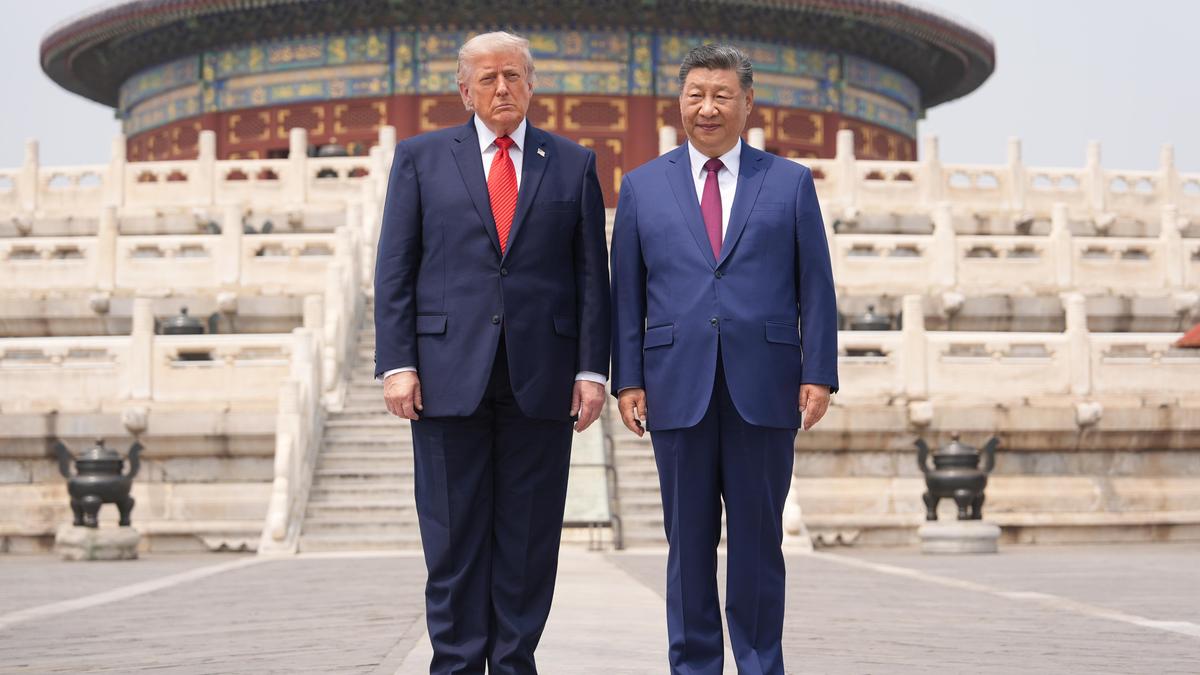
Washington and Beijing just hit the pause button on their economic knife fight. If you watch mainstream financial news, you might think global markets can finally breathe. Don't buy the hype. This temporary truce is a political band-aid, not a cure.
The recent stabilization measures, quiet diplomatic meetings, and cooled rhetoric look great on paper. They prevent a sudden economic meltdown right now. But if you scratch beneath the surface of these high-level negotiations, the structural fractures between the world’s two largest economies are actually widening. You might also find this related coverage interesting: Why Passing Through the Strait of Hormuz is Getting Safer for Cargo Ships.
This isn't a peace treaty. It's a strategic timeout. Both sides are simply catching their breath while they rearm for the next phase of a long-term economic conflict. If you run a business, manage investments, or supply components across borders, relying on this current calm is a dangerous mistake.
The Illusion of Stability
Politicians love photo ops. Smiling officials shaking hands in neutral European cities make for fantastic headlines. They signal to volatile stock markets that everything is under control. As reported in recent articles by NBC News, the results are significant.
But look at what is actually happening. The fundamental disagreements that triggered the trade war years ago remain completely untouched. China still heavily subsidizes its domestic green technology, electric vehicles, and semiconductor industries. The US still views these subsidies as a direct threat to American manufacturing and national security.
We see a cyclical pattern here. Tensions spike, tariffs threaten to choke supply chains, markets panic, and then both governments agree to a temporary truce to prevent total chaos. It happened during the previous administration's Phase One trade deal, which fell short of its purchasing targets. It is happening again now.
This cycle exists because neither nation can afford a total economic break right this second. The US is wrestling with stubborn domestic economic pressures and shifting labor markets. China is dealing with a cooling property sector and local government debt challenges. They paused the fight because their hands are full at home, not because they suddenly found common ground.
National Security Rules Everything Now
The old days of globalization are dead. Economic efficiency used to be the only metric that mattered. Companies built supply chains purely based on who could make a part the cheapest and ship it the fastest.
Not anymore. National security now trumps economic efficiency every single day of the week.
Take the semiconductor industry. The US Department of Commerce has steadily tightened export controls on advanced chips and semiconductor manufacturing equipment to Chinese firms. Washington frames this as a necessary step to protect military AI capabilities. Beijing views it as a direct containment strategy designed to choke its technological rise.
No amount of diplomatic smiling changes this reality. Consider these core areas where conflict is actively brewing despite the truce:
- Critical Minerals: China controls the vast majority of the world's processing capacity for rare earth elements, gallium, and germanium. These metals are vital for defense systems, smartphones, and electric vehicle batteries. Beijing has already demonstrated its willingness to restrict these exports when political tensions flare.
- The EV Showdown: Western markets are terrified of a wave of cheap Chinese electric vehicles hitting their shores. Tariffs on these vehicles are hitting historic highs in both the US and Europe. A temporary truce doesn't erase the massive overcapacity in Chinese factories looking for a home.
- Biotechnology: Capitol Hill is actively targeting Chinese biotech companies over data privacy and intellectual property concerns. This sector is rapidly becoming the next front in the technology blockade.
This isn't about simple tariffs on steel or soybeans anymore. It is a fundamental struggle over who controls the foundational technologies of the next century. You can't fix that with a few rounds of bilateral talks.
Why De-Risking Is Just Decoupling by Another Name
Washington and Brussels love the word "de-risking." They claim they don't want a complete separation from the Chinese economy, which would be disastrous. Instead, they say they just want to secure critical supply chains.
Honestly? It's a distinction without a difference.
When you tell companies to move their manufacturing out of China for "critical" sectors, that list of sectors has a habit of growing. What starts as advanced microchips quickly expands to include EV batteries, solar panels, pharmaceutical ingredients, and telecommunications gear.
Major corporations aren't waiting around to see how this semantic debate plays out. Apple has aggressively shifted significant parts of its iPhone production to India. Standard Chartered and other financial institutions constantly report that multinational clients are executing "China plus one" strategies, building redundant factories in Vietnam, Mexico, or Malaysia.
This corporate migration tells you everything you need to know about the truce. If businesses actually believed this peace would last, they wouldn't spend billions of dollars duplicating their supply chains elsewhere. They are paying a massive premium for safety because they know the current quiet is temporary.
Preparing Your Business for the Next Flare-Up
Stop reading the optimistic press releases coming out of diplomatic summits. Start looking at your own vulnerabilities. The truce gives you a window of opportunity to protect your operations before the next round of restrictions hits.
First, audit your tier-two and tier-three suppliers. You might think you don't buy from China because your primary supplier is based in Ohio or Germany. But where do they get their raw chemicals, specialized plastics, or micro-components? If a renewed trade spat chokes off their sub-suppliers, your production line stops anyway.
Second, stress-test your pricing models against higher tariff environments. Assume the current duties are the baseline, not the ceiling. If a 25% or 50% tariff lands on a key component next year, can your margins absorb it, or will you have to pass that cost onto customers who are already weary of inflation?
Finally, build regulatory compliance directly into your product development cycle. If your engineering team is designing a new product today using components that could easily trigger future export bans, force them to find alternatives now. It is vastly cheaper to design out geopolitical risk during the R&D phase than to re-engineer a finished product under the pressure of a sudden government mandate.
The geopolitical weather is clear today, but the barometer is dropping. Use this calm to fix your roof. Don't wait for the storm to start before you look for a tarp.