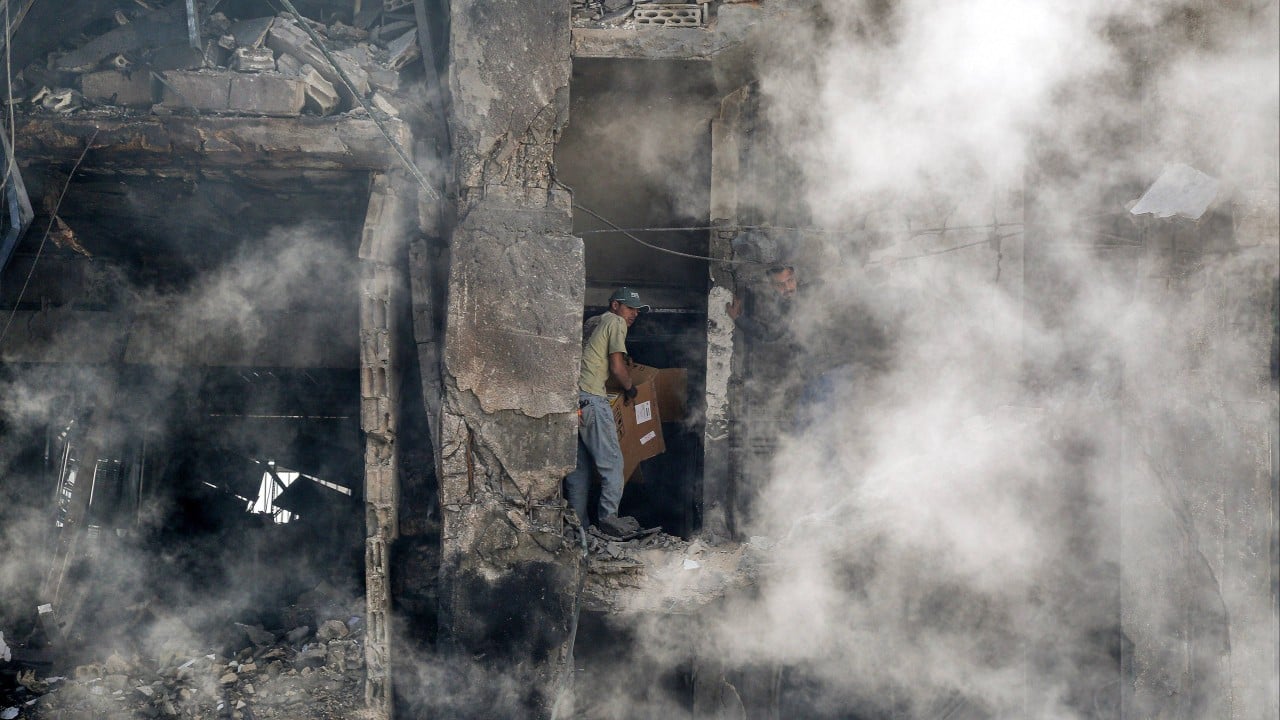
The headlines are shouting about a diplomatic breakthrough, but the ground in Beirut tells a different story. Just 24 hours after the United States and Iran announced a two-week ceasefire, Israel launched its most aggressive air campaign yet. It's a mess. If you think a deal between Washington and Tehran automatically secures the Lebanese border, you’re mistaken.
On Wednesday, April 8, 2026, Israeli strikes killed at least 182 people in Lebanon. That’s the highest single-day death toll since the broader regional war erupted in early March. While diplomats in Islamabad are patting themselves on the back, residents in Beirut’s southern suburbs are dodging missiles. The reality is that the "peace" everyone is talking about doesn't actually exist for Hezbollah.
The ceasefire that isn't
The fundamental problem is a massive gap in interpretation. Iran claims the truce—brokered with help from Pakistan—includes all fronts. They’re saying the war in Lebanon is part of the package. Israel and the Trump administration are saying the opposite. According to Prime Minister Benjamin Netanyahu, the deal with Iran is a separate track that doesn't restrict Israel's right to "dismantle" Hezbollah.
It’s a classic case of strategic ambiguity gone wrong. Netanyahu’s cabinet has already instructed the IDF to continue "Operation Eternal Darkness." In just ten minutes yesterday, 100 airstrikes hit Lebanon. We're talking about ten strikes every sixty seconds. That’s not a "teetering" ceasefire; it’s an active, high-intensity conflict that ignores the diplomatic paper trail.
Why Israel is ignoring the deal
Israel feels sidelined. The negotiations happened largely between the US, Iran, and Pakistan. From the Israeli perspective, stopping now would leave Hezbollah’s infrastructure intact along their northern border. Netanyahu is making it clear that he won't be bound by a deal he didn't sign, especially one that doesn't explicitly guarantee the disarmament of the Radwan Force.
Don't get it twisted—Israel wants the ceasefire with Iran to hold so they don't have to worry about long-range ballistic missiles from Tehran. But they want to use that "quiet" on the Iranian front to finish the job in Lebanon. It's a risky bet. Iran’s President Masoud Pezeshkian has already warned that continued strikes on Lebanon are a "blatant violation." If the IRGC decides to jump back in, the two-week pause won't even last through the weekend.
The Strait of Hormuz Factor
While bombs fall on Lebanon, the real leverage is happening at sea. Iran just closed the Strait of Hormuz again. They’re basically holding the world’s oil supply hostage to force Israel’s hand.
Tehran’s logic is simple: If our allies in Lebanon aren't safe, your tankers aren't safe. The White House called the closure "unacceptable," but calls don't move sea mines. Iran is currently formalizing a plan to charge ships for passage, treating the strait like a private toll road. This is the "explicit cost" the Iranian parliament speaker warned about.
What the negotiations actually look like
Currently, there's a push for a "separate but equal" track for Lebanon.
- The US-Iran track: Focuses on the Strait of Hormuz, nuclear enrichment limits, and a temporary halt to direct missile exchanges.
- The Lebanon track: Netanyahu wants this to focus entirely on disarming Hezbollah and pushing them north of the Litani River.
- The Lebanese stance: President Joseph Aoun is desperate. He’s pushing for the US to act as a guarantor because, frankly, the Lebanese army can’t stop the IDF or control Hezbollah.
Breaking the proxy cycle
The big mistake most analysts make is treating Hezbollah as just a puppet. They’re an autonomous force with their own local survival at stake. Even if Iran tells them to stop, Hezbollah isn't going to sit still while the IDF takes Bint Jbeil. As of April 9, the 98th Division of the IDF has almost full control of that town.
You’re seeing a shift in the regional power dynamic. The US is trying to pivot away from a full-scale war with Iran, but Israel is doubling down on a "New Middle East" where Hezbollah no longer exists as a military power. These two goals are currently at odds.
What happens in the next 48 hours
Expect the body count in Lebanon to rise. Israel just issued urgent evacuation orders for Al-Janah, a heavily populated part of Beirut. They aren't slowing down. If anything, they're speeding up to maximize gains before the diplomatic pressure becomes unbearable.
If you’re looking for a sign that the ceasefire is actually working, don't look at the news out of Washington. Look at the Strait of Hormuz and the flight paths over the Beqaa Valley. Until the US can convince Israel to stop the strikes—or convince Iran that the strikes aren't a dealbreaker—this "peace" is just a rebranding of the same old war.
Immediate actions for those following the crisis:
- Watch for the JD Vance-led delegation arrival in Islamabad on Saturday; that’s where the real terms will be hammered out.
- Monitor oil price fluctuations; any spike over $110 indicates the Strait of Hormuz is effectively blocked regardless of "negotiations."
- Follow the Lebanese National News Agency (NNA) for real-time casualty updates that the Western press often lags on.
The war isn't over. It just changed its shape.