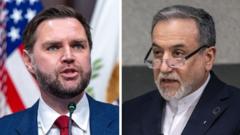
The ceasefire announced this week between Washington and Tehran feels less like a breakthrough and more like a collective gasp for air. After months of air strikes, a crippled Iranian navy, and global oil markets behaving like a roller coaster, both sides are heading to Islamabad to talk. But let’s be real. Calling this a "peace process" is generous. It’s a tactical pause.
You’ve likely seen the headlines about "significant progress," but if you look closer, the same old walls are still standing. The Trump administration wants a total dismantle of Iran’s nuclear capabilities, while Tehran is trying to trade its control over the Strait of Hormuz for a return to economic normalcy. It’s a high-stakes poker game where both players are holding losing hands but refusing to fold.
If you’re wondering why we can’t just sign a paper and move on, it's because these five issues aren't just technicalities. They're fundamental survival questions for both regimes.
The nuclear enrichment trap
Washington isn't interested in the 2015 JCPOA framework anymore. That’s dead and buried. The current US demand is simple but brutal: Iran must end all uranium enrichment, forever. No "sunset clauses" that let them start back up in a decade. No "peaceful" research that can be pivoted to a bomb in weeks.
Iran’s response? A hard no. From their perspective, enrichment isn't just about energy; it’s about sovereignty. They’ve seen what happens to regional leaders who give up their leverage. They watched the 2025 "Midnight Hammer" strikes wreck their facilities at Natanz and Fordow, and they've spent the last year trying to move what's left even deeper underground.
The US wants all enriched uranium shipped out of the country. Iran wants to keep a "research" stockpile. Until one side blinks on the very definition of "peaceful" nuclear work, the centrifuges will keep spinning, or the bombs will keep falling.
The Strait of Hormuz extortion
This is the new variable that wasn't on the table a few years ago. Iran has basically turned the world’s most important oil transit point into a private toll booth. By closing the Strait of Hormuz, they’ve managed to send Brent crude toward $100 a barrel despite the US being a top producer.
The US demands the immediate and permanent reopening of the waterway for all international shipping. Iran, however, sees the Strait as its only real "insurance policy" against further US strikes. They’re basically saying, "If we can’t export our oil because of your sanctions, nobody gets to move theirs."
Trump has called this "short-term extortion," but it’s working. The US Treasury had to issue a temporary license just to let some Iranian oil flow and cool down global inflation. Tehran won’t give up that leverage for a pinky promise. They want the sanctions gone before the ships move freely again.
Verifiable dismantling vs. pinky swears
Trust is at an all-time low, which is saying something for these two. The US isn't just asking for inspectors to come back; they’re demanding a "managed access" regime that would essentially give the IAEA—and by extension, Western intelligence—a map of every military bunker in Iran.
Iran views this as legalized espionage. They remember how the US used previous "inspections" to identify targets for the 2025 strikes. They’re demanding "credible assurances" that the US won't just pull out of the next deal when a new president takes office or when Trump gets bored.
The problem is that under the US system, no president can truly guarantee what the next one will do. This "permanence" issue is a massive roadblock. Iran wants a treaty ratified by the Senate, which is politically impossible in the current climate.
The proxy war in Lebanon and beyond
You can’t talk about Iran without talking about Hezbollah. Israel has made it clear that even if the US and Iran stop shooting at each other, their campaign against Iranian proxies in Lebanon will continue.
Iran wants the ceasefire to cover their regional allies. They see Hezbollah as their first line of defense. If Hezbollah is wiped out, Iran feels exposed. Meanwhile, the US (pushed heavily by Israel) is demanding that Iran stop funding and arming these groups as part of any "Grand Bargain."
Basically, the US wants Iran to stop being a revolutionary regional power and start being a "normal" country. Iran’s leadership believes that being a "normal" country in the Middle East is a death sentence.
Sanctions relief timing
This is the classic "chicken and egg" problem. Iran wants the sanctions lifted on day one so their economy can breathe and they can stop the domestic protests that have been rocking Tehran since late 2025. They need money to fix their crumbling infrastructure and quiet the streets.
The US, burned by the 2015 experience, wants "conditioned relief." They want to see the centrifuges dismantled and the uranium shipped out before the money starts flowing. They’re worried that if they lift sanctions first, Iran will just take the cash and keep their nuclear program in the basement.
It’s a fundamental disagreement over the sequence of events. Iran won’t move without the money; the US won’t give the money until Iran moves.
Don't expect a "Mission Accomplished" banner anytime soon. If you're looking for the next move, watch the Islamabad talks for any mention of a "phased" approach. A real win would be a tiny, incremental agreement—like trading a partial reopening of the Strait for a specific, limited lift on medical or food imports.
If they try to go for the "Grand Bargain" all at once, they’ll fail. Watch the oil prices. If they stay high, it means the markets don't believe a deal is coming. If you're tracking this, keep your eye on the IAEA reports out of Vienna next month. If inspectors aren't getting into the "rebuilt" sites, the ceasefire is as good as dead.



