The narrative that a massive segment of the American population has turned against medical science is fundamentally flawed. When you strip away the frantic headlines and the social media noise, the reality is far more nuanced. Most Americans are not hard-core vaccine refusers. Instead, they are caught in a deep, agonizing fog of uncertainty. They are not looking for an ideological battle; they are looking for answers they can trust from institutions that have systematically burned their credibility over the last several years.
This isn't a problem of anti-science sentiment. It is a crisis of institutional legitimacy.
To understand why this is happening, you have to look past the binary labels. For decades, the public health establishment operated on a model of absolute authority. You received guidance, you followed it, and the system functioned on a foundation of implicit trust. That foundation cracked during the pandemic. When public health messaging became inextricably tied to political agendas and shifting mandates, the average citizen began to question not just the medicine, but the messenger.
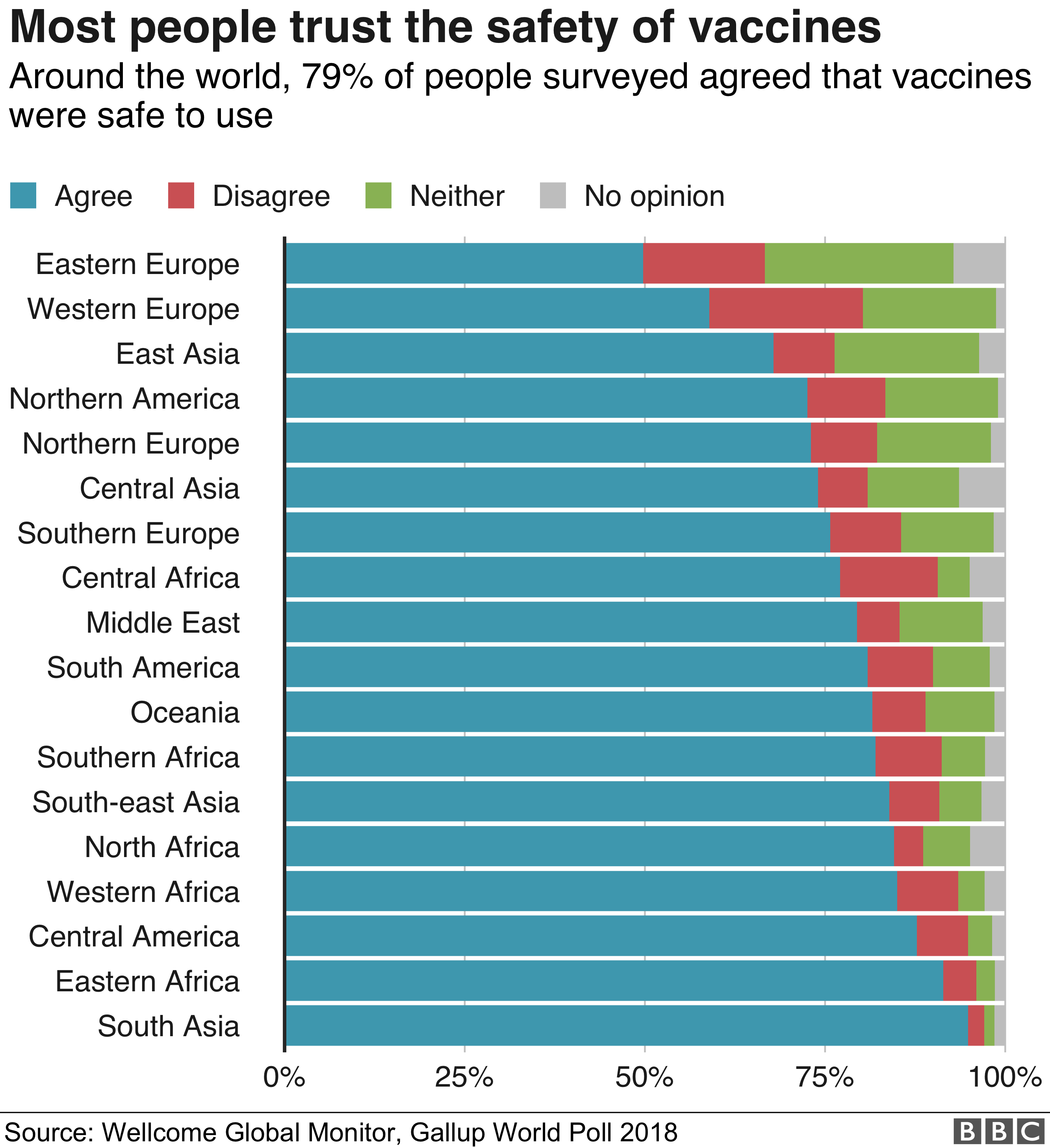
Consider the data. A small, concentrated minority—often cited as the "hard-core" refusers—actually accounts for a tiny slice of the adult population. The vast majority of Americans still hold generally positive views on the foundational importance of immunization. Yet, confidence in safety testing and the standard childhood vaccine schedule has eroded significantly. This shift is not necessarily driven by a rejection of biology or physics. It is driven by a profound skepticism regarding how that science is packaged, mandated, and communicated by government agencies and pharmaceutical entities.
The friction is often misdiagnosed as ignorance. Experts frequently treat vaccine hesitancy as a failure of education, assuming that if they just provide more charts, more data, and more infographics, the "hesitant" will fall into line. This is a strategic error. When you tell a person who is already skeptical that they simply do not understand the data, you are not inviting them into a conversation. You are dismissing their lived experience.
If a parent feels that their concerns about a specific vaccine schedule were brushed aside by a rushed clinical trial or a bureaucrat prioritizing political optics over transparency, they do not suddenly become a scientist by reading a government pamphlet. They become more suspicious. They retreat into peer-to-peer networks where they feel heard, even if those networks are filled with flawed information.
One of the most ignored factors in this friction is the role of institutional memory. Many Americans have seen government agencies walk back claims, reverse guidelines, and oscillate on critical safety matters. When the goalposts move, the public does not just watch the game—they stop believing the referee is keeping score correctly.
Hypothetically, imagine a patient visiting a primary care physician. The patient asks a genuine question about the timing of a multi-dose vaccination series. If the physician responds with a standard, pre-approved script that feels designed to shut down debate rather than engage with the concern, the patient walks away feeling managed rather than treated. That moment of interaction is where the public health crisis is won or lost. It is rarely won in a national press conference.
The current strategy of doubling down on top-down messaging is failing because it treats the public like a demographic to be managed rather than a partner to be engaged. The obsession with labeling anyone who asks a question as "anti-vaccine" has a chilling effect. It pushes the uncertain into the arms of the radical. When you remove the middle ground where questions can be asked without judgment, you leave no space for moderate, cautious individuals to navigate their own health decisions.
We are witnessing the end of an era where medical dictates were accepted without question. The path forward is not found in more aggressive marketing or harsher social stigmatization. Both approaches have been tried, and both have served only to harden existing divisions.
Rebuilding trust requires a radical pivot toward radical transparency. It requires institutions to admit where knowledge gaps exist, to explain the process of science in real time—including the possibility of revision—and to respect the agency of the individual. If public health leaders cannot or will not treat the public as intelligent participants in their own medical welfare, the erosion of confidence will continue. The challenge is not that people have stopped listening to science. It is that they have stopped believing the authorities are telling them the whole truth.
The silence after a question is asked is often louder than the prepared answer that follows. Institutions that fear that silence will continue to lose the room. Those that embrace it and fill it with honesty might just begin the long, slow work of repairing the connection.