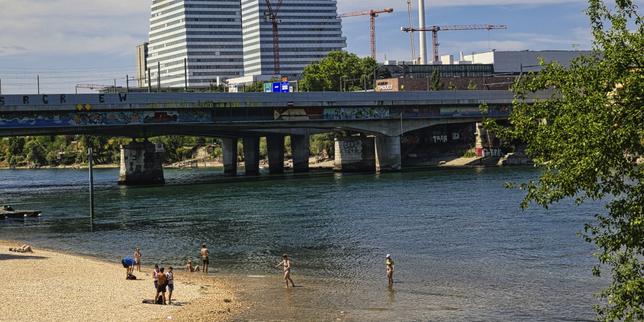
The water does not look like a highway. It looks like a slow, green muscle sliding down from the Alps, heavy with the weight of European industry, smelling faintly of coal dust, diesel, and wet stone.
Stand on the banks of the Rhine near Basel, and you can hear the deep, metallic thrum of commerce moving beneath the surface. Or at least, you used to.
Today, the sound is different. It is sharper. The scraping of steel hulls against hidden gravel bars. The worried chatter of freight captains peering at mud-stained depth gauges that drop lower with every passing week of unbroken summer heat.
Low water. Two words that sound deceptively simple, almost bureaucratic. But to understand what happens when the Rhine shrinks is to understand how a nation tucked securely inside the mountains, far from any ocean, can suddenly find its economic breathing pipe pinched shut.
Consider a hypothetical captain named Markus, a man whose family has steered barges down this liquid corridor for three generations. Markus does not read economic forecasts to know the state of Swiss manufacturing. He reads the marks on the ancient stone piers of the Basel harbor. When the water dips below the red line, Markus knows his cargo must shrink. A barge cannot carry twelve hundred tons of steel coils or chemical feedstock if it is scraping bottom in three feet of stagnant silt. It can only carry six hundred. Then four hundred. Eventually, it ties up to the concrete wall entirely, a massive, floating monument to immobility.
This is the hidden vulnerability of Swiss trade. While the world pictures Switzerland as a pristine sanctuary of private banks, watchmakers, and snowy peaks, the engine room of its actual manufacturing base relies on a wet highway. Roughly ten percent of all Swiss foreign trade moves along this watery artery. Chemicals from Basel laboratories, heavy machinery destined for global export, raw materials for pharmaceutical giants, and the fuel that heats homes and powers regional transport—all of it floats north and south on the back of the Rhine.
When the river drops, the price of everything rises.
It is a curious thing to watch a modern, highly digitized economy scramble because of a puddle. Economics textbooks love to talk about supply chains as intricate webs of software and global logistics. They feature clean flowcharts with arrows pointing neatly from producer to consumer. But peel back the pixels of those digital diagrams, and you find something painfully physical. Iron. Water. Gravity.
During historic droughts, such as the punishing dry spells that have increasingly plagued central Europe, the Rhine recedes to fractions of its normal volume. The shipping lanes narrow. Insurance rates for cargo skyrocket. A single barge that normally replaces the need for dozens of roaring freight trucks is suddenly reduced to hauling a fraction of its capacity, forcing companies to scramble for scarce rail cars that simply do not exist in sufficient numbers.
To make matters worse, the rail network cannot instantly absorb the displaced weight. Swiss rail lines are marvels of engineering, but they are already heavily utilized by passenger commuter traffic and high-value cargo. They cannot pivot overnight to carry thousands of tons of heavy liquid chemicals or bulk raw materials without choking the tracks.
The financial friction ripples outward with quiet devastation. A chemical plant in the Basel canton finds its production lines slowing down, not because demand has vanished, but because the raw inputs sitting in a barge terminal seventy miles downriver in Germany cannot reach the factory gates. Margins compress. Delivery schedules shatter. The consumer notices nothing unusual at first, save for a subtle, creeping inflation that defies simple monetary explanations.
We forget that modern wealth is deeply parasitic on ancient geography. The Romans built their forts along these exact banks because they understood that water is the cheapest carrier of heavy things. Two thousand years later, despite fiber-optic cables and artificial intelligence, our prosperity still rises and falls with the rain and the melting glaciers of the Grisons.
When the river bed bakes under a relentless July sun, revealing jagged rocks and forgotten debris from decades past, it serves as a visual rebuke to human hubris. We have engineered financial derivatives, algorithmic trading floors, and global supply networks that span continents in milliseconds. Yet, all of it remains tethered to a physical ditch carved by retreating ice age glaciers thousands of years ago.
The dry river bed is a silent warning. It whispers that the margin between stability and chaos is measured in inches of water. As climate patterns shift and the ancient rhythm of Alpine snowmelt accelerates into early spring floods followed by brutal summer parching, the economic strain on landlocked industrial hubs will only intensify.
The water will return, eventually. The autumn rains will swell the channel, and the heavy barges will ride high and deep once more, churning past the ancient stone piers of Basel. But the memory of the mud will linger. Beneath the polished veneer of commerce, the quiet riverbed waits, reminding everyone that the greatest vulnerability is often the one we take completely for granted until it runs dry.