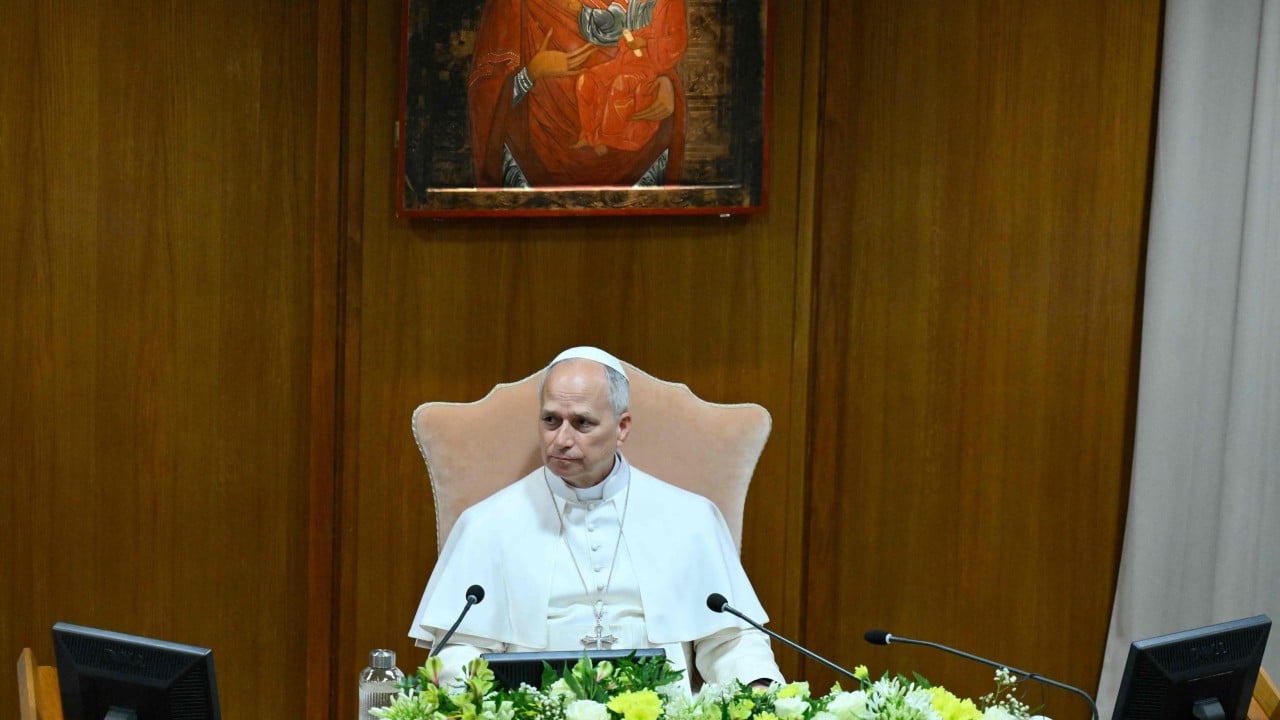
Pope Leo XIV shattered the comfortable, corporate consensus on artificial intelligence automation on Monday, releasing a sweeping papal manifesto that demands the immediate global disarming of autonomous algorithms. In his first encyclical, Magnifica Humanitas, the history-making first American pontiff directly attacked the aggressive tech deregulation favored by Washington, declared the Catholic Church's ancient just war doctrine completely outdated, and forced Silicon Valley executives to confront the hidden human exploitation underpinning their multi-billion-dollar models. By framing the computation race not as an engineering milestone but as a raw struggle for geopolitical and commercial dominance, the Vatican has shifted the global AI conversation from abstract tech-ethics to immediate, practical resistance.
The document represents a severe escalation in the global regulatory battle. Rather than issuing a standard, polite call for corporate responsibility, the Pope staged the release alongside Christopher Olah, the co-founder of safety-focused AI firm Anthropic. This calculated presentation exposed a growing rift within the tech sector itself, highlighting how current commercial and military pressures directly collide with basic human survival.
The Myth of Clean Silicon
Mainstream tech reporting routinely treats computational models as ethereal, clean products of pure mathematics. The Vatican completely rejects this illusion.
Magnifica Humanitas exposes the vast, low-wage human infrastructure that keeps modern data centers functioning. The Pope pointed directly to the millions of content moderators, data-labelers, and low-paid tech contractors who endure daily psychological trauma to clean up toxic training data.
Behind the sleek user interfaces sits a brutal extraction economy. The document details how the pursuit of larger datasets relies on the physical destruction of communities, including child labor in rare-earth mining operations that supply computer hardware manufacturers.
"Nothing in the world of AI is immaterial or magical," the Pope wrote, explicitly linking algorithmic efficiency to human suffering. "They are scarred, injured and worn down so that computational flow may continue uninterruptedly."
By focusing on physical hardware and labor, the Vatican dismantles the tech industry's favorite defense mechanism: the idea that software is neutral. The document forces a critical realization. Software cannot be separated from the human cost of its creation.
The End of Just War in the Algorithmic Age
The most explosive policy shift in the encyclical lands directly on global defense ministries. For centuries, international law and Western military policy have relied on theological frameworks to justify conflict, evaluating whether military actions meet specific ethical criteria.
Leo explicitly retired that framework for modern combat. He stated that the introduction of automated targeting, autonomous drone swarms, and predictive battlefield algorithms makes human accountability impossible.
The political timing is highly combative. Washington has pushed aggressively to integrate commercial AI into military and surveillance operations, frequently using religious rhetoric to validate its defense postures. The Pope explicitly countered this approach, stating flatly that no computer program can make the taking of human life morally acceptable.
This is a direct challenge to the business models of defensive tech startups rushing to secure lucrative defense contracts. When a machine determines a target, the chain of moral command breaks. The Vatican's position is uncompromising: handing life-and-death decisions to software is an absolute moral failure, regardless of accuracy metrics.
Subsidiarity vs the Technocratic Elite
A concentrated group of private executives in California and Seattle currently dictates how human communication, memory, and labor function. The encyclical identifies this extreme concentration of data ownership as an existential threat to democratic societies.
To combat this, the Vatican invokes the economic principle of subsidiarity. This principle dictates that social and political decisions must be handled by local communities rather than distant, centralized authorities.
| Current AI Power Structure | The Vatican Subsidiarity Model |
|---|---|
| Centralized corporate ownership of data infrastructure | Strict public regulation and shared data ownership |
| Closed-door development of proprietary models | Open, public discussion of ethical frameworks |
| Algorithmic engagement maximizing outrage and division | Local community oversight to protect cultural identity |
Tech monopolies have effectively built digital monopolies that bypass local governments entirely. When a single company modifies its algorithm, it can instantly disrupt small business economies, alter national political discourse, and change how children learn. The Pope argues that local institutions and civic organizations cannot remain passive consumers of these updates. They must possess genuine veto power over deployment.
The Failure of Corporate Self Regulation
The presence of Anthropic’s Christopher Olah at the Vatican press conference confirmed that the tech industry’s internal guardrails are failing. Olah admitted that leading laboratories operate under commercial and geopolitical pressures that prevent them from executing basic safety procedures.
Voluntary corporate pledges are useless against market forces. A company prioritizing safety over deployment speed faces immediate financial obsolescence if its rivals choose to ship unverified models. The encyclical recognizes this structural trap. It demands binding international legal frameworks and independent oversight bodies with the authority to halt dangerous deployments.
True disarmament requires removing technology from the logic of endless market competition. It requires treating advanced computation as a public utility rather than a corporate weapon.
The Vatican has drawn an unmistakable line. The primary issue facing society is not whether machines will achieve consciousness, but whether human beings will willingly surrender their critical thinking, agency, and moral responsibility to a handful of corporate servers. The document offers a clear ultimatum to developers, regulators, and citizens alike: treat technology as a tool to serve human dignity, or watch it become an unaccountable tool of human subjugation.