Urban vector management in the United States has reached an operational inflection point. Traditional chemical applications—synthetic pyrethroids and organophosphates—suffer from diminishing marginal returns driven by physiological resistance in target arthropod populations and strict environmental accumulation limits. Into this methodology gap steps biological vector suppression, most visibly manifested in the deployment of hundreds of thousands of laboratory-reared, bacteria-infected male mosquitoes across the Washington, District of Columbia metropolitan area.
Understanding this intervention requires deconstructing the underlying mechanics of population suppression, the cost function of biological scaling, and the ecological boundaries of species-specific targeting.
The Three Pillars of Incompatible Insect Technique
The strategy deployed in the District relies on the Incompatible Insect Technique, executed via the introduction of strains carrying Wolbachia pipientis bacteria. Unlike genetic modification strategies that alter the host genome, this approach leverages cytoplasmic incompatibility.
The structural mechanics operate through three distinct operational phases:
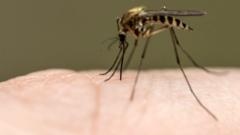
- Laboratory Sex-Sorting and Infection: Rearing facilities cultivate Aedes albopictus—commonly known as the Asian Tiger mosquito—under controlled conditions. Larvae are inoculated with specific strains of Wolbachia. Because operational efficacy depends entirely on releasing zero biting females, mechanical and optical sorting protocols must achieve near-total separation accuracy.
- Sustained Saturation Releases: Males are distributed across urban and suburban corridors in numbers proportional to the wild density. These males do not consume blood, as their mouthparts are morphologically adapted solely for nectar feeding; therefore, they pose no vector threat to human populations.
- Reproductive Sterilization: When a released laboratory-reared male mates with a wild female lacking the corresponding bacterial strain, biochemical incompatibilities prevent embryonic development. The female continues to oviposit, but the eggs fail to hatch.
This creates a targeted reproductive bottleneck. Rather than blanketing an ecosystem with broad-spectrum neurotoxins that affect non-target pollinators, the intervention utilizes the target species' own biological drive to locate mates as the delivery mechanism for population suppression.
The Economic and Logistical Cost Function
Scaling biological control across a dense urban environment introduces distinct logistical constraints that traditional chemical spraying avoids. Chemical fogging is capital-intensive upfront in equipment, but operationally simple: trucks or backpack sprayers disperse compounds on a reactive schedule.
Biological interventions invert this cost structure. They require complex, continuous rearing inputs, precise temperature-controlled transport, and timed release schedules that span multiple warm-weather months. The cost function is defined by the release ratio requirement. To suppress a robust wild population, the sterile-to-wild male ratio must exceed a critical threshold—often requiring multiple releases of tens of thousands of insects per acre to swamp local mating competition.
Furthermore, these systems are non-self-sustaining under standard Incompatible Insect Technique parameters. Because the released males are sterile or cause reproductive incompatibility without passing the modification to subsequent generations (unlike self-sustaining population replacement strains), the intervention ceases to suppress the population shortly after releases stop. Funding and deployment must remain continuous throughout the transmission season to prevent rapid demographic rebound.
Ecological Displacement and Target Specificity
A primary concern among urban stakeholders involves the ecological fallout of removing an insect population from a localized food web. Broad-spectrum insecticides routinely decimate beneficial populations, including local hymenoptera and lepidoptera.
Species-specific biological control eliminates this collateral damage through narrow taxonomic targeting. The Asian Tiger mosquito is an invasive species in North America, having arrived via international shipping logistics in the late 20th century. Because it occupies an aggressive urban micro-niche—utilizing small artificial containers like discarded tires, clogged gutters, and plant saucers for larval development—its local eradication does not destabilize native aquatic or terrestrial food webs. Predators such as bats, birds, and spiders exhibit wide dietary breadth, meaning the local reduction of Aedes albopictus forces no trophic collapse.
Evaluating the Limits of Urban Biopesticides
Despite high target specificity, biological vector control is not a universal panacea. Several operational vulnerabilities constrain its efficacy:
- Dispersal Barriers: Urban architecture, wind currents, and micro-climates impede the flight paths of laboratory-reared males, creating localized spatial gaps where wild mating escapes suppression.
- Immigration Pressure: Continuous migration of fertile mosquitoes from untreated adjacent jurisdictions dilutes the sterile-to-wild male ratio, neutralizing gains achieved within core project boundaries.
- Public Perception Friction: Introducing bags or boxes of mosquitoes into public consciousness triggers immediate visceral resistance, requiring intensive public education campaigns to clarify that the released insects are incapable of biting.
Vector control authorities must model these variables dynamically, integrating trap-based density monitoring with geographic information systems to adjust release densities in real time rather than relying on static deployment maps.
Deploy regional geographic surveillance grids prior to the next seasonal cycle, mapping wild Aedes density differentials against urban green spaces to optimize the spatial distribution frequency of future biological releases.