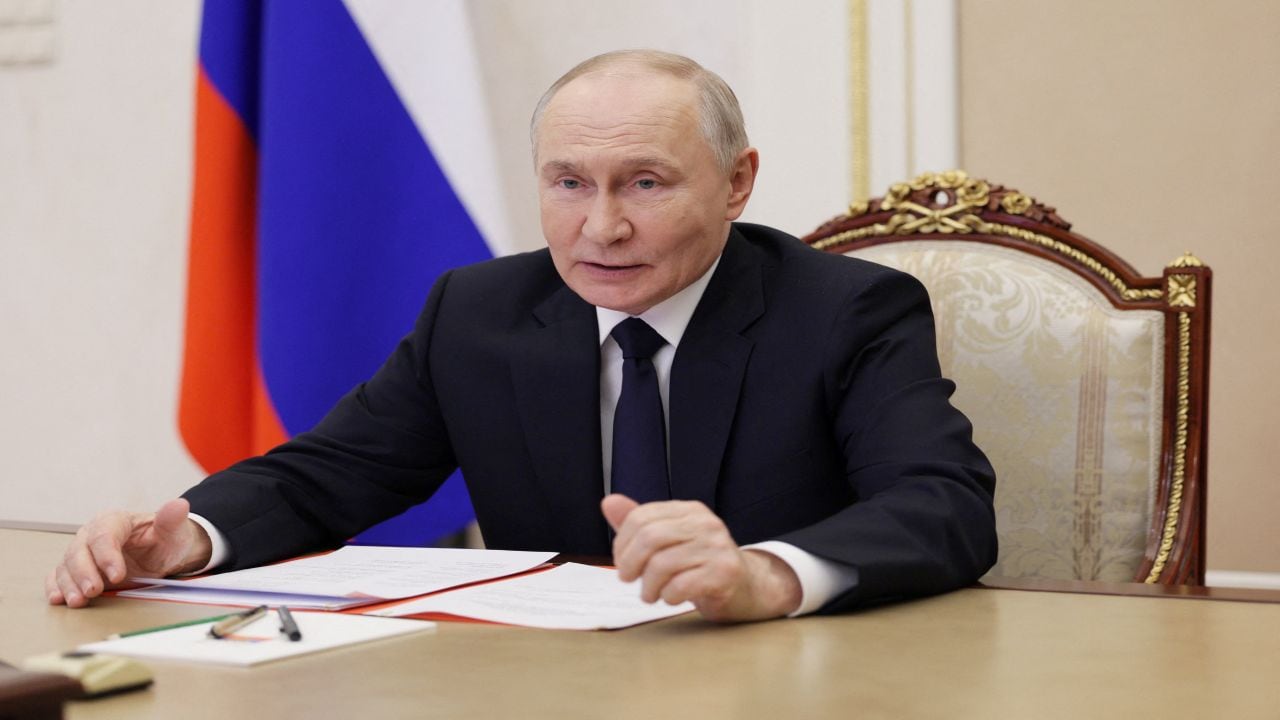
Vladimir Putin just spent a significant amount of time talking about how great Indian software engineers are. Speaking at the St. Petersburg International Economic Forum, the Russian President showered praise on India's technology sector. He noted that Indian coders have achieved global fame through sheer talent and deep education. It sounds like a standard diplomatic compliment. But if you think this is just a pat on the back for New Delhi's tech graduates, you're missing the real story.
This isn't just about code. It's about a shifting global economy where the traditional rules of trade and alliances are being rewritten. Putin's explicit focus on India's technology industry happens at a moment when Russia is desperate to build an economic system entirely independent of Western control. Software is the backbone of that independence.
By analyzing the actual text of his speech and looking at the macroeconomic data behind the BRICS economic expansion, we can see exactly what this means for the global tech supply chain.
The Geopolitical Strategy Behind the Tech Praise
When a world leader speaks at a major economic forum, they don't say things by accident. Every sentence serves a strategic purpose. Putin explicitly stated that India is a key partner and noted its massive share of the international software market.
To understand why this matters, look at the broader context of his address. Putin spent a massive chunk of his time arguing that BRICS has completely overtaken the G7 in terms of economic power. He dropped some hard numbers to back it up. He stated that nearly half of the world's annual economic growth over the last five years came from BRICS countries. Specifically, he cited that BRICS accounts for 49% of that global growth compared to just 18% from the G7.
Russia is trying to build an alternative global system. Sanctions forced Moscow out of Western software ecosystems, banking networks, and supply chains. To survive, Russia needs advanced technology that doesn't originate in Silicon Valley.
India has exactly what Russia needs. The Indian IT industry isn't just large. It is completely woven into the fabric of global enterprise software. By publicly praising India's technology industry, Putin is signaling a desire for deeper technological integration between the two nations. This goes way beyond old-school trade deals involving crude oil and military hardware.
Why India's Technology Industry Matters to a Sanctioned Russia
For decades, the relationship between New Delhi and Moscow rested on two main pillars: defense and energy. India bought Russian fighter jets, and more recently, massive amounts of discounted Ural crude oil. But you can't run a modern digital economy on oil and hardware alone. You need software.
When Western tech giants pulled out of Russia, they left massive gaps in enterprise software, cloud infrastructure, and operating systems. Russia has been forced to scramble to build domestic alternatives. It's a slow, painful process.
India offers a massive pool of highly skilled, globally recognized tech talent that operates independently of Western strategic directives. India prides itself on its strategic autonomy. Prime Minister Narendra Modi has consistently refused to bow to Western pressure regarding India's trade with Russia. Putin openly acknowledged this during the forum, praising India for refusing to follow external diktats.
By tapping into Indian software expertise, Russia sees a path toward digital sovereignty. This could take several forms:
- Joint venture software projects that create enterprise tools free from Western backdoors
- Hiring Indian software development agencies to build custom infrastructure
- Collaborative research in artificial intelligence and automation that skips Western patent pools
This isn't theoretical. The two countries already have a history of highly complex technological collaboration. Look at the BrahMos missile program. It's a highly successful joint venture where Russian aerospace engineering combined with Indian software and control systems. Putin specifically highlighted this project as the gold standard for how the two countries should cooperate moving forward.
What This Means for Global Software Engineers
If you're a software engineer or a tech leader, this geopolitical positioning should catch your attention. The tech sector has spent thirty years operating under the assumption of a flat, globalized world. You could hire a team with members in San Francisco, Bengaluru, and Eastern Europe, and they would all use the exact same stack.
That unified tech world is fracturing. We are seeing the rise of a bifurcated tech stack. On one side sits the US-led ecosystem built on software from Microsoft, Google, AWS, and Apple. On the other side, an alternative stack is rapidly emerging, driven by Chinese hardware and supported by a diverse coalition of global tech talent.
Indian coders are uniquely positioned in the middle of this divide. The country's education system produces millions of engineering graduates who are fluent in the languages of global commerce and advanced computing. Because India maintains open diplomatic channels with both the West and the Global South, its tech workforce is becoming the ultimate bridge.
However, this positioning comes with massive risks. As tech infrastructure becomes increasingly weaponized through sanctions and export controls, Indian tech firms will face intense pressure. Washington will want assurances that sensitive intellectual property isn't leaking to Moscow. Moscow will want assurances that the software it buys can't be turned off remotely by a switch in California.
The Next Steps for Tech Firms and Developers
The romantic idea that technology exists outside of global politics is officially dead. If you are managing digital infrastructure or planning a global hiring strategy, you must adapt to this new reality immediately.
First, diversify your software dependencies. Relying entirely on a single geopolitical region for your software tools or your development talent is dangerous. Look closely at open-source technologies that cannot be locked down by regional sanctions or executive orders.
Second, understand the regulatory compliance shifts. If your business operates globally, expect stricter compliance checks regarding where your code is written and who has access to your repositories. The lines between software development and national security are blurring permanently.
Putin's comments in St. Petersburg weren't an award ceremony for Indian software engineers. They were a clear signal that the struggle for global influence has moved straight into the source code.