Rain in the mountains does not fall as drops. It falls as weight.
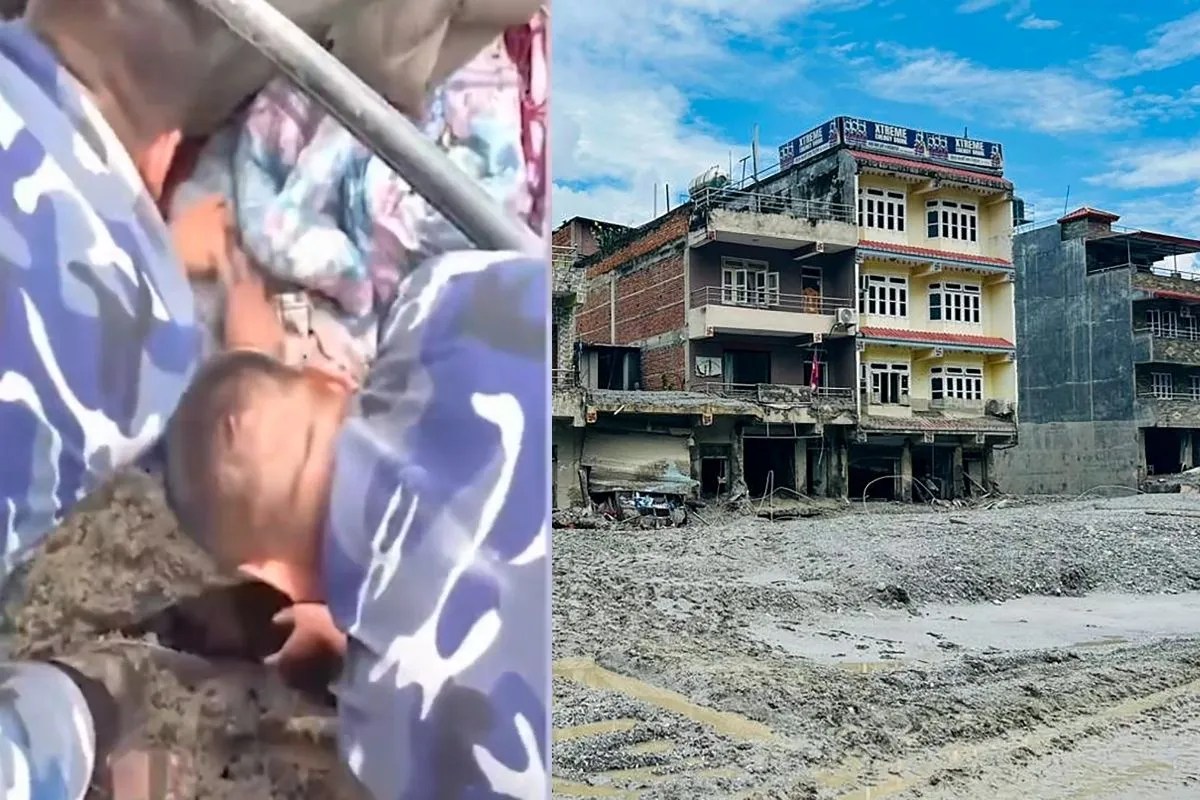
When the hillside above the valley finally let go, it did not happen with cinematic slowness. It was a roar that swallowed the sound of the river, a sliding wall of mud and shattered timber that erased houses before the families inside could finish their evening tea. In these moments, geography becomes an enemy. Roads vanish. Bridges snap like dry twigs. Electricity dies in a single, flickering second, plunging entire communities into a damp, suffocating dark.
For three days, the village of Sindhupalchok was a rumor.
The outside world knew only the broad strokes of catastrophe. Monsoon fury. Blocked highways. Rising rivers breaching danger marks. But numbers on a weather report cannot capture the texture of disaster. They cannot capture the smell of pulverized earth mixed with diesel and raw sewage, or the particular brand of silence that settles over a valley once the initial screaming stops. It is a heavy, stunned silence broken only by the erratic gurgle of muddy water seeking a new path through what used to be a living room.
Seventy-two hours.
In rescue logistics, those three days are a terrifying threshold. They represent the physiological limit of human survival without water, trapped beneath crushing debris in oppressive heat and humidity. Hope, under normal circumstances, is a renewable resource. Under tons of wet earth, it has an expiration date.
Amidst the ruins of a collapsed home, rescue workers moved with methodical, exhausting care. Heavy machinery was useless here; the access roads were buried ten feet deep miles away. Every boulder had to be shifted by hand. Every slab of concrete had to be levered with iron rods while men and women in mud-caked uniforms listened intently, straining to hear anything above the hiss of the persistent drizzle.
Then came the sound.
It was not a cry. A cry requires lungs full of air and strength that a six-year-old child trapped in a tomb of silt simply should not possess. It was a thread. A thin, vibrating whisper that slipped through a micro-fissure in the packed earth.
A voice beneath the rubble.
Imagine being the person who hears it. The heart stops. The chaotic symphony of the rescue site vanishes. Every face turns toward the source. For a moment, doubt paralyzes the team—was it just the settling of the mud, or the wind playing tricks on exhausted ears?
Then it came again. A fragile, unmistakable syllable.
Rescuers do not work faster in these moments; they work with terrifying precision. A mistake with a shovel could turn a miraculous survival into a tragedy. They dropped to their knees, digging with bare fingers where the earth was softest, clearing away splintered plywood and wet insulation. They spoke into the dark, shouting words of comfort they could barely feel themselves.
"We hear you. Stay still. We are coming."
What follows in a rescue operation of this scale is a masterclass in human stubbornness. It is the refusal to accept the finality of death. When six-year-old Puja was finally lifted from the suffocating dark, blinking against the brutal daylight, she was not just a survivor of a flash flood. She was a living indictment of despair.
She had survived seventy-two hours in an air pocket no larger than a kitchen breadbox, surrounded by the wreckage of her family's life, breathing stale air that grew thinner with every passing hour. How a child’s small frame endured the cold, the terror, and the sheer physical compression of the mud defies easy medical explanation. Yet there she was, wrapped in a coarse rescue blanket, clutching a stranger's thumb with a grip that felt like an anchor.
We look at disasters through the lens of statistics. We count the displaced, the missing, the millions of dollars in infrastructure damage. We debate climate policy and early warning systems in air-conditioned rooms hundreds of miles away. These intellectual exercises have their place. But they miss the human core.
Disasters are not measured in hectares of destruction or cubic meters of mud. They are measured in inches. The single inch of breathable air left in a collapsed room. The single inch of space between a falling beam and a child's head. The single thread of a voice cutting through the silence of a ruined valley.
As the heavy rain resumed, washing fresh gray sludge over the boots of the exhausted team, the villagers did not disperse. They stood shoulder to shoulder, watching the makeshift stretcher carry the child toward the waiting helicopter. They knew the road to recovery would take years, that the hillsides remained unstable, and that the monsoon was far from finished with them.
Yet, for one impossible afternoon, the mountain had given something back.
The mud still clings to the boots. The scars on the landscape will remain for generations, raw red gashes healing slowly under layers of wild grass and stubborn scrub. But beneath the surface of the tragedy, something else survived. A stubborn, quiet refusal to let the dark have the last word.