The Verdict That Shook Seoul
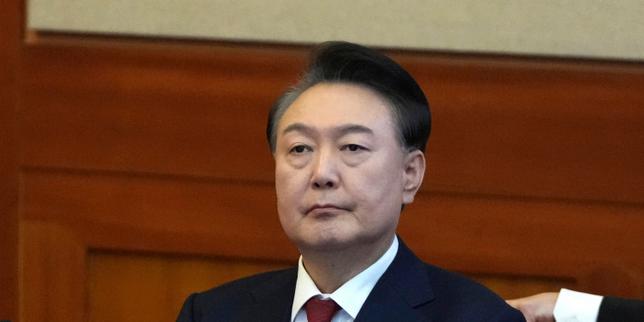
Former South Korean President Yoon Suk Yeol has been sentenced to two years in prison following a definitive ruling by the Seoul Central District Court. The conviction centers on his orchestration of illegal public opinion polls during his tenure, a systemic manipulation of data designed to artificially inflate political support and influence primary elections. While domestic media outlets have framed the sentence as an isolated case of electoral fraud, the reality cuts far deeper. This verdict exposes a systemic vulnerability within South Korea’s highly digitized democracy, where public opinion data is routinely manufactured, bought, and deployed as a kinetic political weapon.
The court found that Yoon, acting through intermediaries and rogue polling firms, violated the Public Official Election Act. The operation relied on creating artificial sample pools, rigging response rates, and intentionally leaking biased data to friendly media syndicates. In a political ecosystem where a candidate’s viability is tied directly to early polling numbers, these actions did not just tilt the playing field. They built an entirely fraudulent arena.
Inside the Mechanism of Manufactured Consent
To understand how a sitting president ends up behind bars for polling data, you have to look at the mechanics of the South Korean political machine. This was not a simple case of a politician looking at a favorable chart. It was a calculated, industrial-scale operation.
The strategy exploited a critical loophole in the country's public opinion tracking system. In South Korea, political parties rely heavily on "virtual numbers"—scrambled, temporary phone lines provided by telecom companies—to conduct internal primary polling. Yoon's operatives compromised this process through a two-step manipulation tactic.
The Shell Game of Virtual Numbers
First, the conspirators secured proprietary internal data regarding when and how these virtual numbers would be distributed. With this timeline in hand, they deployed specialized "call centers" staffed by partisan actors who utilized multiple SIM cards to spoof demographic data. When the legitimate polling firms called to gauge public sentiment, they weren't reaching a representative sample of the electorate. They were hitting a wall of coordinated operatives.
Second, the operation utilized a technique known as response rate suppression. In South Korea, official election polls must meet strict regulatory thresholds for response validity. By flooding the lines during specific windows, the conspiracy forced legitimate respondents out of the data pool, effectively curating a bespoke demographic that favored Yoon’s faction.
The resulting data looked flawless on paper. It passed regulatory muster, was uploaded to the National Election Survey Deliberation Commission, and was subsequently broadcast across major television networks. The public believed they were watching a organic surge in momentum. In reality, they were watching a mirror maze.
The Dark Money Pipeline Supporting the Charts
Data manipulation requires capital. Polling operations of this scale cannot be hidden in standard campaign expense reports, which are subject to rigorous audits by the National Election Commission. The investigation revealed that the funding for these illegal surveys was routed through a network of regional corporate entities disguised as market research firms and public relations consultancies.
[Corporate Donors / Factions]
       │ (Unreported Cash)
       ▼
[Disguised PR Consultancies]
       │ (Subcontracts)
       ▼
[Rogue Polling Agencies] ─► [Manufactured Data] ─► [Media Amplification]
These entities acted as clearinghouses for corporate donations that sought proximity to Yoon’s inner circle. Cash was funneled into these shell companies, which then subcontracted the actual data collection to complicit polling agencies. Because the transactions occurred under the guise of commercial market research, they evaded the legal caps placed on political contributions.
This financial structure highlights the deepest rot in the system. The corporations funding these polls weren't buying advertising; they were buying the perception of inevitability. When a candidate appears to be leading by double digits, political capital flows toward them automatically. Legislation aligns. Opposition softens. The investment pays for itself long before election day.
Why the Systemic Safeguards Failed
South Korea’s National Election Survey Deliberation Commission (NESDC) is often cited as one of the strictest polling watchdogs in the world. Yet, it stood by while this fraud was perpetrated. The breakdown occurred because the regulatory framework is fundamentally unsuited for an era of automated, high-frequency data generation.
The NESDC operates primarily on a model of post-hoc verification. They review methodology reports after the data has been collected and published. They check the math, verify the age and gender weights, and ensure the geographic distribution looks statistically plausible.
What they cannot do in real-time is verify the human identity behind the voice on the line. When an operative using sophisticated software manages hundreds of active profiles, the data fingerprints look entirely genuine. The algorithms used by regulators to detect anomalies are designed to catch lazy errors, not coordinated institutional fraud. The watchdogs were looking for mathematical discrepancies while the thieves were rewriting the source material.
The Broader Fallout for East Asian Governance
The sentencing of Yoon Suk Yeol is not an isolated event in South Korea's turbulent democratic history; it is a continuation of a pattern where the judiciary serves as the ultimate arbiter of executive overreach. However, the international implications are distinct this time around.
South Korea stands as a critical geopolitical linchpin in East Asia, balanced precariously between western alliances and regional economic realities. When the domestic political structure of such a state is revealed to be highly vulnerable to internal cybernetic manipulation, it raises immediate red flags for international security partners.
A government built on manufactured public support is inherently unstable. Its foreign policy shifts with the volatility of the polls it seeks to control. For allies relying on Seoul for long-term strategic commitments, this verdict is a stark reminder that the democratic institutions of the country remain highly volatile, susceptible to sudden corrections that can upend years of diplomatic groundwork overnight.
The Illusion of the Flawless Data Point
The fundamental lesson of the Yoon conviction is that data is not inherently neutral. For decades, modern democracies have treated polling data as a form of weather reporting—an objective measurement of an atmospheric condition called public opinion. This case proves that public opinion can be manufactured in a laboratory.
When data becomes the primary metric by which a politician’s legitimacy is judged, the temptation to manipulate that metric becomes absolute. Yoon’s team did not invent political deception, but they modernized it, turning the statistical tools designed to understand the electorate into an apparatus to deceive them.
The two-year prison sentence delivered to Yoon Suk Yeol provides a temporary sense of legal closure, but it leaves the machinery that enabled his rise completely intact. The virtual numbers are still being generated, the PR firms are still operating under corporate cover, and the public hunger for daily, horserace-style data remains insatiable. Until the systemic reliance on these easily corrupted metrics is broken, the integrity of the vote itself remains compromised. The cell door closing behind an ex-president does not fix the code that let him game the system in the first place.


