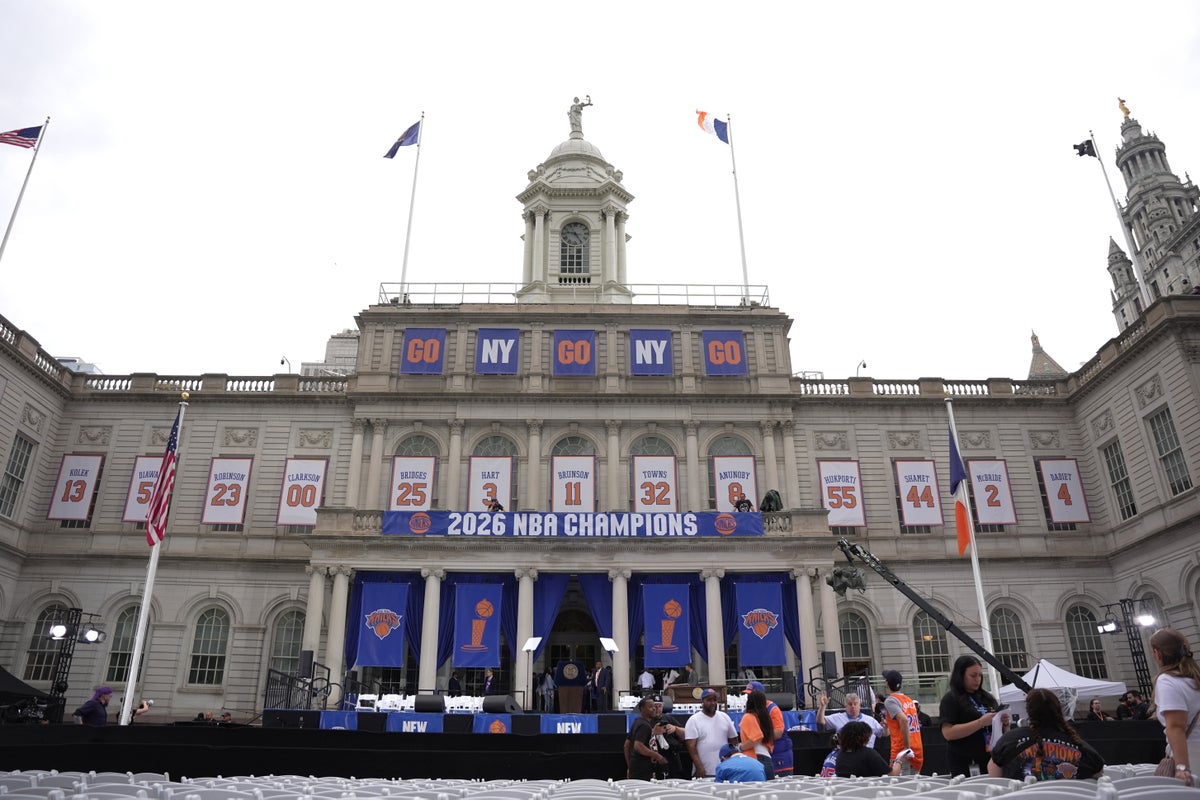
The modern sports arena is a cathedral of distraction. Beneath the blinding rafters of Madison Square Garden, twenty thousand voices fuse into a singular, deafening roar. Sneaker rubber squeaks against polished maple. The bass from the stadium speakers vibrates straight through the soles of your shoes. In that space, surrounded by the blur of blue and orange jerseys, it is easy to believe that basketball is just a game of geometry, speed, and muscle.
But sports have never been just about the final score. For a different look, check out: this related article.
When a team wins a championship, the echo of that victory ripples far beyond the arena walls. It travels down city avenues, into living rooms, and eventually, up the marble steps of the most powerful house in the world. A White House invitation is the traditional punctuation mark at the end of a championship season. It is a photo op. A handshake. A fleeting moment of national unity.
Lately, though, that invitation has begun to feel heavy. For many modern athletes, a trip to Washington is no longer a simple victory lap; it is a complex navigation of political identity, personal values, and public scrutiny. The decision to go, or to stay home, carries an invisible weight. Similar analysis on this trend has been published by NBC Sports.
And then, a legendary voice cuts through the noise, reminding everyone what is actually at stake.
The View from the Moderating Chair
To understand the emotional gravity of this conversation, you have to look at the woman holding the microphone. Whoopi Goldberg does not view the world through the sanitized lens of a traditional sports commentator. She views it through the lens of history, culture, and a lifetime spent breaking barriers in spaces that were never originally designed to accommodate her.
Sitting at the center table of The View, Goldberg reacted to the ongoing murmurs surrounding the New York Knicks and their potential future obligations. The discussion wasn’t merely about scheduling or team logistics. It was about presence. It was about ownership of space.
"I want all those Black men to stand in our house," Goldberg said, her voice carrying a mixture of fierce pride and urgent command.
The phrase hung in the air. Our house.
She wasn't talking about Madison Square Garden. She was talking about 1600 Pennsylvania Avenue.
In those eight words, Goldberg stripped away the contemporary partisan bickering that so often taints these events. She reframed the entire concept of the White House visit, shifting it from a political obligation to a historical reclamation.
The Unspoken Labor of the Past
To grasp why Goldberg’s statement resonates so deeply, consider a hypothetical young athlete. Let's call him Marcus. Marcus grew up in a neighborhood where the local basketball court was the only place that felt entirely safe, entirely his. Through sheer talent and thousands of hours of unseen sweat, he makes it to the league. He wins the ultimate prize.
Then, the invitation arrives.
Marcus hesitates. He looks at the current political climate, the headlines on his phone, the divisions fracturing the country, and he feels a deep ambivalence. He worries that by standing on that stage, he is endorsing policies or politicians that don’t align with his community. Staying home feels like a statement of resistance. It feels like preserving his authenticity.
But Goldberg’s argument challenges Marcus—and the real-world players he represents—to look backward before they step forward.
The White House was not merely designed by European architects; it was physically constructed, stone by heavy stone, by enslaved labor. The very foundations of the building were laid by people who were legally classified as property, individuals who possessed no rights, no citizenship, and no voice. For generations, Black Americans entered that building primarily through the service entrance, carrying trays, sweeping floors, and operating in the shadows of power.
When Goldberg demands that a modern team of successful, empowered, wealthy Black athletes walk through the front door of the White House, she is invoking that history.
Consider the profound shift in the timeline. The descendants of the people who built the structure under the whip are now being invited through the front gates as honored guests, celebrated for their excellence, dominance, and brilliance. In this light, skipping the visit isn't a boycott; it is a missed opportunity to claim an inheritance.
The Power of Showing Up
Power rarely concedes anything without a demand, but it also rarely changes if those who have earned a seat at the table choose to leave it empty.
There is a distinct difference between endorsement and presence. Walking into a room does not mean you agree with every policy enacted within its walls. It means you refuse to be invisible. It means you assert your right to occupy the highest offices of the land because you helped build the culture that defines the nation.
Sports have always been America’s truest mirror. When Jackie Robinson stepped onto Ebbets Field, he wasn't just playing baseball; he was forcing a segregated nation to look at itself. When Muhammad Ali refused the draft, or when Tommie Smith and John Carlos raised their fists in Mexico City, they used their athletic platforms to command political attention.
Goldberg’s plea to the Knicks is part of that exact same lineage, twisted into a modern context. She recognizes that the visibility of Black excellence in spaces of traditional power is a vital signal to the next generation.
Imagine a ten-year-old kid watching the news. He doesn't understand tax policy or foreign diplomacy. But he sees a group of men who look like him, who come from places like he comes from, standing tall in the East Room. He sees them being applauded by the leader of the free world. In that moment, the White House stops being a distant, abstract museum of old statues and oil paintings. It becomes a place where he belongs.
Beyond the Box Score
The temptation to keep sports and politics entirely separate is a luxury of the unaffected. For the players on the court, their identities cannot be peeled off like a sweaty jersey at the end of the fourth quarter. They carry their lived experiences, their communities, and their histories with them every time they step into the spotlight.
Whoopi Goldberg’s commentary serves as a blunt reminder that some invitations transcend the person currently sitting behind the Resolute Desk. The presidency is temporary. The administration changes. But the house belongs to the people. All the people.
The next time a championship team weighs the merits of a Washington trip, the conversation shouldn't just be about political alignment or media optics. It should be about honoring the ghosts in the drywall. It should be about the long, slow, agonizing march toward true representation.
The ball is in the players' court, but the stadium is watching. When the time comes to step onto that lawn, the truest victory might not be the trophy they carry, but the simple, undeniable fact that they are standing there at all.