The tunnel before an international match does not smell like glory. It smells of deep heat, damp concrete, and the sharp, metallic tang of raw anxiety.
Inside that narrow concrete throat, the air grows thick. To your left, a wall of red jerseys represents Belgium—a footballing aristocracy built on decades of golden generations, tactical cynicism, and elite pedigree. To your right stands the United States Men’s National Team. For years, this program has been an idea waiting to happen. It has been a collection of incredible athletes, relentless runners, and passionate outliers. But it has rarely possessed a killer.
Then there is the young man standing near the front of the American line.
Folarin Balogun adjusted the fabric of his jersey. His face remained a mask of pure calm, but the stadium outside was already vibrating. When the official team sheets clicked onto the media monitors press boxes away, his name sat firmly in the starting eleven. To the casual observer scrolling through a sports app, it was a standard piece of pre-match news. A tactical note. A line item.
To anyone who understands the deep, agonizing history of American soccer, it was a declaration of war.
For nearly two decades, the American number nine position has been a haunted house. Since the twilight of Clint Dempsey and the physical peak of Jozy Altidore, the striker role for the United States has felt less like a sporting honor and more like an existential crisis. A revolving door of hopefuls, converts, and flashes-in-the-pan have worn the shirt. They all discovered the same brutal truth. The American system could produce brilliant wingers, tireless midfielders, and heroic goalkeepers. But it could not create the cold-blooded predator who lives exclusively to put a leather sphere into the back of a net.
Enter the kid from London by way of New York.
To understand the stakes of this single starting lineup against Belgium, you have to understand the geography of a young man's soul. Balogun was born in Brooklyn. He moved to England as a toddler. He grew up in the prestigious Arsenal academy, scoring goals at a rate that made scouts whisper in dark corners of North London pubs. He represented England at the youth level. He was eligible for Nigeria. He had the football world at his feet, and he could have chosen the comfortable path of the English developmental machine.
Instead, he chose the pressure cooker of a nation desperate for a savior.
Choosing to play for the United States meant accepting a unique kind of burden. In England, a young striker is part of a conveyor belt. If you fail, the machine simply produces another. In America, if you are a striker of elite talent, you are not just a player. You are a prophecy. You are expected to carry the commercial, emotional, and competitive ambitions of a country that still treats soccer as a frontier to be conquered.
The match against Belgium was not a friendly, regardless of what the official paperwork claimed. There are no friendlies when a young team is trying to prove it belongs in the upper echelons of the global game. Belgium represents the old guard. They are ruthless, structured, and deeply experienced. They know how to choke the life out of a game, how to isolate a young striker, and how to make ninety minutes feel like a lifetime of solitary confinement.
When the coach decided to write Balogun’s name at the top of the formation, it was a clear signal. The era of experimentation was over. The time for hiding behind tactical flexibility had passed. The Americans were going to play with a proper spearhead.
The whistle blew.
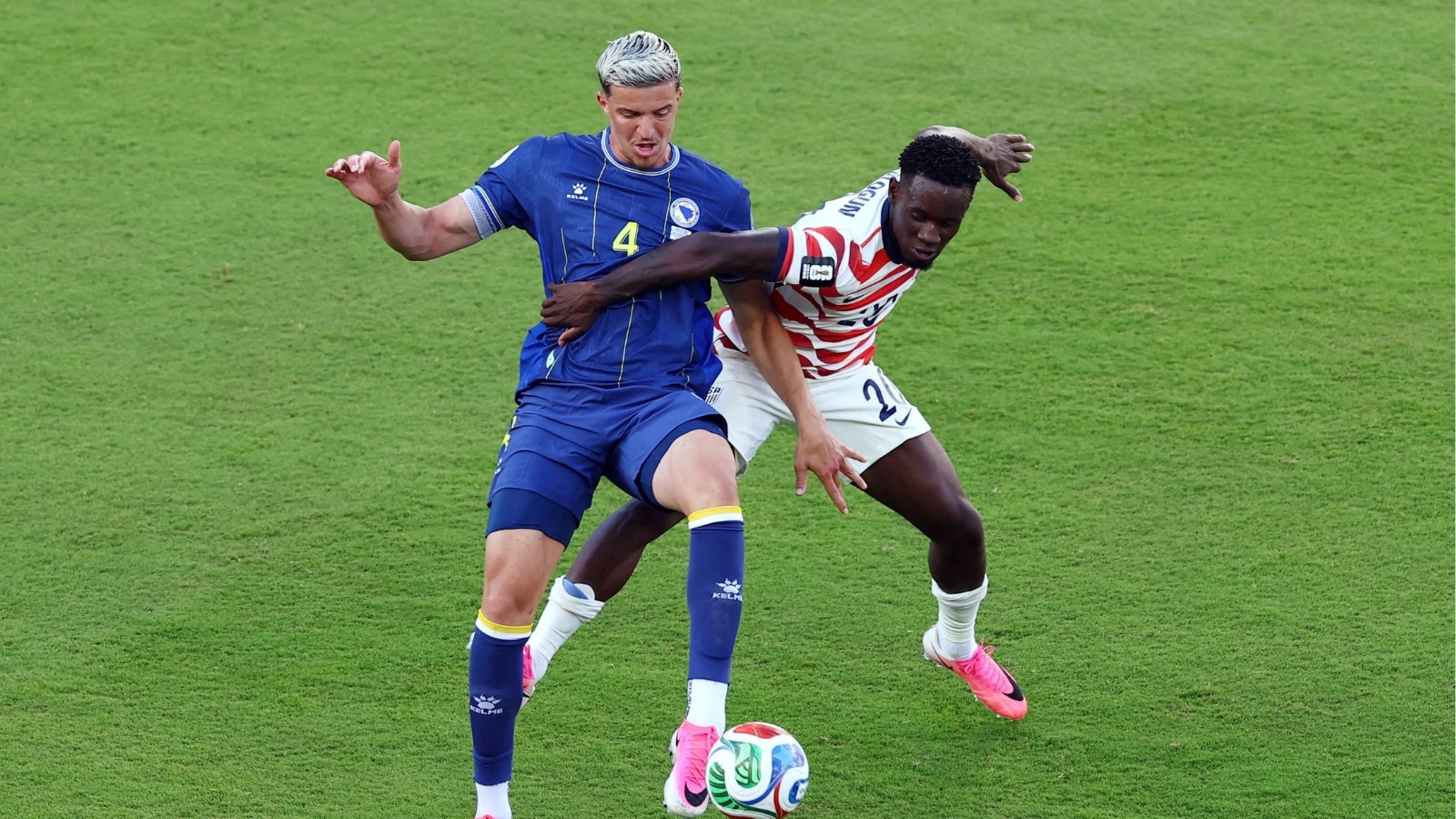
The first fifteen minutes of any high-stakes international match are an exercise in survival. The ball moves with a terrifying velocity. The grass feels slicker, the tackles arrive a fraction of a second faster, and the margin for error evaporates completely. Balogun spent those early minutes chasing shadows. The Belgian center-backs, massive men with decades of Champions League scars, wasted no time introducing themselves. A forearm to the lower back here. A clipped heel there. They wanted to see if the young man with the English accent had the stomach for a dirty night in the trenches.
Soccer at this level is a game of psychological warfare. If a striker drops deep to find the ball out of frustration, the defenders win. If he complains to the referee, they win.
Balogun did neither. He simply kept running his routes, stretching the defensive line, and waiting for the game to slow down.
Consider what happens when a team lacks a true focal point. The wingers cut inside, find crowded spaces, and are forced to pass backward. The midfield retains possession but creates no real danger. It is a beautiful, possession-based illusion that produces zero goals. But when a defender knows that a single step out of position will result in a world-class striker sprinting into the space behind them, everything changes. The defensive line drops five yards. The midfield gets room to breathe. The entire pitch opens up like a book.
That is the invisible contribution of an elite number nine. Even when they are not touching the ball, they are dictating the behavior of the opposition.
By the thirty-fifth minute, the dynamic began to shift. The American midfield, anchored by relentless energy, started winning the second balls. A quick transition found the ball at the feet of a winger on the right flank.
Time slowed down.
Balogun made his move. It was not a straight sprint, but a subtle, curved run that started toward the back post before abruptly cutting across the face of the defender. It is a movement practiced thousands of times on rainy afternoons in London, a motion designed to exploit the blind spot of even the most experienced center-back. The cross came in low and hard.
It did not result in a goal. A desperate, sliding block from a Belgian defender deflected the ball out for a corner.
But the message had been delivered. The old guard was rattled. The Belgian defenders turned to each other, arguing, pointing, and realizing that they could not leave this young man alone for a single heartbeat. The stadium, filled with thousands of traveling American fans, roared in collective anticipation. They recognized what they were seeing. This was not the standard American attack of years past—all hustle and no finish. This was sophisticated, dangerous, and predatory.
The second half became a test of physical endurance. The humidity began to take its toll, and the spaces on the field widened. Every tactical plan gives way to sheer human will in the final thirty minutes of a match like this.
You could see the exhaustion etched into the faces of the players. The shirts were soaked through, and the sprints became shorter, more painful bursts. Yet, Balogun’s work rate never dropped. He tracked back, held up the ball under immense physical pressure, and allowed his team to transition from defense to attack. He showed the kind of maturity that coaches dream about—a willingness to suffer for the collective good of the squad.
When he was finally substituted in the eighty-second minute, the ovation was deafening.
The raw statistics of the match will tell one story. They will record the shots, the passes completed, and the distance covered. They will go into the database, used by analysts to project future outcomes and build complicated tactical models. But those numbers miss the point entirely.
The real story of this match was written in the collective sigh of relief from an entire footballing nation. For the first time in a generation, the United States did not look like a team searching for an identity. They looked like a team that had found its focal point. They had a player who could look the best defenders in the world in the eye and refuse to blink.
The journey is far from over. There will be nights when the ball hits the post and bounces out. There will be matches where the service dries up and the frustration returns. The path of an international striker is never a straight line; it is a volatile ride filled with extreme highs and devastating lows.
But as Balogun sat on the bench, wrapping a jacket around his shoulders and watching the final minutes tick away, the narrative had changed forever. The question is no longer whether the United States can produce a world-class striker. The question is how far that striker can take them.
The stadium lights reflected off the damp grass as the final whistle blew. In the center of the pitch, the players exchanged jerseys, their bodies spent, their faces exhausted. The young man from Brooklyn stood near the touchline, looking out at the sprawling, noisy crowd, perfectly aware that he had just stepped into a larger world.