The wood is never as dry as it looks. In the humid air of the Albertine Rift, the grain of a dugout canoe stays perpetually damp, a heavy, sodden weight that smells of silt and old fish. This is the primary transport for thousands of people along the shores of Lake Albert and the rivers that feed it. It isn't a choice made out of a desire for the "authentic" or the rustic. It is a necessity of the geography.
Last week, thirty-five people stepped off the muddy banks and onto the narrow, unstable ribs of one such vessel. Thirty-five lives. Thirty-five sets of plans, worries, and mundane errands. One might have been carrying a crate of tomatoes for the market. Another, perhaps a young mother, held a child whose only concern was the rhythmic splash of the oars.
The water in these regions is deceptively still. It has a glass-like quality that reflects the African sky so perfectly it feels like you are floating through the clouds. But underneath that reflection is a chaotic physics. When a boat designed for twenty holds thirty-five, the center of gravity doesn't just shift; it vanishes.
The Math of Tragedy
Physics is a cold master. It doesn't care about the urgency of a trip or the lack of alternative roads. To understand why thirty-five people would crowd onto a single canoe, you have to understand the isolation of the Ugandan interior. Roads here are often suggestions made of red dust, easily erased by a single afternoon of tropical rain. The river is the only reliable highway.
When the boat began to take on water, it wasn't a sudden explosion. It rarely is. It starts with a trickle over the gunwale. A slight tilt to the left as someone shifts their weight. A small gasp of water over the side. Then, the panic. Panic is the heaviest cargo a ship can carry.
Imagine the sensation. The sudden, icy grip of the river reaching for your ankles. The shouting starts low, a murmur of concern, before escalating into the sharp, jagged spikes of terror. In the chaos, people stand. They reach for the person next to them. They try to balance the world, but in doing so, they tip the scales toward the inevitable.
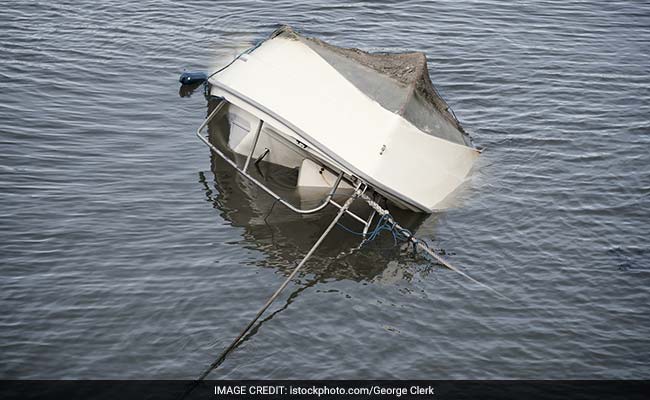
The boat didn't just sink. It surrendered.
The Cost of a Life Jacket
In the aftermath of such events, the official reports always focus on the same few facts: overloading, lack of safety equipment, and the unpredictable weather. These are the "cold facts" that populate the news tickers. But they miss the human architecture of the problem.
Why were there no life jackets?
To a subsistence farmer or a local trader, a life jacket is an unimaginable luxury. It is a piece of plastic and foam that costs more than a week’s wages. When you are choosing between a life-saving device you might never use and the seeds required to plant next month’s crop, the seeds win every single time. We gamble with our lives because the alternative—staying on the bank—is a slow, certain decay of opportunity.
Consider a hypothetical passenger named Abel. Abel is forty. He has four children. He needs to get across the river to sell a goat. If he waits for the next boat, the market will be closed. If he doesn't sell the goat, the school fees aren't paid. The boat looks full, but he sees a sliver of space near the stern. He steps in. He isn't being reckless. He is being a father.
This is the invisible stake. The tragedy isn't just the moment the boat flips. The tragedy is the economic desperation that makes the risk of drowning seem like a reasonable trade-off for a few shillings.
The Silence After the Splash
When the canoe overturned, the river didn't make a sound for long. The splash was followed by the frantic, muffled sounds of a struggle. Swimming in a river like this isn't like swimming in a pool. The water is thick with sediment. The currents pull at your clothes. If you are wearing heavy cotton or boots, the river becomes a lead weight.
Local fishermen, the first responders in a land without sirens, raced toward the site. They pulled what they could from the water. In these moments, the community reveals its true heart. There is no bureaucracy in a rescue. There is only the grip of a hand on a wrist and the desperate pull against the current.
But for many, the river was too fast.
The official count began. Bodies were recovered, laid out on the same mud they had stepped off from just hours before. The quiet that follows a river disaster is different from any other silence. It is heavy. It feels like the air itself has been dampened by the water.
A Cycle Written in Water
We see these headlines every few months. "Boat Capsizes in Congo." "Dozens Missing in Uganda River." We read them and we move on, perhaps feeling a momentary pang of pity before the next notification scrolls by.
But we have to look closer at the "why."
Uganda’s waterways are its lifeblood, yet they are treated with a strange mix of reverence and neglect. The government issues warnings. They tell people not to travel at night. They tell boat operators to limit their passengers. But a warning doesn't build a bridge. A warning doesn't provide a motorized ferry.
The problem is structural. It is a gap between the reality of the people and the regulations of the state. Until the infrastructure of the land catches up with the needs of the people, the river will continue to demand its toll.
We talk about "safety standards" as if they are universal constants. They aren't. They are a byproduct of wealth. When we criticize the "overloading" of a canoe, we are often criticizing the only tool a community has to survive. It is easy to be safe when you have options. It is a miracle to stay safe when you have none.
The Ripples That Remain
The loss of thirty-five people in a rural district isn't just a news story. It is a catastrophic blow to the local economy and the social fabric. Thirty-five families are now missing a breadwinner, a mother, a storyteller, or a child. The ripples of this single event will be felt for decades.
A daughter will drop out of school because her father's goat never made it to market. A grandfather will go hungry because the boat carrying his supplies is at the bottom of the silt. The grief is not a single point in time; it is a long, slow erosion of a community's future.
We must stop looking at these events as "accidents." An accident is something that happens despite our best efforts. This was a consequence. It was the logical end point of a system that leaves the most vulnerable with the most dangerous choices.
The river is still there. It is still beautiful, reflecting the sun and the reeds. Tomorrow, another boat will pull up to the bank. It will be a wooden dugout, weathered and damp. A group of people will stand on the shore, looking at the narrow space inside. They will think about their families, their debts, and their dreams.
They will step in.
They will hope the wood holds. They will hope the water stays on the outside. They will pray that today, the physics of the river is kind.
The boat will pull away from the shore, low in the water, a single plank standing between the living and the deep, silent dark.