Heavy is the head that wears the crown. Older adages have a stubborn habit of surviving because they are true, carved from the bone of centuries. But what happens to the hand that must steady that head while the rest of the world watches through a glass darkly?
Secrecy is a peculiar kind of prison. You hold the key in your palm, yet turning it means unlocking a storm that could flatten everything you love.
Queen Camilla knew that feeling well. When the palace walls closed in and the diagnosis arrived—cold, clinical, and unyielding—the instructions were clear. Protect the king. Protect the stability of the nation. Guard the secret as if your own breath depended on it.
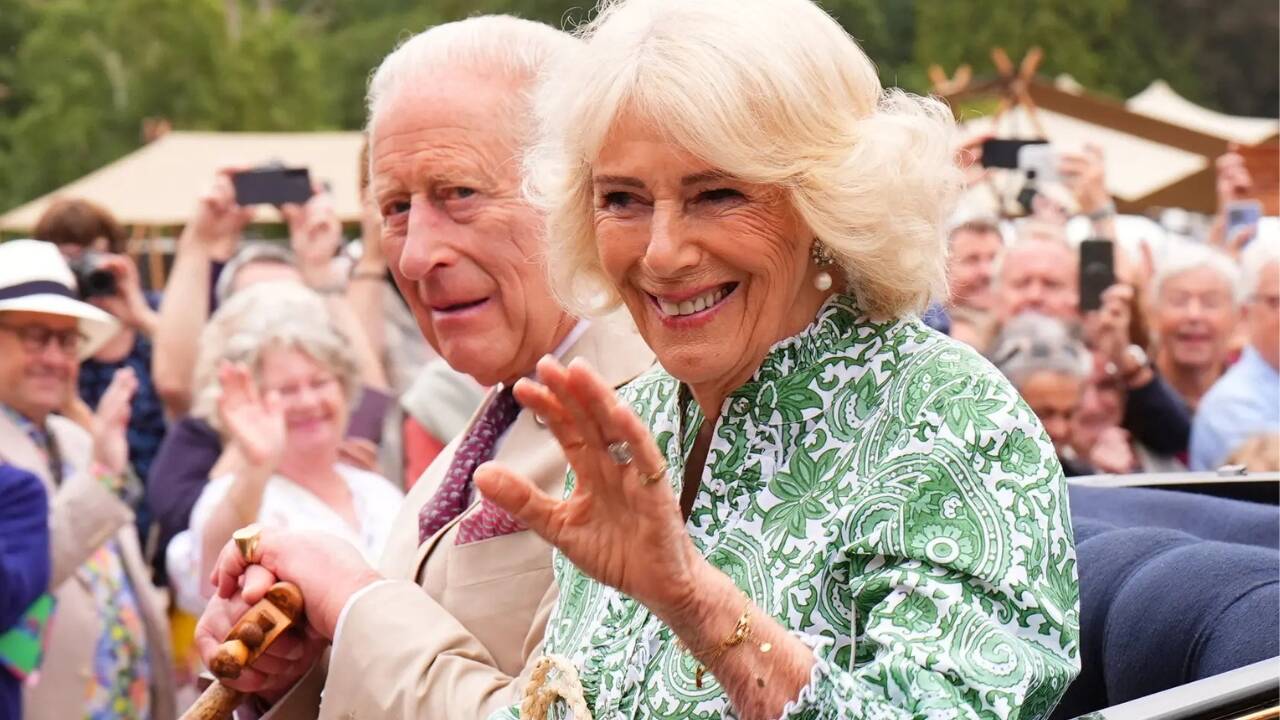
Imagine standing before a crowded room of well-wishers, your smile locked into place like porcelain, while underneath your ribs beats a heart hammering against a cage of unspoken dread. Every handshake is a performance. Every nod is an act of supreme theatrical endurance. You pour tea. You discuss local charities. You listen to a child recite a poem about a pony. And all the while, a single name, a single word—cancer—echoes in the chambers of your mind, louder than the brass band playing outside.
It was difficult. That was the word she used later. Difficult.
A masterpiece of understatement.
The Architecture of Silence
We live in an era that demands total exposure. Every meal photographed, every fleeting emotion broadcasted, every medical nuance dissected by anonymous hordes online. Privacy has become an expensive luxury item, locked behind high gates and legal teams. Yet, when true crisis strikes, the instinct of the hunted animal takes over. We freeze. We hide.
For the royal household, discretion is not merely a preference; it is the mortar holding the institution together. When King Charles faced his diagnosis, the machinery of state did not stop turning. Bills needed royal assent. Ambassadors needed receiving. Foreign delegations expected protocols to be observed with millimetric precision.
To maintain that illusion of normalcy, someone had to absorb the shockwaves.
Camilla became that shock absorber. She bore the administrative weight of the revelation while managing the private terror of a spouse facing mortality. It requires a specific brand of steel to look into the cameras, face the flashes of a hundred photographers, and project an aura of serene confidence when your private world is fracturing.
We forget that behind every historical figure lies a kitchen table. Behind every velvet robe is a human being who forgets to buy milk, who worries about test results, who simply wants to hold a hand in the dark without a journalist chronicling the angle of their fingers.
The Cost of Keeping Up Appearances
Consider what happens next when the secret finally breaks. The containment wall bursts, and the floodwaters rush in.
When the palace finally issued the statement regarding the King's health, the collective gasp of the commonwealth was audible. Markets wobbled momentarily. Editorial boards scrambled. Conspiracy theorists crawled out from their damp corners to spin elaborate webs of doom.
That is the true penalty of the secret. It is not the hiding itself, but the detonation that follows the reveal.
Camilla had spent months walking a razor's edge. One slip of the tongue during a hospital visit, one unscripted tear at a ribbon-cutting ceremony, and the narrative would have slipped out of their control entirely. In the modern age, losing control of a narrative is worse than losing a battle. It invites chaos.
She held the line. She absorbed the isolation.
There is an aching loneliness in public service at that level. Surrounded by courtiers, advisors, protection officers, and aides, you can still be utterly marooned on an island of your own fears. You cannot lean on your staff in the way you lean on a lifelong partner. And when that partner is the one fighting for his health, the island shrinks until there is barely room to stand.
The Human Core
We dissect these lives as if they were characters in a prestige television drama, cheering for triumphs and wincing at missteps, forgetting that blood runs beneath that purple velvet. We treat them as symbols, forgetting they bleed.
When Camilla spoke of the difficulty of those months, she wasn't asking for pity. Pity is cheap, and royals rarely trade in it. She was simply stating a brutal, physical truth about the intersection of duty and humanity.
Duty demands that you smile. Humanity demands that you weep. Doing both at the exact same time requires a transmutation of the soul.
The crown did not crush her. It tested the alloy. And somewhere behind the fortress walls of Clarence House, away from the telephoto lenses and the breaking news banners, two people who have lived long enough to know the fragility of flesh sat quietly, finally permitted to stop pretending.
The silence lifted. The machinery adapted. But the ghost of those hidden months remains, lingering in the quiet spaces between one public engagement and the next, a reminder that even kings and queens are tethered to the same fragile heartbeat as the rest of us.