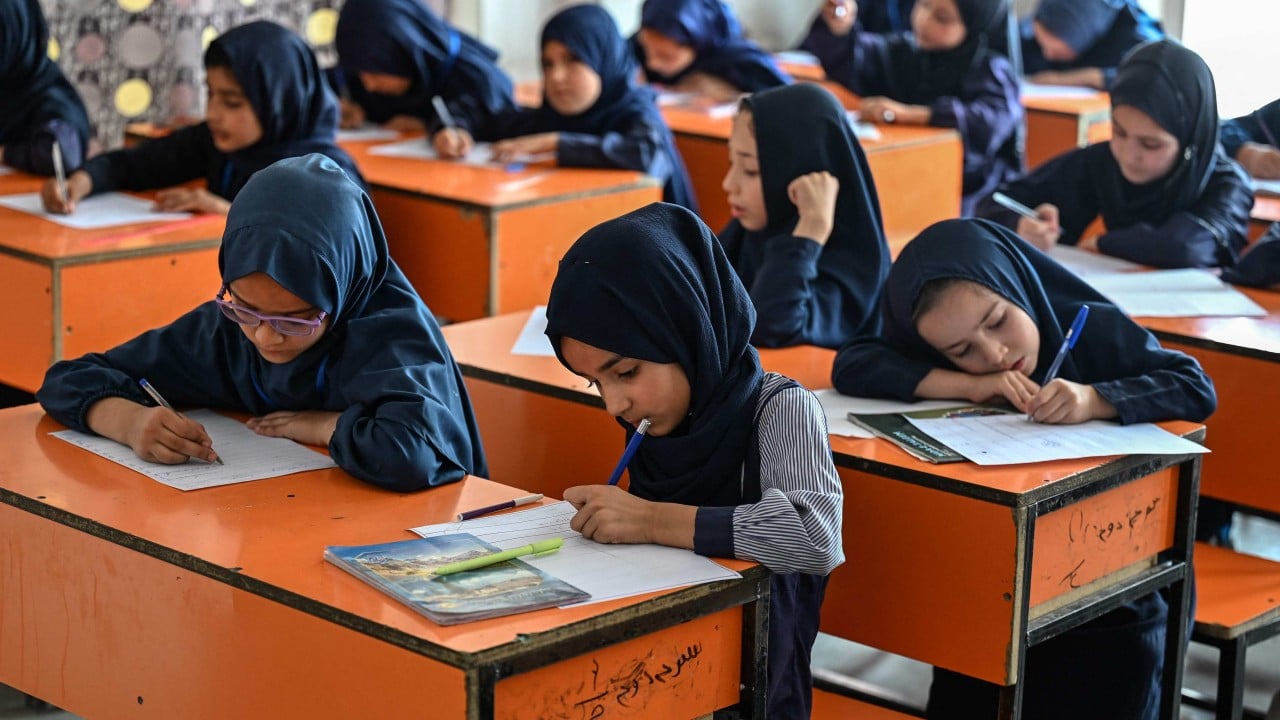
Every August, the anniversary cycle rolls around like clockwork. Western media outlets publish the exact same numbers, mourn the exact same milestones, and offer the exact same hand-wringing editorials about the millions of girls locked out of secondary classrooms in Afghanistan. The headlines scream about lost potential. The United Nations releases another sternly worded report. Diplomats express deep concern over Zoom.
And nothing changes.
In fact, the situation deteriorates precisely because the international community refuses to abandon a broken playbook. For twenty years, Western foreign policy treated Afghan women's rights as an exportable commodity, something that could be bolted onto the country via foreign aid packages, curriculum grants, and rhetorical pressure. When the foreign military footprint vanished, that fragile superstructure collapsed overnight.
Stop treating education under the Taliban as a mere policy dispute. It is a structural siege, and the standard Western prescription of public outrage and conditional aid is actively backfiring. If you want to understand why five years of total bans have only entrenched the regime further, you have to stop looking at the problem through the lens of liberal humanitarianism and start looking at it through the cold calculus of authoritarian survival.
The Flawed Premise of Conditional Diplomacy
The prevailing consensus in Washington, London, and Brussels rests on a comfortable delusion: that the Taliban care about international legitimacy enough to trade ideological purity for recognition and cash.
I have watched foreign policy analysts burn millions of dollars in donor funds operating under this exact premise. They assume that if the West tightens financial sanctions, freezes central bank reserves, or withholds diplomatic recognition, the regime will eventually blink. They believe the mullahs in Kandahar wake up worrying about a seat at the United Nations General Assembly.
They do not.
The core miscalculation lies in misunderstanding what legitimacy means to an insurgency that just defeated a superpower. To the hardline faction currently calling the shots, survival does not depend on Western approval. It depends on internal cohesion, tribal appeasement, and religious ideological consistency. Every time a Western diplomat stands at a podium and demands the immediate reopening of high schools as a precondition for aid, they hand the regime a propaganda victory. They allow the Taliban to frame the education of girls not as a universal human right, but as a foreign weapon designed to subvert Islamic values.
When you make a basic human right a bargaining chip in a geopolitical chess match, you give the adversary a powerful incentive to dig in their heels. That is precisely what happened. The ban went from a provisional security measure in the chaotic early months of the takeover to a permanent ideological pillar precisely because the West made it the center of its geopolitical leverage strategy.
What the Numbers Actually Tell Us
Let us look past the headline figure of 2.4 million girls shut out of classrooms and examine the ground-level mechanics of how Afghan society has adapted, fractured, and resisted beneath the radar.
Big data aggregates obscure local realities. Before the 2021 collapse, the shiny statistics about rising enrollment rates in Kabul and Herat masked a grim rural reality. In vast swaths of Helmand, Uruzgan, and Zabul, secondary education for girls was largely a fiction on paper, heavily dependent on local compromises with tribal elders or outright bribes paid to district commanders. The urban centers enjoyed an illusion of rapid progress funded by foreign occupiers, while the countryside remained locked in traditional conservatism.
When the regime implemented the nationwide secondary ban, it did not just erase modern progress; it forced underground education networks to scale up overnight.
This is where the mainstream narrative completely misses the mark. It portrays an entire generation sitting passively in their homes, waiting for a rescue that never comes. That is false. Necessity breeds innovation, even under totalitarian rule.
The Underground Economy of Knowledge
Imagine a scenario where a dozen teenage girls sneak into a suburban basement in Kabul three mornings a week, carrying biology textbooks hidden inside grocery bags while an older woman stands watch by the front gate.
This is not a theoretical exercise. It is happening right now, funded not by UN grants or foreign ministries, but by diaspora remittances, resourceful local merchants, and teachers working for pennies out of sheer defiance.
We need to stop viewing education exclusively through the institutional framework of formal brick-and-mortar schools. When states fail, civil society fragments, adapts, and goes underground. The most effective resistance to the Taliban's educational apartheid is not occurring in UN conference rooms in Geneva; it is happening in living rooms, bakeries, and mosques across the country through clandestine homeschooling networks and digital peer-to-peer sharing.
Yet, international donors pour the vast majority of their resources into lobbying efforts and macro-level advocacy that yield zero tangible shifts on the ground. They are funding press releases while local resistance fighters and educators are begging for basic digital infrastructure, encrypted communication tools, and small-scale micro-grants to keep underground tutors fed.
The Cost of Performative Outrage
There is a dark, cynical truth that nobody in the foreign aid ecosystem wants to admit: performative outrage is cheap, and it keeps bureaucratic machinery employed.
Every year, think tanks generate fresh reports detailing the economic toll of barring women from the workforce and classroom. They calculate lost GDP, plummeting literacy rates, and the looming public health crises. These reports are meticulously researched, elegantly formatted, and entirely useless to a fourteen-year-old girl in Kandahar who needs a way to learn mathematics today.
The international community's fixation on formal diplomatic recognition has created a bottleneck. By refusing to engage pragmatically at the provincial and local levels while maintaining rigid macroeconomic sanctions, the West has immiserated the entire population without loosening the regime's grip on power. Poverty does not trigger democratic revolutions against totalitarian regimes; it atomizes populations, forcing families into survival mode where education becomes an unaffordable luxury compared to basic caloric intake.
If you starve an economy, you do not weaken the extremists running it. You force citizens to rely entirely on the state or informal criminal networks just to eat, destroying the very middle class that historically drives social reform.
Dismantling the Savior Complex
The deeper rot in how the West approaches Afghanistan is a persistent savior complex that refuses to acknowledge local agency. For two decades, foreign actors acted as if modernity was something installed by a contractor. When it broke, they blamed the recipients rather than questioning the architecture of the intervention.
Real change in Afghanistan will not be handed down by Western parliaments or brokered through sterile summits in Doha. It will be carved out by Afghans themselves, working within the terrifying constraints of their current reality.
That means shifting strategy entirely.
First, redirect humanitarian funds away from bloated international bureaucracies and toward decentralized, un-monitored cash transfers that empower families directly. Second, stop making secondary education the sole litmus test for every single micro-interaction; use backchannels, religious jurisprudence arguments, and provincial-level pragmatism to open spaces for girls. Local commanders care more about public health clinics, agricultural yields, and local commerce than ideological purity tests from New York. Third, supercharge digital access. Smuggling low-cost tablets, offline educational servers, and solar chargers into the country does more to crack open the information blockade than a thousand impassioned speeches at the United Nations.
The Taliban want total isolation because isolation hides their incompetence and consolidates their control. By cooperating with that isolation through blanket boycotts and moral posturing, the West is playing right into their hands.
Stop writing obituaries for an entire generation of Afghan girls while patting yourselves on the back for caring. Open the digital conduits. Fund the underground networks. Drop the savior complex and start backing the people actually doing the dangerous work on the ground.


