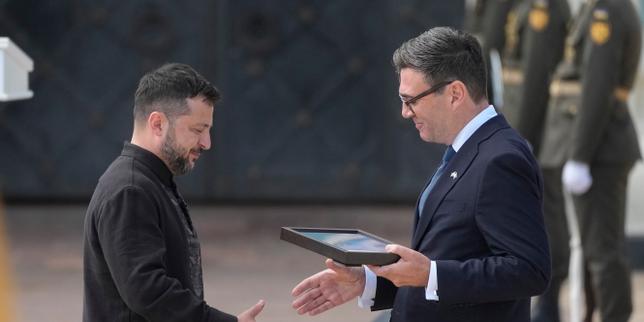
The lazy consensus in European capitals is a comforting fairy tale. Visiting dignitaries step off planes in Kyiv, flash grim smiles for the cameras, and pledge endless solidarity against what they call scandalous threats from the East. This performance relies on a deeply flawed premise: that blank checks and slow- drip military shipments equal long-term strategy. They do not. They equal a slow-motion catastrophe dressed up as moral clarity.
I have watched corporate boards bleed capital into failing projects because managers lacked the spine to cut their losses, and statecraft is operating under the exact same delusion. The mainstream narrative insists that maintaining the current volume of financial and material backing will eventually reverse realities on the ground. That assumption ignores basic mathematics, industrial capacity limits, and the brutal mechanics of attrition. Read more on a connected issue: this related article.
The Expert Fallacy
Let us define terms honestly. When politicians talk about sustaining a stalemate indefinitely, they are projecting political survival onto a military equation that refuses to balance. Military analysts worth their salt understand that modern industrial warfare favors mass, geography, and domestic production depth. Throwing high-end, low-quantity hardware at a structural deficit in artillery shells and manpower does not win campaigns. It merely redraws the timeline of destruction.
By pretending that victory is just one more funding package away, Western leaders avoid hard conversations with their own publics. They substitute photo-ops for strategic realism. More reporting by The Washington Post delves into similar perspectives on this issue.
The Real Cost of Indefinite Stagnation
Imagine a scenario where a business keeps subsidizing a failing subsidiary year after year, hoping market physics will suddenly reverse to reward loyalty. Competitors would laugh that company out of the room. Yet in geopolitics, this is treated as statesmanship.
The human toll of this endless holding pattern is staggering. Every month the conflict drags on without a clear, achievable endgame, more infrastructure turns to dust and demographic decay deepens beyond repair. The diplomatic vacuum left by Western leaders who refuse to broker hard compromises guarantees a worse outcome tomorrow than a painful settlement today.
Stop pretending that writing checks without a theory of victory is a substitute for strategy. The most compassionate policy right now is facing reality, abandoning the comforting delusions of total victory, and forcing a transition toward a sustainable, realistic peace before there is nothing left of the country to save.