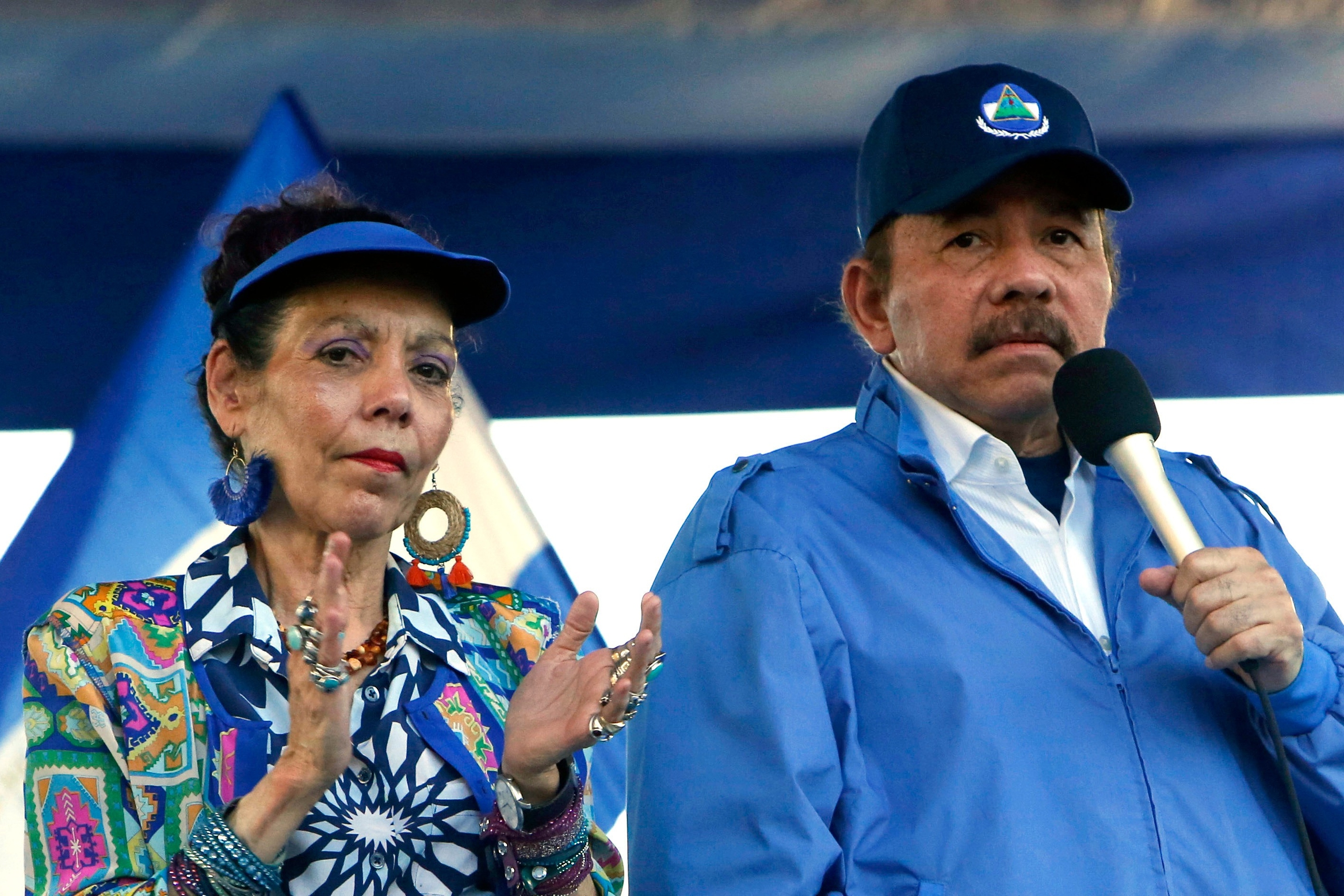
The headlines were predictably hysterical. When Daniel Ortega stood at a podium in Managua during the anniversary of the Sandinista Revolution and declared that Nicaragua would hold no more elections, mainstream newsrooms treated it as a terrifying watershed moment. Cable news commentators gasped. Human rights watchdogs issued frantic press releases. Western foreign policy pundits began wringing their hands over the official death of Central American democracy.
They are completely misreading what just happened.
The conventional consensus is that Ortega canceling future votes represents a terrifying demonstration of unchecked dictatorial power. The lazy media storyline paints an 80-year-old strongman effortlessly tightening his grip, expanding his rule, and leaving the world helpless to respond.
That analysis is dead wrong.
When an autocrat abandons the pretense of electoral politics, it is almost never a victory lap. It is an admission of operational exhaustion, financial waste, and intense internal panic. The mainstream press is mistaking the structural fortifying of a bunker for an empire expanding its borders.
The Fraudulent Tax of Dictatorial Theater
Why do autocrats bother holding elections in the first place? Autocrats do not hold rigged votes to entertain their citizens. They hold them because fake elections serve three precise functional purposes for a dictatorship:
- They create a legal fiction that gives foreign trading partners a polite pretext to keep buying exports.
- They offer a controlled safety valve to identify, monitor, and isolate internal political dissent.
- They establish a predictable, scheduled mechanism to distribute kickbacks and rank within the ruling party elite.
Staging these elaborate political plays is neither cheap nor easy. In the 2021 presidential vote, Ortega had to arrest seven prospective presidential candidates, lock up dozens of civil society leaders, shut down independent news stations, and deploy thousands of militarized police officers just to ensure a pre-ordained victory.
Imagine a scenario where a corporate chief executive spends forty percent of his company's annual budget every four years hiring fake auditing firms, fabricating balance sheets, and bribing security guards—all to trick board members who already know the company is insolvent. At some point, the sheer friction and financial cost of maintaining the lie exceeds whatever value the lie produces.
That is the wall Ortega and his co-president wife, Rosario Murillo, hit. The performance stopped working. The international community stopped recognizing the results. The domestic population stopped turning out to vote. The entire exercise became pure, unadulterated overhead. Dropping the routine is not a display of supreme confidence; it is cutting losses on a bloated, useless political ritual that no longer yields a return on investment.
The Caracas Factor and Dictatorial Panic
Foreign policy analysts love to look at autocratic decisions in a vacuum. They treat Managua as if it exists on an isolated island unaffected by regional shifts. They completely ignore the geopolitical seismic wave that hit the region months earlier.
When a U.S. military operation swept into Caracas in early 2026 and removed Venezuelan dictator Nicolás Maduro from his presidential palace, every authoritarian ruler in the Western Hemisphere suffered a massive heart attack.
For years, autocrats believed in a specific rulebook: if you maintain the outer shell of constitutional continuity—holding periodic elections, keeping a nominal parliament running, maintaining formal diplomatic protocols—the international community will restrict its retaliation to economic sanctions and harsh statements at the United Nations.
Maduro followed that rulebook for over a decade. He ran rigged presidential elections, kept a rubber-stamp assembly operational, and managed sanctions. It did not save him.
Ortega watched his primary benefactor vanish overnight. He realized that the democratic theater Western nations once demanded no longer provides an armor shield. The threat matrix shifted instantly. The threat was no longer a diplomatic censure from the Organization of American States over electoral integrity; the threat was physical, existential, and immediate.
When a regime faces that level of existential dread, it stops caring about international PR. It stops wasting time designing voting ballots. It shifts instantly into hard survival mode. Ortega's announcement on Sunday that he will pass legislative reforms to build a structural wall against any political opposition is not a confident expansion of his 20-year regime. It is a nervous dictator barricading the front door because he saw what happened to his neighbor down the street.
The Western Fallacy of Electoral Fetishism
The most dangerous misunderstanding in Western diplomatic circles is what can only be called electoral fetishism—the naive obsession with the mechanics of voting as a standalone metric for political freedom.
For decades, American and European foreign policy toward Central America has rested on a lazy policy loop:
- Wait for an election year.
- Send observers or demand election monitoring.
- Express shock when the strongman rigs the vote.
- Issue targeted sanctions on official figures.
- Demand "free and fair elections" for the next cycle.
This loop allowed Western governments to pretend they were doing real foreign policy while avoiding hard decisions. It allowed international bodies to treat deeply brutal regimes as temporary democratic aberrations that could be solved with better ballot boxes.
By explicitly stating "there will be no more elections," Ortega accidentally did the world a favor. He shattered the diplomatic fiction. He stripped Washington, Brussels, and Latin American capitals of their favorite stalling tactic.
You can no longer call for "electoral reforms" in a country that has formally abolished the concept of voting. You can no longer pretend that sending monitoring missions to Managua in 2027 is a viable policy option. Ortega forced the international community to look at Nicaragua for what it actually is: a hereditary family dictatorship operating without a shred of institutional legitimacy.
When you take away a bureaucrat's favorite distraction, you force them to confront reality. That is why Western foreign policy elites are so upset by Ortega's speech. It wasn't just because democracy took a blow; it was because their entire operational playbook was rendered totally useless in a single afternoon.
The Myth of Sandinista Stability
Mainstream commentators point to Nicaragua's surface-level stability as evidence that Ortega's control is unbreakable. They note that street protests have died down since the bloody 2018 crackdowns, that economic output has remained relatively steady, and that the army and police forces remain loyal.
This is a complete misreading of basic political mechanics.
Silence is not stability. Compliance enforced at the point of a gun is not institutional strength.
Look closely at the sheer volume of pressure the Ortega-Murillo regime has to exert daily just to maintain basic control:
- Over 5,600 non-governmental organizations and religious charities shuttered by state decree.
- Mass cancellations of professional licenses for lawyers, independent judges, and legal experts.
- More than 500 prominent citizens, opposition figures, and journalists stripped of their national citizenship and assets.
- Entire Catholic orders expelled and bishops imprisoned or exiled.
- Constant purges within the Sandinista party's own internal ranks to eliminate potential disloyalty.
A political system that operates from a position of true strength does not need to strip thousands of lawyers of their degrees just to stop lawsuits. A government that commands real popular authority does not need to outlaw Catholic charities or strip citizenship from exile groups.
These are the actions of a regime suffering from acute internal brittle fracture.
In engineering, brittle materials do not bend under stress; they look completely solid right up until the exact microsecond they shatter entirely into dust. By eliminating every single legal outlet for disagreement—including the controlled, fake outlet of rigged elections—Ortega has removed every pressure-release valve in the entire nation.
When a boiler has no release valve, the pressure inside does not vanish. It builds until the metal tears itself apart.
The Succession Trap
The most absurd aspect of mainstream coverage is the idea that Ortega has secured a lasting dynasty. Media reports routinely cite the early 2025 constitutional overhaul—which created a co-presidency for his wife Rosario Murillo and extended presidential terms—as a masterstroke of dynastic planning.
In reality, Ortega has constructed a classic autocratic trap.
Dictatorships are inherently personalist regimes. They depend entirely on the physical presence, historic personal prestige, and specific internal relationships of the individual holding power. Daniel Ortega has historical weight among the Sandinista old guard dating back to the 1979 revolution that overthrew Anastasio Somoza. He possesses a revolutionary credential that cannot be transferred by decree or codified on a piece of paper.
Rosario Murillo possesses no such historical standing among the military brass or the old-guard Sandinista commanders. She is widely disliked within key factions of the ruling party's own internal apparatus.
By formalizing a co-presidency diarchy and eliminating elections, Ortega is attempting to force an artificial succession plan onto a military and police apparatus that only obeys him out of personal loyalty.
The moment Ortega dies or becomes incapacitated, the legal framework he wrote on paper will mean absolutely nothing. Without the normalizing framework of an election—even a fraudulent one—Murillo will have zero institutional legitimacy to claim absolute rule. The Sandinista party will immediately split into rival armed factions, military chiefs, and economic interests competing for survival.
By destroying the electoral mechanism today, Ortega has guaranteed that the day after his reign ends, Nicaragua will enter an immediate, catastrophic succession crisis. That is not strategic brilliance; it is generational negligence born out of short-term terror.
What Real Action Looks Like
If Western governments actually want to deal with the reality of Nicaragua, they need to stop acting shocked by speeches in Managua and start executing strategy that targets the regime's actual vulnerabilities.
Stop asking for dialogue. Stop issuing press statements pleading for a return to democratic norms. Accept that the Ortega-Murillo dictatorship is an explicitly hostile, totalitarian family enterprise that understands only hard economic and security leverage.
First, cut off the financial oxygen laundering through international institutions. Despite Ortega's anti-Western rhetoric, Nicaragua continues to draw funding from regional development banks and maintain trade privileges under the Central America Free Trade Agreement (CAFTA-DR). Allowing a regime that explicitly outlaws democratic elections to enjoy preferential duty-free access to Western consumer markets is diplomatic incompetence. Shut the trade access down.
Second, target the financial holdings of the Sandinista military leadership. The Nicaraguan armed forces run massive private pension funds heavily invested in foreign equities and international financial markets. The moment generals realize that protecting Ortega's dynastic paranoia will personally freeze their private bank accounts in Europe and North America, their commitment to the co-presidency will evaporate overnight.
Third, treat the regime as an illegitimate security threat rather than a diplomatic partner. When a dictator tells you he is done with democratic governance forever, believe him—and adjust your intelligence, financial containment, and regional defense operations accordingly.
Daniel Ortega did not deliver a speech of triumph on Sunday. He delivered an admission of total systemic failure. He showed the world that his regime can no longer afford even the illusion of choice. Stop mourning the death of fake elections in Nicaragua, and start preparing for the explosive, inevitable collapse of the brittle dictatorship that replaced them.