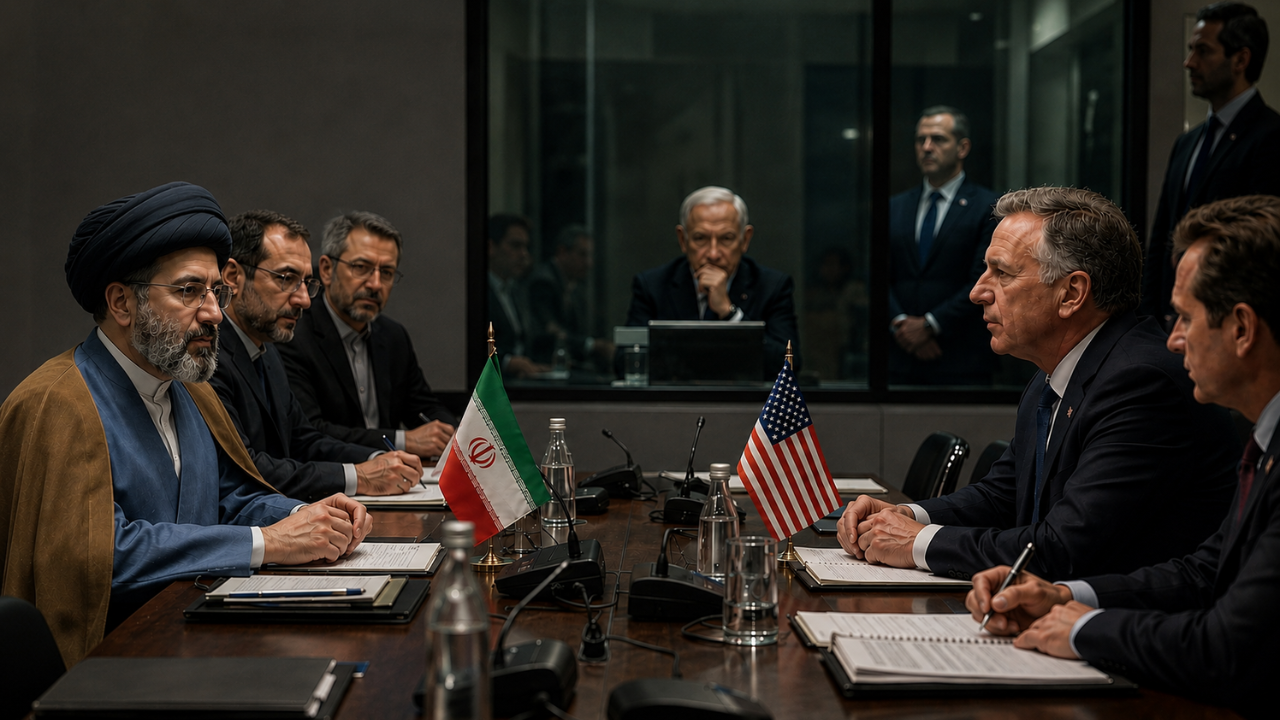
The coffee in the basement of the J. Edgar Hoover Building is always lukewarm, tasting faintly of paper cups and exhaustion. A mid-level counterintelligence analyst sits before three monitors, the glow etching deep lines into a face that hasn't seen proper sunlight in months. It is 2014. On the screens, a series of encrypted anomalies flashes—digital footprints left behind in the sensitive diplomatic networks where the United States, Iran, and Europe are quietly hammering out a historic nuclear deal.
The data tells a story, but not the one the public reads in the morning papers. The papers talk about historic handshakes in Geneva. The monitors talk about a ghost in the machine.
When we think of espionage, our minds drift to cinematic clichés. We picture midnight break-ins, poison-tipped umbrellas, and sleek operatives scaling concrete walls. The reality is far quieter, far more bureaucratic, and infinitely more devastating. It is a game of proximity. It is the agonizing realization that the person sitting next to you, the ally who shares your intelligence, who signs your joint communiqués, might also be looking through your desk drawers when you step out for lunch.
For decades, the relationship between Washington and Jerusalem has been described in the grand language of unbreakable bonds and shared democratic values. But beneath the rhetoric lies a subtext of deep, mutual suspicion. When the Obama administration began secret negotiations with Iran to curb its nuclear ambitions, the geopolitical fault lines shifted. To the White House, it was a diplomatic breakthrough. To the Israeli leadership, it was an existential threat negotiated behind their backs.
The tension boiled over not in public shouting matches, but in the silent architecture of information networks.
The Mechanics of the Ghost
Imagine walking into a room where you believe you are entirely alone. You close the heavy wooden door, draw the blinds, and speak in a hushed tone to your closest confidant. Now imagine discovering months later that the very drywall was vibrating, capturing every inflection of your voice and transmitting it to a listening post three blocks away.
That is what the cyber-reconnaissance operations during the Iran talks felt like to those tasked with defending American networks.
Official reports eventually leaked, pointing fingers at a highly sophisticated cyber-espionage campaign. The targets weren't military bases or weapon blueprints. They were the luxury hotels hosting the diplomats—the Palais Coburg in Vienna, the InterContinental in Geneva. The weapon of choice was a highly modified variant of a well-known espionage toolkit, meticulously engineered to infiltrate hotel communication infrastructure, manage surveillance cameras, and command the building's internal networks.
Every draft proposal typed on a laptop in a secure suite, every late-night phone call back to Washington, every off-the-record strategy session over room service was potentially compromised.
But the technical sophistication is only half the story. The true impact is psychological. When a nation realizes an ally is spying on them during a critical negotiation, the air in the room changes. Trust becomes a luxury that no one can afford. Every smile from a foreign counterpart feels like a probe. Every shared intelligence briefing feels like a curated trap.
A History of Shared Beds and Sharp Knives
To understand how we arrived at this point, we have to look past the immediate horizon of the nuclear negotiations. The intelligence community remembers what the public frequently forgets.
Jonathan Pollard.
In the mid-1980s, Pollard, a civilian US Navy intelligence analyst, passed thousands of highly classified documents to Israel. The betrayal cut deep, not because the recipient was an enemy, but precisely because they were a friend. It forced a harsh truth into the light: in the world of international relations, there are no permanent friends, only permanent interests.
The Pollard affair was supposed to be a turning point, a moment where boundaries were firmly established. Israel promised to halt all espionage operations on American soil.
Yet, the temptation of the raw, unedited truth is a powerful narcotic for a state that believes it is fighting for its survival. Over the years, federal agencies continued to quietly flag anomalous activities. There were the mysterious IMSI-catchers—devices designed to mimic cell towers and intercept mobile phone traffic—discovered near the White House and other sensitive locations in Washington. There were the strangely aggressive recruitment attempts targeting American defense contractors.
The response from the American government has historically been a masterclass in compartmentalization. Publicly, the alliance remains ironclad. Privately, the FBI's counterintelligence division maintains a dedicated, watchful eye on Israeli operations within the United States. It is a strange, schizophrenic existence. By day, analysts sit in joint briefings sharing high-level data on mutual adversaries. By night, those same analysts review security logs to ensure their partners didn't plant a digital back door on their way out of the building.
The Human Cost of the Double Game
The true victims of this shadow war are rarely the politicians who write the policies. They are the career civil servants, the diplomats, and the intelligence officers who operate in the gray space between alliance and betrayal.
Consider the position of an American diplomat negotiating in Vienna. You are exhausted. The stakes are impossibly high; a misstep could mean war, while success could mean a safer world. You rely on your secure communications to consult with experts back home. Then, a security officer knocks on your door and informs you that your secure line is no longer secure.
The immediate reaction isn't anger. It is a profound, paralyzing isolation. You realize you are completely exposed. The words you chose so carefully in private are already being analyzed in a foreign capital, weaponized to counter your next move before you even make it.
The narrative spun by defenders of these operations is one of necessity. When your nation's survival is on the line, every ethical boundary becomes malleable. If the United States is negotiating a deal that could fundamentally alter the security landscape of the Middle East, Israel argues it has a right, an obligation to its citizens, to know exactly what is happening behind those closed doors.
But this logic creates a toxic loop.
When espionage is exposed, the immediate political reaction is denial, followed by a quiet, reciprocal escalation. The United States tightens its security protocols, restricts information sharing, and increases its own surveillance of Israeli officials. The circle of trust shrinks. The collective capacity to face genuine, shared threats is degraded because too much energy is spent watching each other.
The Illusion of Total Security
The modern digital landscape has fundamentally broken the old rules of espionage. It used to require a human asset, a dead drop in a park, a film canister hidden in a hollow stone. Today, lines of code travel across oceans in milliseconds, exploiting vulnerabilities that the creators of the software didn't even know existed.
This technological evolution has democratized surveillance, making it invisible and omnipresent. It has also made attribution incredibly difficult. A piece of malware can be designed to look like it originated in Moscow or Beijing, when it actually came from a server in Tel Aviv or Langley. This ambiguity creates a perpetual state of low-grade paranoia.
In this environment, the line between defensive security and offensive espionage blurs completely. A nation installs surveillance architecture under the guise of protecting its diplomats, only to use that same architecture to vacuum up the secrets of its hosts.
We look at the headlines about spying and see a series of isolated scandals, a sequence of unfortunate events that can be managed with a diplomatic reprimand or a revised security protocol. We are wrong.
These incidents are symptoms of a deeper, systemic reality. The shadow war between allies is not a malfunction of the system; it is the system itself. It is the natural consequence of a world where nations refuse to outsource their survival to anyone else, no matter how many treaties they sign or how many shared values they celebrate.
The lights remain on in the basement of the Hoover Building. The monitors continue to scroll through endless lines of code, looking for the telltale signatures of unauthorized access. The analysts know that the hunt never truly ends. The names of the operations change, the targets shift from Swiss hotels to virtual cloud servers, but the fundamental struggle remains identical.
The ghost in the machine is here to stay, a permanent resident in the house of international diplomacy, listening to every word, waiting for the moment the room falls silent.