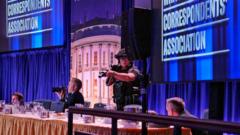
The mainstream media is running with the predictable narrative. A security incident occurs, a high-profile Washington event gets postponed, and the commentary machine immediately pivots to hand-wringing over safety, the polarization of modern society, and the tragic disruption of a sacred capital tradition.
They are missing the entire point.
Postponing the White House Correspondents' Dinner following a shooting incident is not a logistical necessity forced by sudden security vulnerabilities. It is a calculated, strategic calculation wrapped in the language of public safety. Washington operates on optics, and the decision to push pause on a room full of politicians and journalists clinking champagne glasses in tuxedos is about managing public perception, not minimizing physical risk.
The Illusion of the Security Overhaul
Every major news outlet covering this rescheduling treats the Secret Service and event organizers as if they were caught flat-footed. The underlying assumption is that a security incident elsewhere suddenly renders the Washington Hilton unsafe.
This premise is completely flawed.
The Secret Service does not build security apparatuses on the fly. The perimeter for an event featuring the President of the United States is planned months in advance, utilizing heavy weaponry, biometric scanning, pre-vetted guest lists, and counter-sniper teams. The physical risk inside that ballroom did not magically spike because of an external incident.
Instead, the postponement buys something far more valuable than safety: time to control the narrative.
When a violent event dominates the news cycle, the optics of the political and media elite gathering for a night of self-congratulatory comedy and red-carpet glamour becomes an instant liability. If the dinner proceeded as scheduled, every joke told from the podium would look callous. Every photo of a smiling administration official would be weaponized by political opponents.
By rescheduling, organizers avoid the inevitable accusations of being out of touch, while wrapping themselves in the noble mantle of caution. It is a risk-mitigation strategy for reputations, not bodies.
Dismantling the Myth of Media Independence
The public often asks: "Why do journalists and politicians party together anyway?" The standard defense of the dinner is that it showcases the strength of the First Amendment, proving that even bitter adversaries can share a room in the name of democracy.
Let's strip away that sanctimonious veneer.
The dinner exists to codify a symbiotic relationship. Media executives, high-ranking government officials, and corporate lobbyists use the event to solidify access. It is an industry trade show disguised as a charity gala.
When an incident disrupts the capital, the immediate threat to this ecosystem is exposure. A crisis forces journalists to at least pretend they are adversarial watchdogs. Holding a gala in the immediate aftermath breaks the illusion, making it glaringly obvious to the public that the watchdogs and the political class sleep in the same doghouse.
I have watched organizations spend millions maintaining the appearance of absolute objectivity while simultaneously angling for the best tables at this exact event. The panic behind closed doors when an incident like this occurs is never about the physical safety of the reporters; it is about how to defer the party without losing the corporate sponsorships that fund the entire weekend.
The High Cost of Corporate Capitalization
There is a downside to this contrarian view that must be acknowledged. Postponing a massive apparatus like this carries an immense logistical and financial penalty.
- Sunk Venue Costs: High-security venues require non-refundable deposits and massive staffing commitments that cannot simply be wiped clean.
- Network Production Loss: Major cable networks lose prime-time broadcasting slots and advertiser commitments structured specifically around the live broadcast.
- The Vulnerability Trap: By shifting the date explicitly due to an external threat, the administration inadvertently signals that the public schedule of the executive branch can be disrupted by outside actors.
This last point is the most dangerous consequence of the rescheduling strategy. It creates a precedent. If a security incident can freeze the social calendar of the presidency, it demonstrates a leverage point that adversaries will notice.
The Punditry is Asking the Wrong Question
The talking heads are asking: "When will it be safe enough to hold the dinner?"
The real question we should be asking is: "Why does the survival of this specific event require such a massive public relations defense mechanism?"
If the dinner were truly about journalism and scholarship, it could be held in a secure briefing room with zero fanfare. But it requires the ballroom. It requires the celebrities. It requires the spectacle.
When a shooting incident forces a delay, it exposes the reality that the event cannot withstand the weight of real-world context. It only functions when the rest of the country is quiet enough to let the elites play-act their rivalries in peace.
Stop looking at the rescheduled date as a victory for cautious security protocols. It is a tactical retreat by a political and media apparatus that realized the curtain had slipped, exposing the machinery of Washington's favorite illusion. They will bring the show back only when they are certain the audience has forgotten the reality outside the windows.