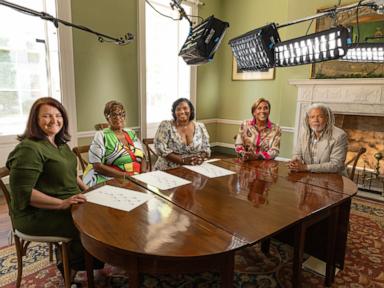
Corporate media loves a neat, emotional narrative. When ABC News sits down with the descendants of enslaved laborers who built the White House, the script writes itself. It focuses heavily on personal trauma, late-stage recognition, and symbolic justice. It checks all the boxes for modern broadcast journalism.
It is also profoundly incomplete.
By treating the construction of early Washington, D.C., as a localized, southern tragedy of forced labor, mainstream reporting completely misses the broader, cold-blooded economic reality. The construction of the White House was not just a moral failure. It was a sophisticated, state-sanctioned financial operation that blended public debt, private slave-leasing cartels, and northern financial complicity.
When we reduce this history to a purely emotional family tree, we let the structural architects of early American capital off the hook. We trade structural accountability for a feel-good prime-time segment.
The Slave-Leasing Cartel: Government as a Commercial Tenant
The popular imagination pictures enslaved labor on government projects as a blunt instrument of direct ownership. People assume the federal government owned the workers, or that the work was done entirely under the whip of independent overseers on public land.
The historical data paints a far more corporate picture.
The D.C. Commissioners—the bureaucrats appointed by George Washington to oversee the capital's construction—operated a massive government-leasing scheme. They did not own the majority of the labor force. They rented it.
Local slaveholders in Maryland and Virginia functioned exactly like modern government contractors. They leased out their enslaved workers to the federal government for fixed terms, pocketing the wages paid out by the public treasury. The National Archives hold the direct receipts. Men like James Hoban, the architect of the White House, utilized enslaved carpenters and stonemasons whose wages went straight into the bank accounts of their legal owners.
This was a highly organized market. The government set wage scales, handled logistics, and even provided rations. To analyze the building of the White House without analyzing the state-sponsored leasing system is like studying modern military logistics while ignoring defense contractors. It is a fundamental misunderstanding of how the project functioned.
Dismantling the Southern Isolation Myth
The prevailing media consensus treats slavery as a uniquely Southern sin, an isolated regional economy that the rest of the nation merely tolerated. This framework falls apart the moment you look at the supply chains of the early federal city.
The capital was built on credit. The young United States lacked the liquid capital to fund massive infrastructure projects on tax revenue alone. Where did the money come from? It came from Dutch bankers, Philadelphia merchants, and New York financiers who bought up public land certificates and government bonds.
Northern banks routinely accepted enslaved human beings as collateral for the loans that funded the development of Washington, D.C. The stones of the White House were quarried in Aquia Creek, Virginia, using leased enslaved labor, but the financial architecture that permitted those quarries to operate was deeply embedded in Wall Street and global trade networks.
When media outlets frame the issue around individual descendants finding peace through historical acknowledgement, they narrow the scope of complicity. They make it look like a localized issue between a few families and a specific building. The truth is much colder: the entire financial system of the early republic was leveraged against the value generated by these workers.
The Flawed Premise of Symbolic Recognition
People frequently ask: How should the federal government honor the enslaved people who built its most iconic structures?
The standard answer from legacy media and politicians is symbolic plaque placement, museum exhibits, and official statements of regret.
This approach is fundamentally flawed because it treats an economic extraction problem as an emotional recognition problem. A plaque does not rebalance a ledger.
Consider the sheer scale of the wealth transfer. Enslaved laborers like those documented in the historical record—skilled blacksmiths, brickmakers, and masons—provided hundreds of thousands of hours of highly skilled labor. This labor directly appreciated the value of federal property and established the infrastructure of a global superpower.
If a multinational corporation built its headquarters using unpaid, coerced labor through a third-party leasing firm, the resolution would not be a commemorative statue in the lobby. It would be a massive, audited financial restructuring. By steering the conversation toward "storytelling" and "healing," the media shifts the focus away from tangible capital and places it safely in the realm of sentimentality.
The Real Cost of Historical Amnesia
This is not a theoretical debate about the 1790s. The refusal to view early American history through a strict economic lens distorts how we analyze modern economic inequality.
When you treat the construction of the White House as a sad, distant historical anecdote, you fail to see the direct line connecting early federal infrastructure projects to modern wealth disparities. The wealth generated by those leased laborers did not vanish. It funded generations of private estates, Ivy League endowments, and northern financial institutions that still exist today.
The descendants of these workers do not just have a story to tell. They are the living witnesses to a massive, unhedged capital extraction project that laid the groundwork for the American financial empire.
Stop looking at the White House as a symbol of early American democracy that had a temporary moral lapse. Start looking at it as the first major corporate headquarters built by state-backed financial engineering at the absolute expense of human capital.
Anything less than that is just public relations.