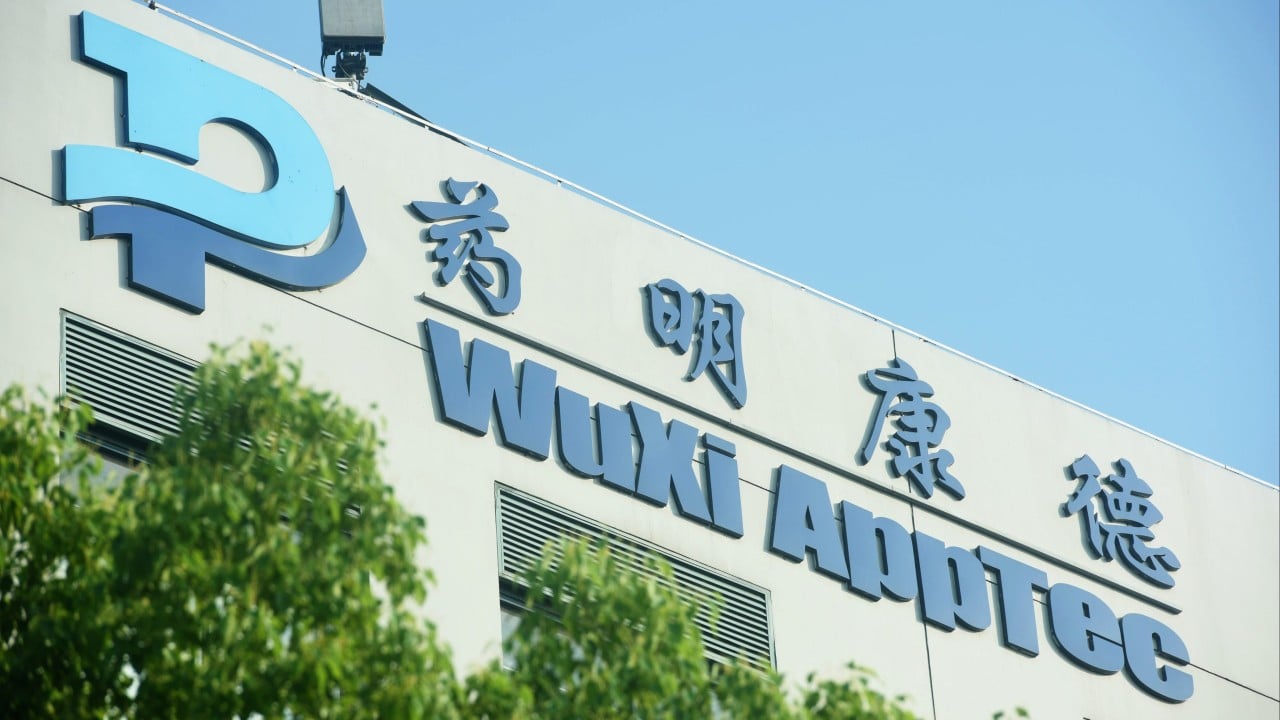
Everyone is popping champagne over the federal court ruling blocking the Pentagon from slapping WuXi AppTec with that dreaded Chinese military company designation. The lazy consensus in boardrooms from Kendall Square to Basel is simple: the legal system worked, the government overreached, and business as usual can resume.
That perspective is dangerously naive.
I have watched executives blow millions on compliance theater while ignoring structural realities. I have sat in rooms where smart operators mistook a temporary judicial injunction for a permanent pardon. Winning a procedural round against the Department of Defense does not mean you have solved your supply chain fragility. It just means the clock is ticking louder.
WuXi AppTec won a round, but Western drug developers who view this ruling as a green light to sleepwalk back into total reliance on contract research and manufacturing organizations based in mainland China are walking straight into a strategic execution chamber.
The False Comfort of a Procedural Victory
Let us look at what actually happened. The court did not declare that WuXi is fundamentally disconnected from geopolitical friction or that Washington has suddenly decided to abandon biotechnology decoupling. The block happened because the administrative process used by the Pentagon lacked the procedural rigor required under the statute.
That is a paperwork victory. It is a technicality. It is not a policy reversal.
Washington treats biotechnology as critical infrastructure. When a state views an industry through the lens of national security, legal speedbumps do not alter the destination; they merely change the route. If the Pentagon or the Department of Commerce wants to restrict an entity deemed a strategic risk, they will simply rewrite the rulebook, shore up their administrative evidentiary standards, and come back through a different door.
Relying on a court to save your drug pipeline from geopolitical gravity is like relying on a beach umbrella to stop a hurricane.
The Structural Addiction Nobody Wants to Name
The dirty secret of modern pharmaceutical development is that Western big pharma outsourced its technical competence decades ago. Companies traded institutional knowledge and chemical manufacturing depth for short-term margin expansion. WuXi filled that vacuum not through coercion, but through ruthless efficiency, massive capital investment, and an army of brilliant scientists who could scale chemistry faster and cheaper than anyone else on earth.
When executives ask how to fix their supply chain vulnerability, they usually look for alternative contract manufacturers in India, Europe, or domestic hubs. But they are asking the wrong question.
The real question is: How did Western companies allow themselves to become entirely dependent on a single foreign jurisdiction for the foundational chemistry of their pipelines?
Diversification sounds great in a slide deck, but the infrastructure does not exist to replace this capacity overnight. Building specialized peptide synthesizers, biologics manufacturing suites, and analytical testing laboratories takes years of capital allocation, regulatory alignment, and workforce training. A court ruling staying a Pentagon label does not magically materialize a dozen domestic biomanufacturing plants.
The Downside of Contrarian Realism
My stance here is bleak, and I will own the downside of this perspective. If you panic-pivot your entire supply chain today based on worst-case geopolitical projections, you will crush your margins, delay clinical trials by years, and likely burn capital on redundant facilities that cannot compete on cost or speed.
That is the trap. Stay put, and you risk sudden, catastrophic regulatory severance. Move too fast, and you bleed out slowly from operational inefficiency.
There is no painless middle ground. The executives who survive the next decade are the ones who accept that regulatory hostility toward cross-border biotech is the new baseline climate, not an anomalous weather event.
Unconventional Playbook for the Post-Injunction Era
If you are running a biotech firm or managing a venture portfolio, stop celebrating legal wins and start executing these three defensive imperatives:
- Treat redundancy as an insurance policy, not a profit center: Accept that dual-sourcing manufacturing outside of high-risk jurisdictions will destroy your gross margins. Pay the tax. View it as paying for operational continuity rather than optimal unit economics.
- Audit your intellectual property data flows: It is not just about where the physical molecule is synthesized. It is about where the analytical data sits, who has access to the proprietary workflows, and how quickly your software infrastructure can be isolated if cross-border data transfer rules tighten overnight.
- Build sovereign optionality before you are forced to: Do not wait for the next executive order or legislative bill to find backup partners in allied nations. Establish baseline relationships now, even if idle capacity costs money.
The judge's gavel just gave you a brief window of breathing room. If you use it to exhale, you deserve what happens next.