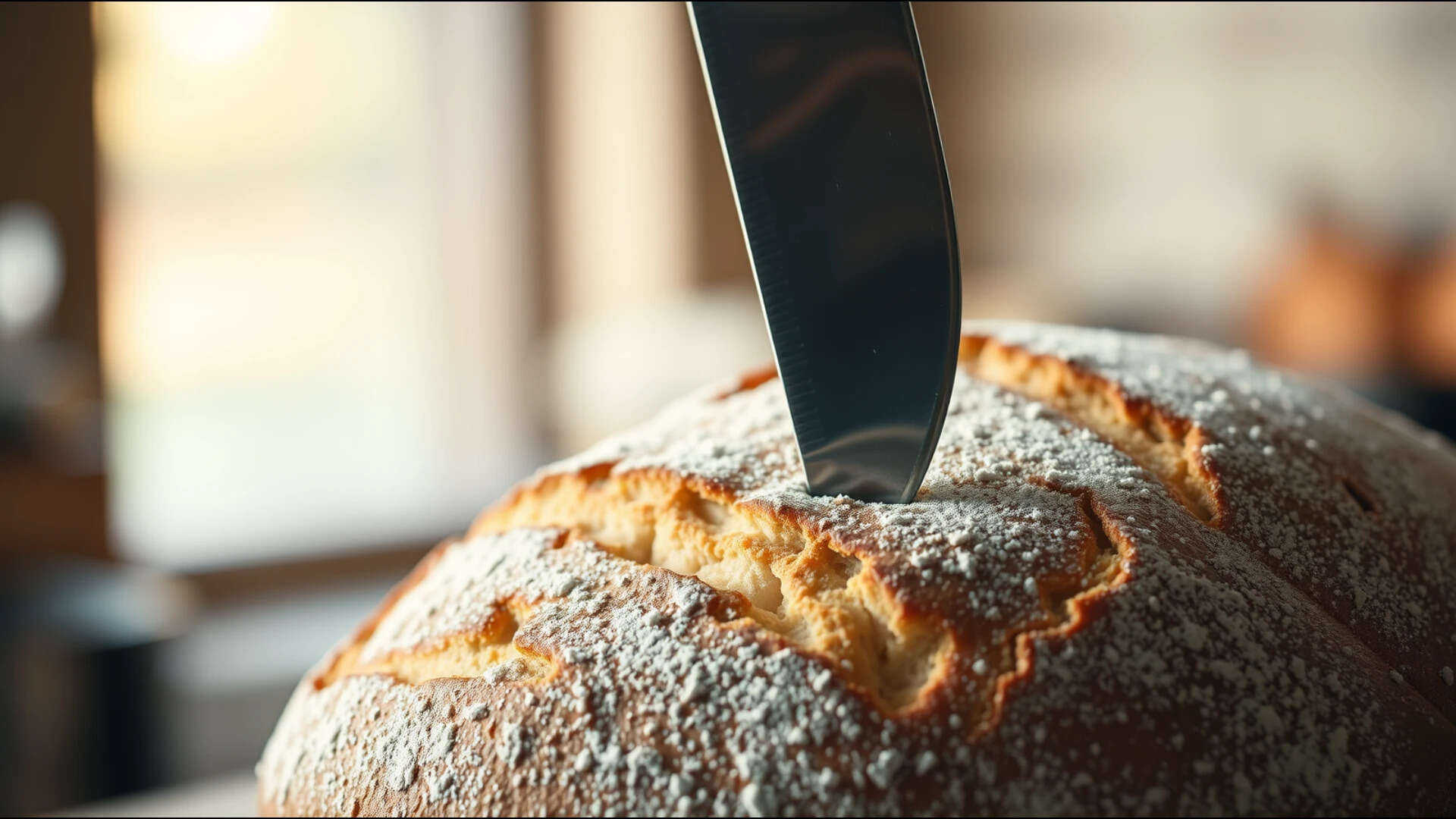
The old Canadian proverb tells you to keep your mouth shut until the work is completely done. "Do not yell 'dinner' until your knife is in the loaf." For generations, this folk wisdom has been passed down as a masterclass in patience and humility.
It is also an absolute death sentence for modern builders, creators, and leaders.
The conventional interpretation of this proverb loves to celebrate the quiet worker. The person who sits in the dark, grinds for three years, and only emerges when they have a flawless, finished product. We are told that premature celebration is a sin, that announcing your intentions before execution is arrogant, and that patience is the ultimate virtue.
This is lazy consensus. It sounds noble, but it fails to survive contact with reality.
In the real world, if you wait until your knife is physically cutting the bread to tell people it is time to eat, your guests have already gone to McDonald's. You are left sitting alone at a cold table with a stale loaf.
The Fatal Flaw of the Silent Grind
Patience is not a strategy; it is often just fear disguised as humility.
When you adhere to the philosophy of hiding your work until it is perfect, you miss the entire loop of market validation. I have watched founders burn through seven-figure seed rounds building software in "stealth mode," terrified that someone might steal their idea or that they might look foolish if they pivot. They spent eighteen months keeping quiet, waiting for their metaphorical knife to hit the loaf. When they finally yelled "dinner," the market gave them a collective shrug. Nobody was hungry for what they were serving.
The premise of the proverb rests on a predictable world. It assumes the wheat has been harvested, the oven works perfectly, and the appetite of the crowd remains unchanged from the time you started baking to the time you start slicing.
That world no longer exists.
Velocity beats secrecy every single day. By announcing the meal before the ingredients are even mixed, you force yourself to build in public. You gather feedback. You find out if your audience is gluten-intolerant before you buy a metric ton of flour.
The Psychology of the Premature Announcement
Critics claim that celebrating too early breeds complacency. They cite pop-psychology studies suggesting that when you tell people your goals, your brain receives a premature hit of dopamine that satisfies the urge to actually achieve them.
Let us break down why that interpretation is fundamentally flawed.
There is a massive operational difference between bragging about a goal and selling a vision. Bragging satisfies the ego; selling a vision creates accountability. When you announce what you are building before it is finished, you are not taking a victory lap. You are burning the boats. You are creating a healthy, terrifying level of social pressure that forces you to execute.
Imagine a scenario where a team is developing a new physical product.
- Scenario A (The Proverb Method): The team works in absolute isolation. They do not launch a crowdfunding campaign, they do not publish teasers, and they do not take pre-orders. They wait until the manufacturing line has cleared every hurdle. By the time they launch, they have zero momentum, zero cash flow from customers, and no community.
- Scenario B (The Contrarian Method): The team sells the concept when it is nothing more than a functional prototype and a rendering. They yell "dinner" when the oven is still cold. They secure five thousand pre-orders. Now, they have the capital to fund production and a hyper-engaged group of stakeholders breathing down their necks to ensure the product arrives.
Which team wins? Scenario B wins every single time. The risk shifts from "Will anyone want this?" to "Can we build this fast enough?" The latter is an operational problem you can solve with money and talent. The former is a market problem that will bankrupt you.
Redefining the "People Also Ask" Assumptions
When people look into these traditional pieces of wisdom, they generally ask variation of the same questions: How do I practice more patience in my career? or Why is humility important in business?
The core premise of these questions is completely broken.
You do not need more patience; you need a higher tolerance for chaos. In an economy driven by rapid iteration, patience is frequently just a euphemism for procrastination. It is the excuse used by perfectionists who are terrified of being judged on an imperfect first draft.
Humility, meanwhile, has been completely bastardized. True humility is not staying quiet and pretending you have nothing to offer. True humility is acknowledging that your solo ideas are likely flawed, which means you need to get them out into the open as fast as possible so the world can correct them. Keeping your project hidden until the knife is in the loaf is not humble—it is incredibly arrogant. It assumes your isolated vision is so perfect that it requires zero course correction from the outside world.
The Hidden Cost of the Finished Product
Let us look at the mechanics of the loaf itself.
In any creative or entrepreneurial endeavor, the moment of completion—the knife entering the bread—is the point of maximum rigidity. Once the loaf is baked, you cannot change the ingredients. If you put too much salt in the dough, the entire batch goes into the trash.
If you yell "dinner" early, you invite people into the kitchen while the dough is still being kneaded.
The Kitchen Collaboration Framework
| Stage of Production | Traditional Approach (Silent) | Contrarian Approach (Loud) | Result |
|---|---|---|---|
| Mixing | Hide the recipe. | Share the ingredients openly. | Early alignment with consumer tastes. |
| Baking | Keep the door shut; hide progress. | Livestream the rise; share the struggles. | Built-in audience engagement and trust. |
| Slicing | Present a final product. | Serve it hot, fresh, and adaptable. | Immediate consumption and monetization. |
When you open the doors early, you allow your audience to influence the final product. This is not about pandering to every whim; it is about observing human behavior. If you announce a feature and your core users don't care, you stop building it before you waste engineering hours. You pivot the recipe.
The Downside of Pushing the Pace
To be absolutely fair, yelling dinner before the food is ready has its own set of brutal challenges. You cannot adopt this mindset without accepting the scars that come with it.
If you shout too early and your kitchen catches fire, you look incompetent. You lose credibility. If you take pre-orders and fail to deliver on the timeline, you face furious customers and potential legal headaches. Managing expectations while evangelizing an uncompleted future requires a rare mix of thick skin and relentless operational discipline.
It is exhausting. It means living in a constant state of public vulnerability.
But the alternative is worse. The alternative is spending your life building things that nobody cares about, all under the comforting illusion that you are being "patient" and "humble."
Stop Waiting for the Knife
The greatest brands, leaders, and creators do not wait for certainty. They build anticipation. They sell the smell of the baking bread long before the loaf is solid.
If you are waiting until everything is aligned, until every bug is squashed, and until the product is beyond reproach before you dare to claim your space in the market, you are moving too slow. Your humility is costing you market share. Your patience is killing your momentum.
Stop hiding your work. Stop waiting for the perfect cut.
Go out there and tell the world what you are cooking before you even turn on the stove. Force yourself to deliver on the promise.
Yell dinner now. Let the hunger of the crowd drive you to finish the baking.